(Last Updated on August 28, 2026 by Henry)
Your finger extension training checklist
Grip training naturally puts a lot of attention on closing the hand.
You squeeze grippers. You hold weights. You carry objects. You pinch plates. You hang from bars.
All of these movements train your ability to produce and maintain force with the fingers and hand. But there’s another side of hand function that can easily get overlooked:
Opening the hand against resistance.
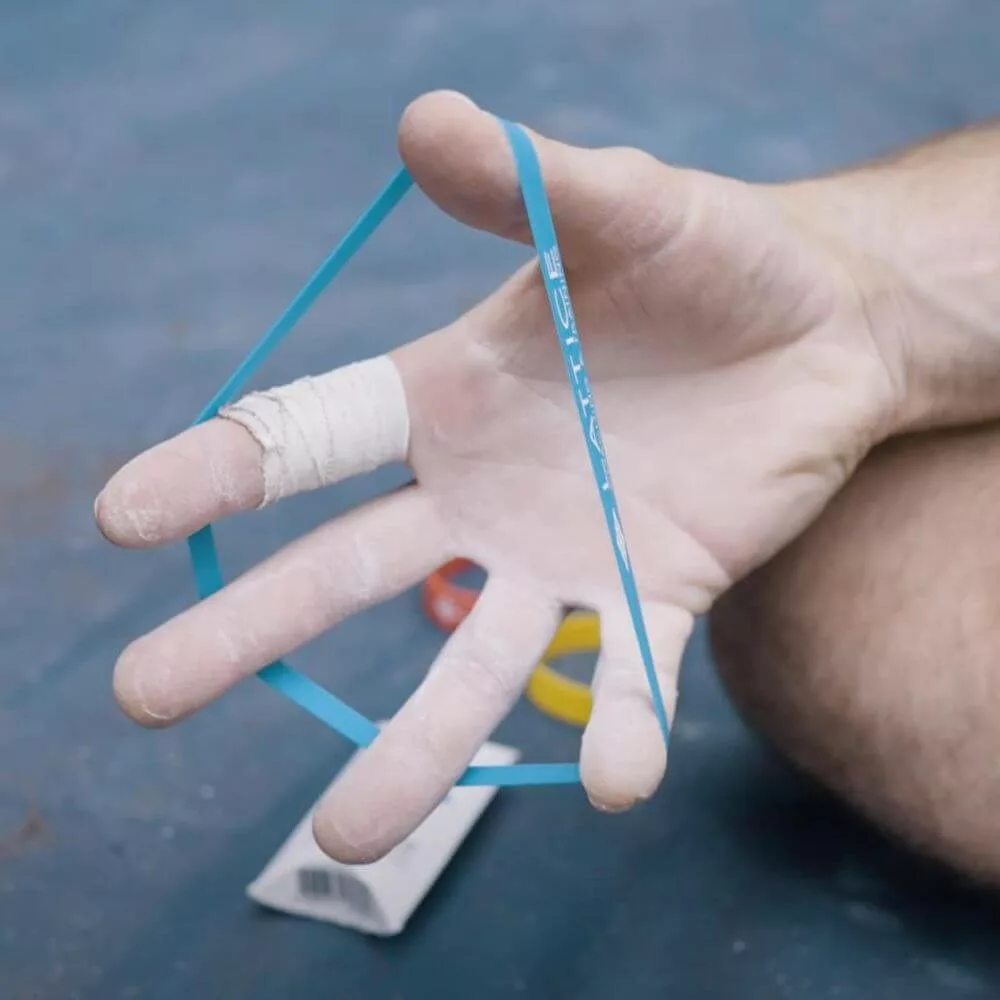
Finger extension is the movement of straightening or opening your fingers.
It may not seem as impressive as crushing a gripper, but it plays an important role in maintaining balanced hand function.
Your fingers don’t exist simply to close around objects.
They also need to do the opposite: open, spread, reposition, and release.
This is especially relevant for people who perform a lot of gripping.
Repeatedly training the closing muscles without giving the opposing movement any attention can create an incomplete training approach. Finger extension work gives you a simple way to introduce resistance in the opposite direction.
It can also be useful outside the gym. Typing, gaming, playing instruments, working with tools, climbing, and many other activities involve repeated finger movements. Developing better control over both opening and closing the hand can contribute to more versatile hand function.
The good news is that finger extension doesn’t require complicated equipment or a huge amount of training time. A simple resistance band designed for the fingers can provide an effective starting point.
Are you training with handbands in the correct way?
Here’s a practical guide on how to get it right on your first attempt.
What Is Finger Extension and Why Does It Matter?
Finger extension is essentially the opposite of gripping.
When you make a fist or squeeze a gripper, the fingers flex toward the palm. During finger extension, the fingers move away from the palm and straighten.
This movement is controlled by muscles and tendons on the extensor side of the hand and forearm. While some of the muscles responsible for finger movement are located in the hand itself, many of the major finger extensors originate in the forearm and connect to the fingers through tendons.
That means finger extension is another example of why hand strength and forearm strength are so closely connected.
Why should grip trainers care about finger extension?
Because most conventional grip exercises emphasize closing the hand.
A well-rounded grip routine should consider both sides of the movement:
- Balance gripping volume – Finger extension provides resistance in the opposite direction from repeated squeezing and gripping.
- Train neglected muscles – The finger extensors can receive much less direct work than the muscles involved in closing the hand.
- Improve finger control – Stronger extension can help you open and reposition the hand with greater control.
- Support hand function – Opening and spreading the fingers are important parts of everyday hand use.
- Complement grip training – Extension work doesn’t replace gripping exercises; it fills an important gap in a broader hand-training routine.
This doesn’t mean finger extension exercises magically prevent every hand or wrist injury. Rather, they provide a practical way to train a movement that is frequently underrepresented in grip programs.
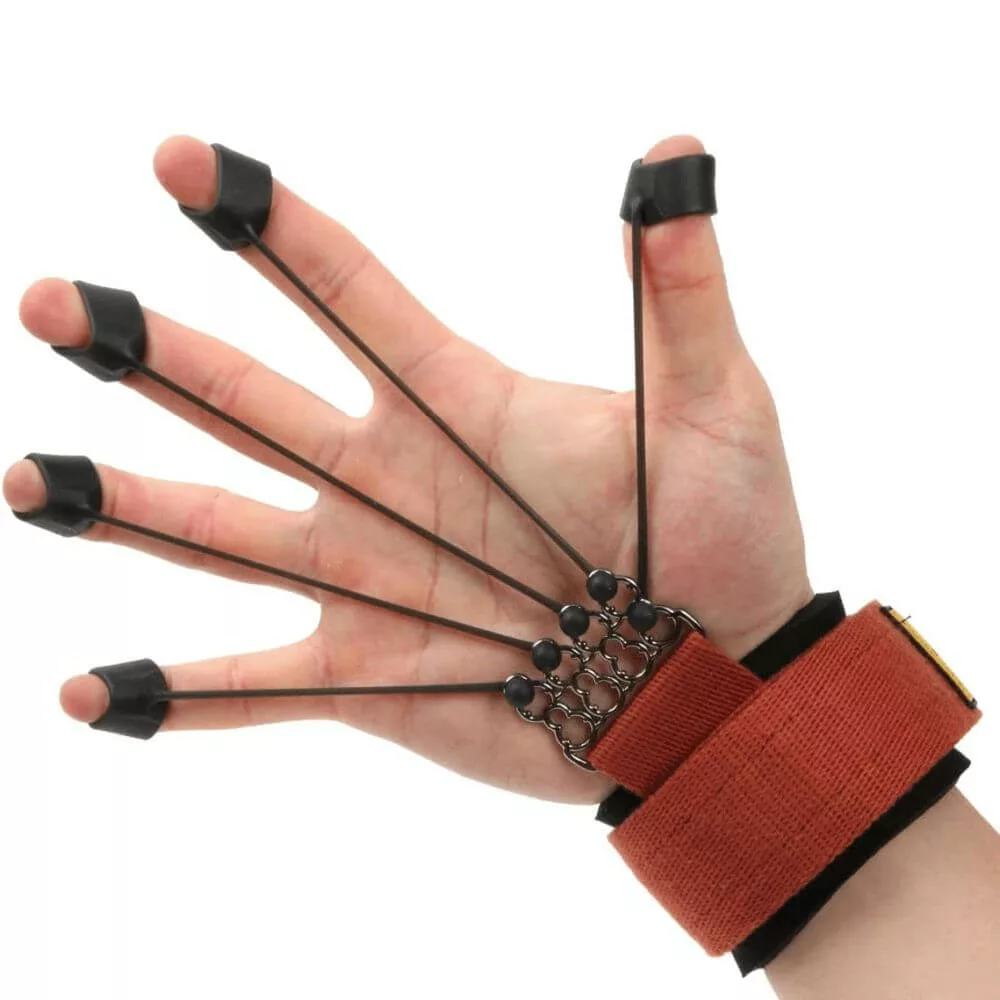
Fancy Finger Exerciser to Build Functional Grip Strength
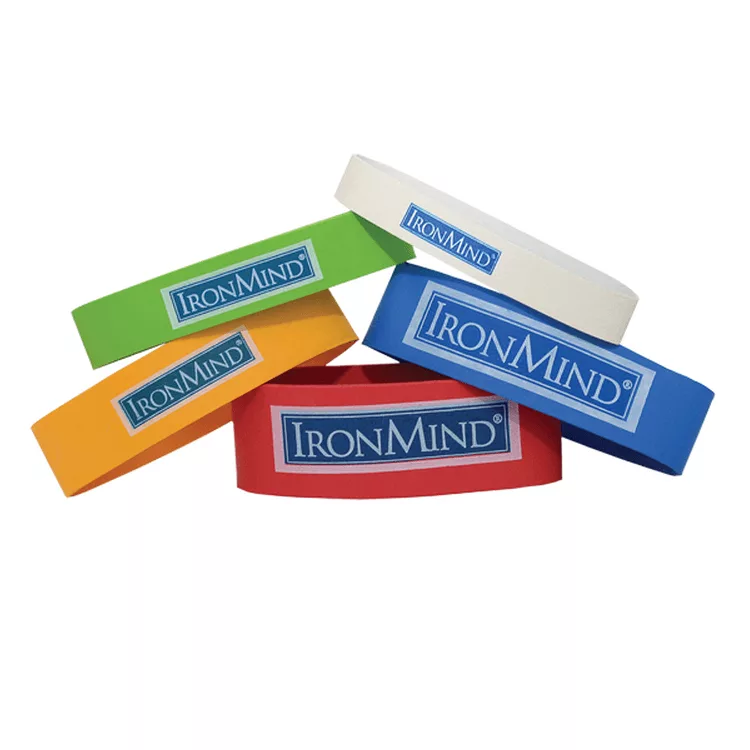
Why are Handbands Staple to Build Hand Muscle Balance?
The resistance is usually modest, but that doesn’t mean the exercise is useless. Finger extension is a relatively small movement, and beginners may discover that even light resistance becomes challenging surprisingly quickly.
How Finger Extension Complements Grip Training
One of the easiest mistakes to make when building a grip routine is to think exclusively about how much force you can produce while closing your hand.
Crush grip, pinch grip, support grip, and many other grip exercises all involve some form of forceful finger flexion.
That’s valuable, but it’s only one part of hand function.
Imagine repeatedly squeezing a gripper during every grip session.
Your fingers are constantly being trained to close against resistance. Adding finger extension creates a simple contrast: instead of repeatedly asking the fingers to squeeze harder, you’re asking them to open against resistance.
This can make finger extension particularly useful as a complementary movement.
A simple way to pair the two
You don’t necessarily need a separate “finger extension workout.”
You could pair extension work with your existing grip exercises:
- Grippers → finger extensions – Follow a set of crush-grip work with controlled extension repetitions.
- Pinch training → finger extensions – Use extension work after plate pinches or other thumb-and-finger exercises.
- Loaded carries → finger extensions – Add a few light sets after support-grip work.
- Desk work → finger extensions – Use gentle extension movements as a movement break after prolonged typing or mouse use.
- Recovery days → light extension work – Very light resistance can provide movement without turning recovery into another demanding grip session.
The important word here is complement.
Finger extension should not become an excuse to add endless volume to an already demanding grip routine. The goal is to create a more balanced approach to hand training, not simply to do more exercises.
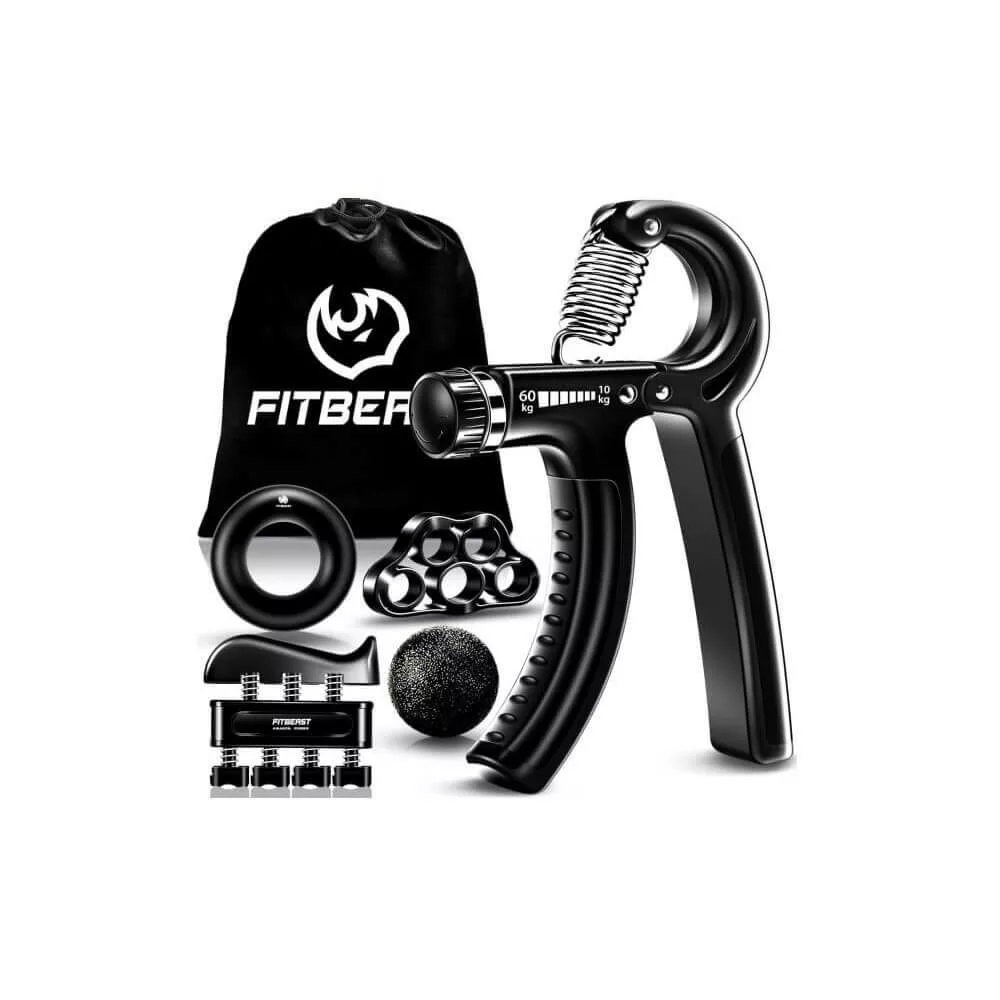
Budget Grip Strengthener Kit With 5 Trainers

Gyro Ball is Amazing For Grip Training Warm-Up & Hand Rehab
Train the Other Side of Your Grip
Grip training naturally gravitates toward exercises that produce an obvious feeling of strength. Closing a heavy gripper or holding a challenging weight gives you an immediate sense of accomplishment.
Finger extension is quieter. But that doesn’t make it irrelevant.
Training the fingers to open and spread against resistance gives your grip routine another dimension. It helps address a movement that receives considerably less attention than squeezing and can make your overall hand-training approach more balanced.
The simplest strategy is also the most sustainable: keep extension work light, controlled, and consistent, then gradually increase the challenge as your fingers adapt.
Recommended Next Reads
A complete grip isn’t only about closing the hand.
It’s also about controlling how you open it.
Key Takeaway
Finger extension matters because grip training shouldn’t only teach your hand how to close harder. Adding controlled extension work gives you a simple way to train the opposing movement, improve hand control, and create a more balanced grip-training system.
You don’t need much equipment or a complicated routine.
A few controlled sets of appropriate resistance can be enough to give this overlooked movement the attention it deserves.
Thanks for Reading!
Do You Train Your Finger Extension or Keep Forgetting About It?
Share Your Thoughts in the Comments!