(Last Updated on May 30, 2026 by Henry)
Whether you train Brazilian Jiu-Jitsu, judo, wrestling, MMA, or traditional grappling arts, your grip is often the difference between control and escape, dominance and fatigue, success and survival.

Strong fingers, resilient tendons, and high-endurance forearms allow you to maintain control under resistance, fight through grip breaks, and stay technically effective even when exhausted.

This grappling-focused hub combines grip endurance training, clinch control development, submission grip mechanics, recovery systems, and combat-specific hand strength tools to help you build stronger, more reliable grip performance on the mat.

Why Grip Strength Matters in Martial Arts & Grappling

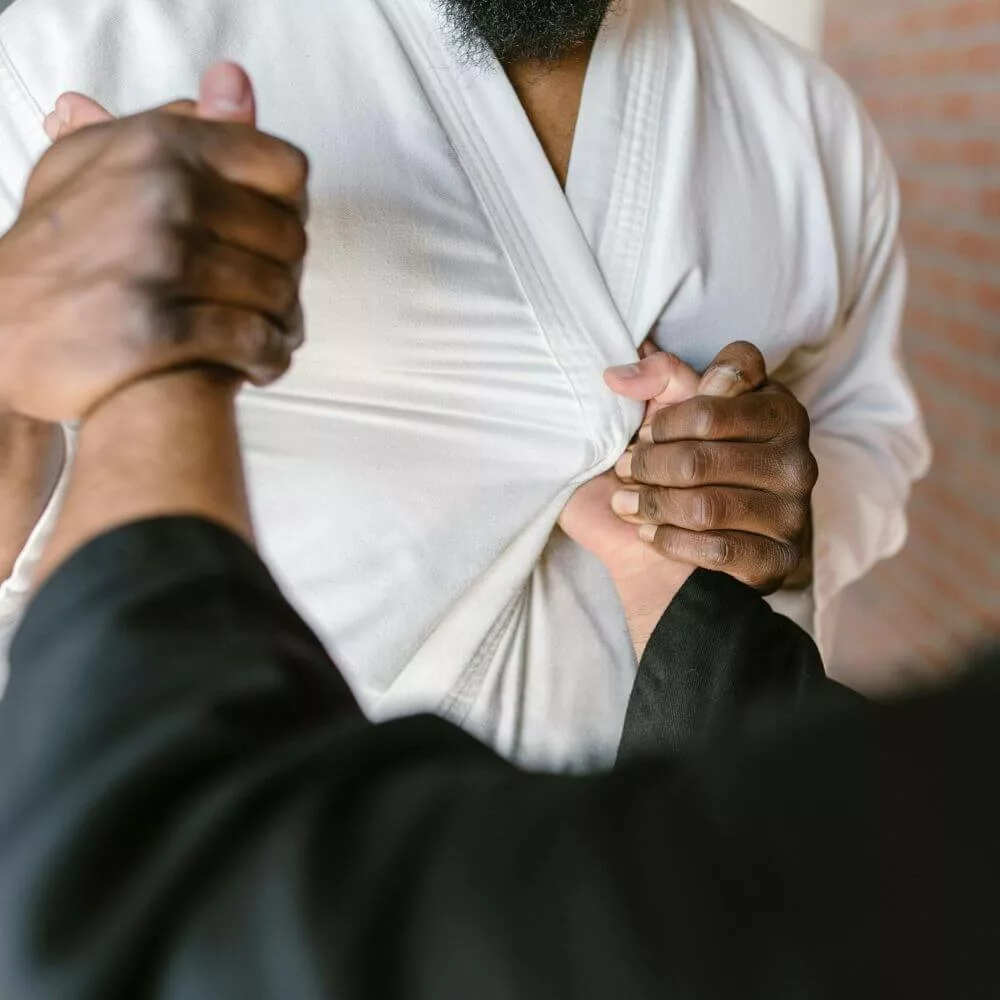
In grappling-based martial arts, grip strength is not just a supporting attribute: it is a control system. Whether you are holding a gi collar, controlling a wrist, maintaining underhooks, or fighting for positional dominance, your ability to maintain grip under fatigue directly influences the outcome of exchanges.

Unlike gym-based strength training, martial arts grip work is dynamic, unpredictable, and reactive. Your hands are constantly dealing with sudden pulls, rotational forces, explosive escapes, and prolonged isometric tension. This places extreme stress on finger flexors, forearm endurance systems, and connective tissue stability.

Grip failure in martial arts rarely happens because of a lack of raw strength alone. It often comes from poor endurance, weak grip positioning, inefficient tension management, and underdeveloped recovery capacity between exchanges. That’s why grapplers must train not only for strength, but also for sustainability under fatigue.

In grappling sports, grip endurance often matters more than maximum strength.
The ability to maintain control for seconds longer than your opponent
is frequently what decides positional dominance.

This hub was built to help martial artists understand grip strength from a combat perspective: covering clinch endurance, gi control, no-gi gripping mechanics, recovery strategies, and injury prevention systems designed for long-term training sustainability.

Explore the stages below to improve grappling grip strength step by step: from awareness and mechanics to training systems, equipment, advanced endurance, and long-term joint resilience.

STAGE 1 — BEGINNER GRAPPLER: UNDERSTAND YOUR GRIP LIMITATIONS

STAGE 1 — BEGINNER GRAPPLER: UNDERSTAND YOUR GRIP LIMITATIONS

At this stage, the goal is to recognize how grip failure affects control, fatigue, and technical performance in martial arts. These guides help beginners identify common gripping mistakes, early fatigue patterns, and structural weaknesses that limit progress in grappling environments.


  • Why Your Grip Fails During Rolling Or Sparring
  • Why You Lose Control In The Clinch So Quickly
  • Common Grip Endurance Mistakes In Grappling
  • Why Beginners Burn Out Their Forearms Early
  • Signs Your Grip Is Limiting Your Technique
  • Why You Struggle With Gi Control
  • Why Your Hands Open Under Pressure
  • Most Common Grip Errors In MMA & BJJ
STAGE 2 — LEARN HOW GRAPPLING GRIP ACTUALLY WORKS

STAGE 2 — LEARN HOW GRAPPLING GRIP ACTUALLY WORKS

Once you recognize where your grip is failing in training or sparring, the next step is understanding how grappling grip strength actually works under resistance. Unlike gym-based strength, grappling relies on timing, tension control, leverage, endurance, and reactive adjustments against a resisting opponent.


  • How Grip Strength Works In Grappling Sports
  • Gi Grip vs No-Gi Control Differences
  • Why Grip Endurance Beats Raw Strength In Sparring
  • How Forearms Fatigue During Rolling
  • How Tendons Adapt To Grappling Stress
  • Why Grip Breaks Happen Under Pressure
  • How Clinch Control Is Actually Maintained
  • Why Recovery Matters In Combat Sports Training
  • How Isometric Grip Fatigue Builds Up
  • Why Extensor Balance Improves Grip Survival
STAGE 3 — EXPLORE GRAPPLING GRIP TRAINING METHODS

STAGE 3 — EXPLORE GRAPPLING GRIP TRAINING METHODS

Now it’s time to translate understanding into practice. These guides cover grip endurance drills, gi-specific pulling methods, clinch control training, forearm conditioning, partner resistance work, and recovery systems designed specifically for martial arts environments.


  • Best Grip Exercises For Grapplers
  • Gi Pulling Drills For Grip Endurance
  • Towel Pull-Ups For Fighting Strength
  • How To Train Clinch Grip Endurance
  • Grip Break Recovery Training
  • Forearm Conditioning For MMA Fighters
  • Finger Extensor Training For Grappling Balance
  • Dead Hangs For Combat Sports Athletes
  • How To Simulate Sparring Grip Fatigue
  • Partner Resistance Grip Drills
  • Grip Transition Training In Scrambles
  • How To Build Submission Grip Strength
  • Wrist Stability Training For Fighters
  • Recovery Methods After Hard Rolling
  • How To Avoid Forearm Burnout In Training Camps
STAGE 4 — FIND THE BEST GRAPPLING GRIP EQUIPMENT

STAGE 4 — FIND THE BEST GRAPPLING GRIP EQUIPMENT

Different martial arts styles place different demands on your grip. Gi grapplers often need sustained friction-based endurance, while no-gi athletes rely more on wrist control, clinch strength, and explosive grip transitions. These guides help you choose equipment that builds real fight-relevant hand strength without unnecessary training noise.


  • Best Grip Trainers For Grapplers & MMA Athletes
  • Best Gi Grip Training Tools For BJJ
  • Best Towel Grip Trainers For Combat Sports
  • Captains Of Crush vs Adjustable Grippers For Fighters
  • Best Forearm Trainers For Grappling Endurance
  • Best Wrist Strength Tools For Clinch Control
  • Finger Extensor Tools For Martial Artists
  • Best Recovery Tools For Sore Forearms After Rolling
  • Grip Conditioning Tools For No-Gi Athletes
  • Best Portable Grip Trainers For Fighters
  • Hand Grippers For Combat Strength Development
  • Forearm Endurance Equipment Compared
  • Best Warm-Up Tools For Grappling Sessions
  • Best Mobility Tools For Wrist Health In Fighters
STAGE 5 — ADVANCED GRAPPLING GRIP PERFORMANCE & LONG-TERM DURABILITY

STAGE 5 — ADVANCED GRAPPLING GRIP PERFORMANCE & LONG-TERM DURABILITY

At advanced levels, grip strength becomes less about simple endurance and more about efficiency, conservation, and tactical application. Elite grapplers learn how to control grip fatigue, cycle tension, protect tendons, and maintain high output across multiple rounds or long training sessions without breakdown.


  • How To Build Elite Grappling Grip Endurance
  • How To Prevent Grip Fatigue In Long Rounds
  • Advanced Gi Grip Control Systems
  • Grip Periodization For Fighters & Grapplers
  • How To Maintain Grip Strength Across Training Camps
  • Tendon Health Strategies For Combat Athletes
  • Advanced Forearm Density Training For Fighters
  • How To Recover Faster Between Sparring Rounds
  • Grip Efficiency Techniques For High-Level Grappling
  • How Elite Fighters Avoid Forearm Burnout
  • Long-Term Wrist Protection For Combat Sports
  • Advanced Clinch Control Mechanics
  • Performance Tracking For Grappling Strength
  • How To Balance Strength, Skill, And Grip Fatigue
  • Sustainable Grip Training For Competitive Fighters
RECOVERY & LONG-TERM JOINT HEALTH FOR GRAPPLERS

RECOVERY & LONG-TERM JOINT HEALTH FOR GRAPPLERS

In grappling sports, progress is not limited by strength alone: it is often limited by how well your hands, wrists, elbows, and forearms recover between sessions. Repeated gripping, resisting, breaking grips, and defending submissions places continuous stress on tendons, ligaments, and small stabilizing muscles in the forearm and hand.


  • Tendon Recovery Basics For Grapplers
  • How To Reduce Forearm Pain After Rolling
  • Wrist Mobility For Injury Prevention In BJJ & MMA
  • Best Recovery Tools For Grappling Athletes
  • Managing Grip Fatigue Between Training Sessions
  • Warm-Up Systems Before Sparring
  • How To Prevent Finger Injuries In Gi Grappling
  • Elbow Health For Fighters & Grapplers
  • Blood Flow Recovery Methods For Forearms
  • Signs You Are Overtraining Your Grip
  • How To Recover Faster Between Training Days
  • Long-Term Joint Protection For Combat Athletes

Most grip-related injuries in grappling do not happen from a single moment:
they develop gradually through repeated fatigue, poor recovery, and
accumulated micro-strain in the fingers, wrists, and forearms.

Strong grappling performance is built through a balance of control, endurance, technique, and recovery. Explore the stages in this hub to build stronger grip endurance, protect your joints, and maintain long-term performance on the mat.

Thanks for Stopping By!

What Aspect Of Grappling Are You Working On Right Now?
Share Your Experience Below!

Need to Improve Your Grip? As a Fitness Enthusiast, I'm Here to Guide You: Looking to Get More Competitive Edge? Prehab, Rehab, Treating RSI or Just Seeking Fun? Find All the Relevant Tricks of the Trade You Need Right Here. Sharing My Insight to Help You to Improve Both Mentally & Physically, Offering You Various Ideas & Directions to Be on Top of Your Game.

Leave a Reply

Your email address will not be published. Required fields are marked *