(Last Updated on July 26, 2026 by Henry)

Why More Grip Training Isn’t Always Better

Getting excited about grip training is a good thing.

For many beginners, discovering grip strength feels like unlocking an entirely new world.

Suddenly, you’re buying hand grippers, hanging from pull-up bars, and wondering why nobody ever taught you about hand training before.

Unfortunately, enthusiasm can sometimes become its own obstacle.

One of the most common beginner mistakes is assuming that more training automatically leads to better results.

If two workouts are good, then surely five must be better, right?

Not quite.

Your body doesn’t get stronger while you’re training. It gets stronger while you’re recovering.

Every training session creates small amounts of stress within your muscles, tendons, and connective tissues. Given enough time, your body adapts to that stress and comes back stronger. But if you continuously train without allowing adequate recovery, progress can quickly stall.

This is especially important when it comes to the hands and forearms. These areas are involved in countless activities throughout the day, which means they’re often accumulating fatigue even when you’re not actively training them.

“Beginners often think they’re undertraining when,
in reality, they’re simply under-recovering.”

Another concept worth understanding is the law of diminishing returns. Early improvements tend to happen quickly, which can be exciting.

But as your body adapts, progress naturally becomes slower and more gradual.

That’s normal.

If you’re constantly tired, struggling to complete workouts, or noticing persistent soreness in your hands and forearms, your body may be asking for more recovery, not more training.

Learning to balance effort with recovery is one of the most valuable skills a beginner can develop.

How Grip Training Actually Progresses

One of the biggest mindset shifts in grip training is understanding that progress is usually slower and more sustainable than beginners expect.

Grip strength isn’t built in a weekend. It’s built through weeks and months of consistent practice.

The foundation of progress is a concept known as progressive overload. In simple terms, this means gradually asking your hands to do slightly more over time.

That might mean:

  • Performing a few extra repetitions.
  • Holding an exercise for a few more seconds.
  • Using slightly more resistance.
  • Trying a more challenging variation.

Many beginners make the mistake of jumping from “I just bought my first hand gripper” to “I’m going to train my grip every day.”

Unfortunately, the hands and forearms don’t always appreciate that level of enthusiasm.

Recovery is equally important.

After training, your muscles, tendons, and connective tissues need time to repair and adapt. This process is what allows you to become stronger. Ignore it, and you’ll likely experience fatigue, slower progress, or discomfort that could have been avoided.

It’s also worth remembering that progression isn’t only about resistance. Improving technique, developing better control, and exposing your hands to different movement patterns are all signs of progress.

For example:

  • A dead hang feels easier.
  • Your farmer’s carries last longer.
  • You can comfortably open stubborn jars.
  • Your hands don’t fatigue as quickly during work.

Those improvements matter just as much as squeezing a heavier gripper.
When beginners understand this, they stop chasing quick fixes and start building habits that produce lasting results.

Progress in grip training isn’t measured by a single number.
It’s measured by how capable your hands become over time.


Common Grip Training Mistakes To Avoid

The good news is that most beginner mistakes are completely avoidable.

If you can recognize them early, you’ll save yourself time, frustration, and potentially a few sore forearms along the way.

The Most Common Mistakes

  • Only training crush grip: Hand grippers are great, but they’re only one part of the six primary hand movements. Neglecting pinch, support, extension, and rotational work can lead to imbalances.
  • Training too often: More isn’t always better. Your hands are already working throughout the day and need adequate time to recover.
  • Ignoring finger extension: Many people spend years strengthening their grip without ever training the muscles responsible for opening the hand.
  • Using poor technique: Fast, uncontrolled repetitions are rarely productive. Focus on quality movements and full ranges of motion.
  • Starting too heavy: Choosing resistance that’s beyond your current ability can slow progress and increase injury risk.
  • Ignoring pain signals: Muscle fatigue is normal. Sharp or persistent pain is not. Learning the difference is an important part of training safely.
  • Comparing yourself to others: Everyone starts at a different point. Focus on becoming stronger than you were last month, not stronger than someone else today.

Perhaps the biggest mistake of all is expecting immediate results.

Grip strength is one of the most rewarding qualities to train, but it still follows the same rules as everything else: consistency, patience, and intelligent programming.

“Beginners don’t fail because they lack potential; they fail because
they expect progress faster than the body can realistically deliver.”

The encouraging news is that most of these mistakes can be corrected immediately. A few small adjustments to your routine can dramatically improve both your results and your overall training experience.

How To Train Smarter

Avoiding mistakes is only half the equation. The other half is building habits that set you up for long-term success.

The good news is that effective grip training is surprisingly simple.

For most beginners, training two or three times per week is more than enough to make noticeable progress. This provides your hands, wrists, and forearms with sufficient stimulation while still allowing adequate time for recovery.

A smart approach to grip training usually includes three things:

  1. A variety of movements.
  2. Consistent training.
  3. Proper recovery.

That means exposing your hands to different challenges throughout the week.

One session might focus on support grip and carries, while another emphasizes crush grip, wrist work, and finger extension.

Recovery deserves just as much attention as training itself.

Sleep, hydration, nutrition, and stress management all play a role in how well your body adapts.

While these topics may not sound exciting, they’re often the difference between steady progress and constantly feeling fatigued.

Remember:

  • Rest days are productive days.
  • Recovery is part of training.
  • Small improvements add up.

It’s also important to listen to your body.

If your hands feel unusually tired, your grip strength is decreasing from session to session, or you’re experiencing persistent discomfort, those are signs worth paying attention to.

Taking an extra day off today is often better than being forced to take several weeks off later.

“The goal isn’t to train as hard as possible,
it’s to train as consistently as possible.”

The people who achieve the best results over time aren’t necessarily the most intense.
They’re the ones who continue showing up month after month, year after year.

Your Beginner Grip Training Checklist

If you’re just getting started, keep things simple. You don’t need a complicated program or a collection of expensive equipment to build stronger hands. You simply need a plan you can follow consistently.
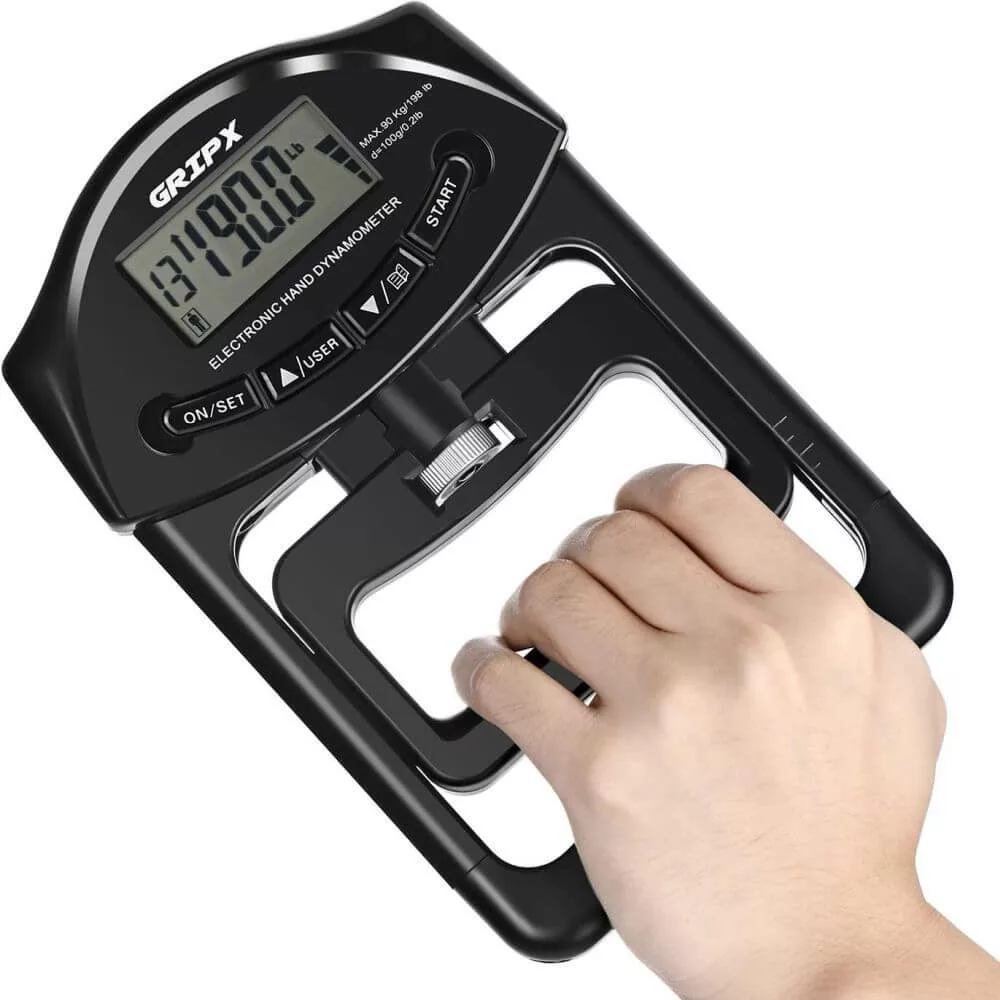
Your Beginner Checklist

  • Start with realistic expectations: Grip strength takes time to develop. Focus on progress, not perfection.
  • Train two to three times per week: Allow enough time between sessions for your hands and forearms to recover.
  • Warm up before training: A few minutes of wrist circles, finger movements, and light exercises can go a long way.
  • Train multiple hand movements: Include crush, pinch, support, twist, extension, and rotational work whenever possible.
  • Track your progress: Keep notes on repetitions, hold times, and resistance levels to monitor improvement.
  • Listen to your body: Learn the difference between healthy fatigue and pain that shouldn’t be ignored.
  • Stay consistent: Small efforts performed regularly will always outperform occasional bursts of motivation.

Most importantly, remember that every experienced grip athlete started exactly where you are now.

Nobody begins with elite grip strength. It’s built one repetition, one workout, and one small improvement at a time.

By avoiding common mistakes early, you’ll put yourself in an excellent position to build stronger, healthier, and more reliable hands for years to come.

Continue Learning

Ready to continue your Beginner’s Guide journey?

  • How Strong Should Your Grip Be?
  • Why Your Hands Fatigue So Quickly
  • How Grip Strength Impacts Everyday Life
  • Grip Strength Myths That Refuse To Die

Grip training is a marathon, not a sprint. If there’s one lesson to take away from this article, it’s this:
Train smart, recover well, and trust the process.

Thanks for Stopping By!

Which Mistakes Have You Avoided by Training Smarter?
Share Your Thoughts in the Comments!

Need to Improve Your Grip? As a Fitness Enthusiast, I'm Here to Guide You: Looking to Get More Competitive Edge? Prehab, Rehab, Treating RSI or Just Seeking Fun? Find All the Relevant Tricks of the Trade You Need Right Here. Sharing My Insight to Help You to Improve Both Mentally & Physically, Offering You Various Ideas & Directions to Be on Top of Your Game.

Leave a Reply

Your email address will not be published. Required fields are marked *