(Last Updated on October 12, 2026 by Henry)
How Strong Is “Strong Enough”?
“How strong should my grip be?”
It’s one of the first questions beginners ask, and it’s a completely reasonable one.
After all, we live in a world obsessed with numbers.
We count our steps, track calories, monitor our heart rate, and compare our lifting totals.
Naturally, people want to know if there’s a magic number separating a “good” grip from a “bad” one.
The truth is a little more complicated.
A 25-year-old climber,
a 40-year-old office worker,
& a 70-year-old retiree,
don’t need the same grip strength to live healthy, productive lives.
Context matters.
The best grip strength is the one that supports your lifestyle, goals, and daily activities.
That’s not to say numbers are useless. Grip strength is actually one of the most researched indicators of overall strength and healthy aging.
Numerous studies have found associations between grip strength and general physical function, particularly as people get older.
The goal isn’t to become obsessed with charts & comparisons, instead, ask:
- Can I comfortably carry groceries?
- Can I perform the activities I enjoy?
- Do my hands fatigue excessively?
- Is my grip limiting my training or work?
If the answer to those questions is positive, you’re already in a pretty good place.
Grip strength should be viewed as a tool, not a score that determines your worth. And while benchmarks can be helpful, they’re only one piece of the puzzle.
Here’s a Simple, Practical Way You Can Measure Your Grip Strength at Home:
Measuring Grip Strength
Before you can answer the question, “How strong should my grip be?”, it helps to know where you’re starting.
The most common way to measure grip strength is with a hand dynamometer. This handheld device measures the amount of force you can generate and provides a numerical reading.
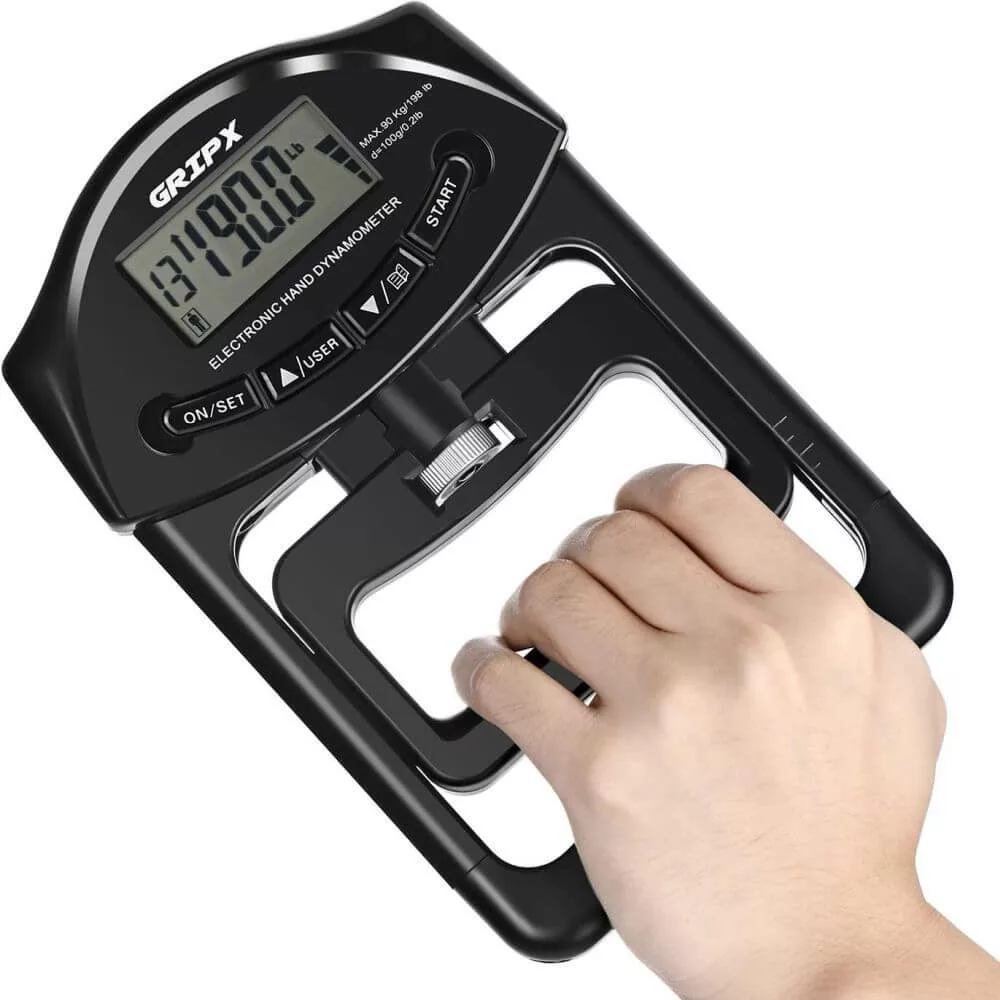
The Best Grip Dynamometer for Home, Sports, & Clinical Use?
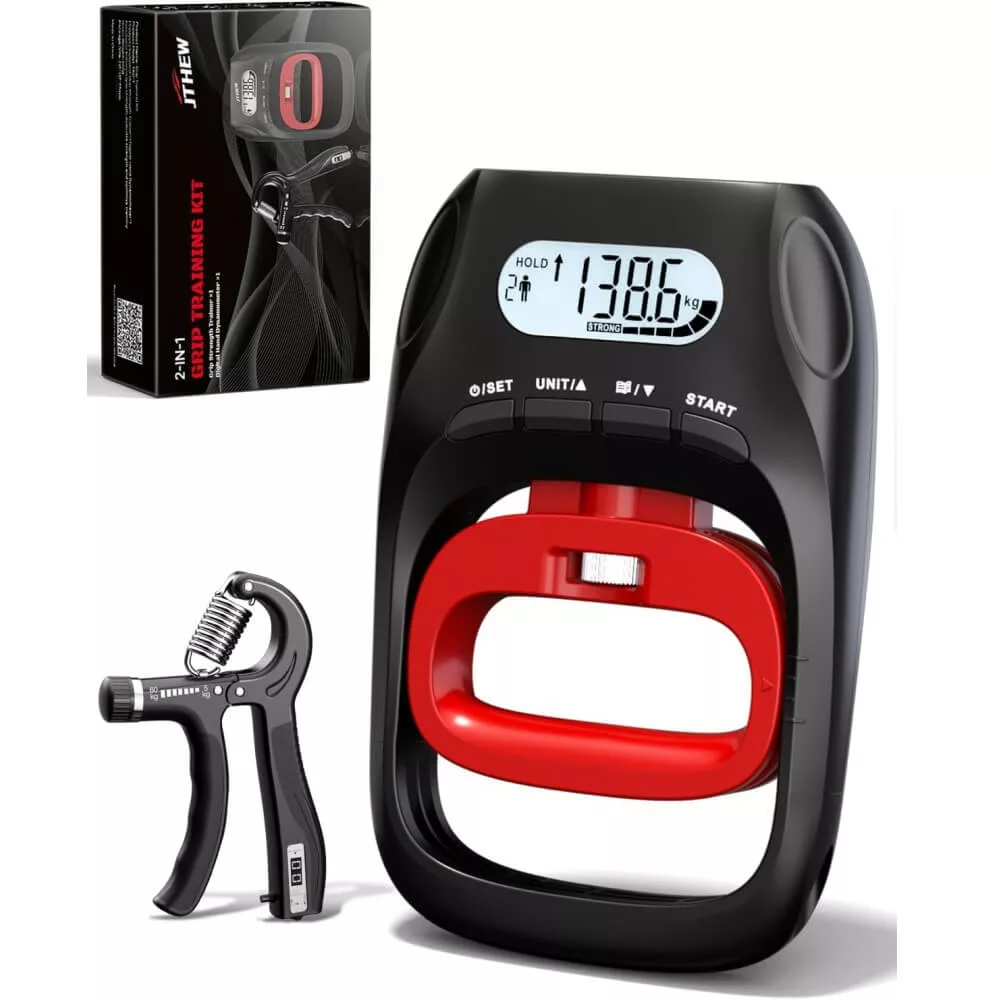
Don’t Guess: Use Grip Dynamometer for Accurate Progress Tracking
It’s widely used in research, physical therapy settings, and fitness assessments because it’s simple, reliable, and easy to repeat over time.
For beginners, however, you don’t necessarily need specialized equipment.
Practical tests can provide a good indication of your current grip capabilities:
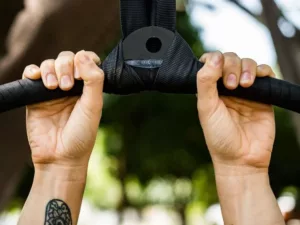
- Dead hangs from a pull-up bar.
- Farmer’s carries.
- Carrying heavy grocery bags comfortably.
- Opening difficult jars or containers.
- Holding onto weights during training.
For example, someone who can comfortably perform a 45-second dead hang & carry groceries without difficulty is likely in a much better position functionally than someone who struggles with both tasks, even if they don’t know their exact grip strength number.
These aren’t perfect measurements, but they offer valuable context. It’s also important to understand that grip measurements can vary.
Factors that influence your results include:
- Fatigue.
- Time of day.
- Previous training sessions.
- Hydration.
- Hand position during testing.
This is why consistency matters. If you decide to track your grip strength, try to test under similar conditions each time.
Your first grip test isn’t a judgment; it’s simply your starting point.”
Remember, measurements are most useful when compared against yourself.
Watching your grip improve over six months is often far more meaningful than comparing your numbers to strangers on the internet.
Factors That Affect Grip Strength
One of the reasons grip strength is so difficult to compare is that there are countless variables involved.
Two people can have very different grip strength levels & still both be perfectly healthy & capable.
2 people can have very different grip strength & still both be perfectly healthy:
- Age
- Sex
- Body size
- Training history
- Occupation
- Sports participation
- Previous injuries
- Overall activity levels
For example, someone who has spent twenty years working in construction will likely have a different baseline grip strength than someone who works at a desk.
Likewise, a recreational climber may naturally develop exceptional support grip endurance, while a musician may possess outstanding finger control and dexterity.
Age is another important consideration.
Grip strength tends to increase through early adulthood, remain relatively stable for many years, and gradually decline as we age. Fortunately, regular training can help maintain hand function and slow some of these changes.
Previous experience matters, too.
Many beginners are surprised to discover they already possess decent grip strength simply because they’ve spent years gardening, carrying tools, lifting weights, or participating in sports. Others may be starting from a lower baseline due to sedentary habits or limited physical activity.
This is why comparisons can be misleading.
The encouraging part is that nearly everyone can improve.
Whether you’re trying to keep up with your grandchildren, perform better in the gym, or simply make everyday tasks easier, stronger hands are a goal that’s achievable at any age.
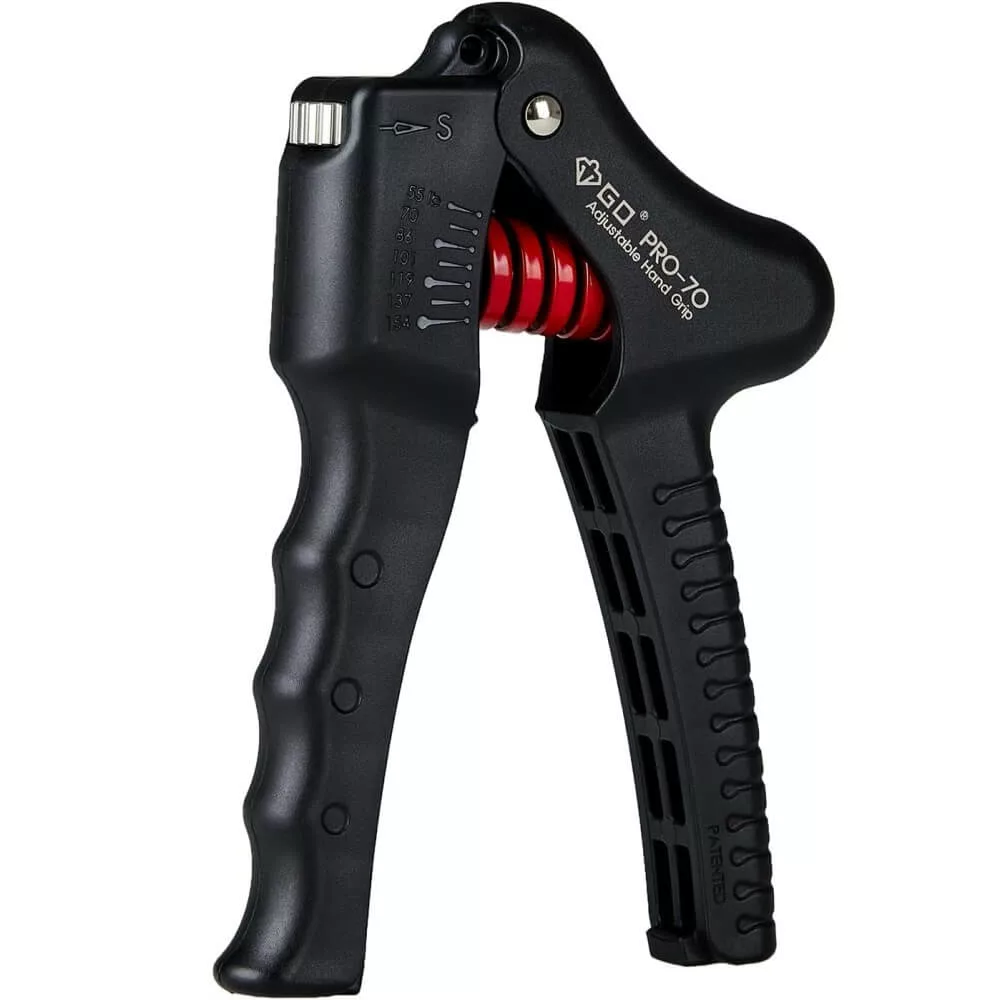
Adjustable Grip Trainer for Steady Strength Progression
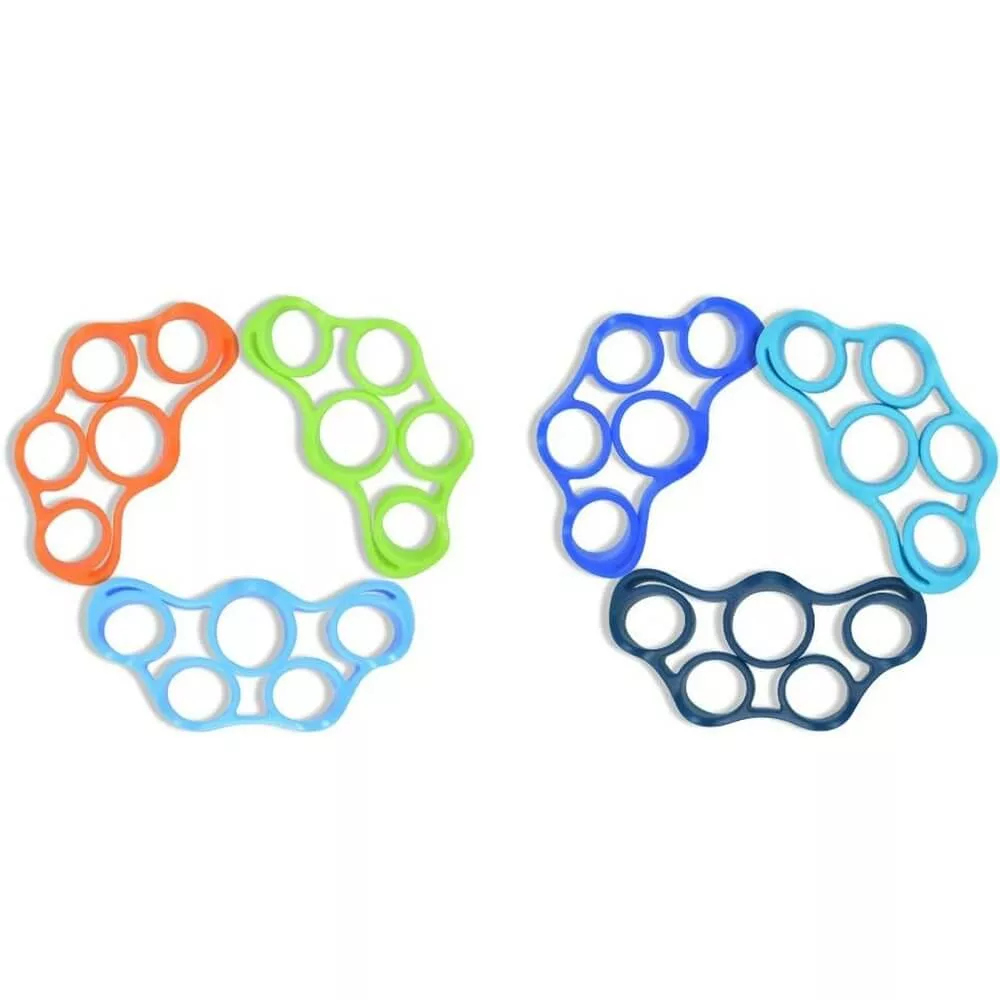
Avoid Elbow Pain with Simple Finger Exerciser
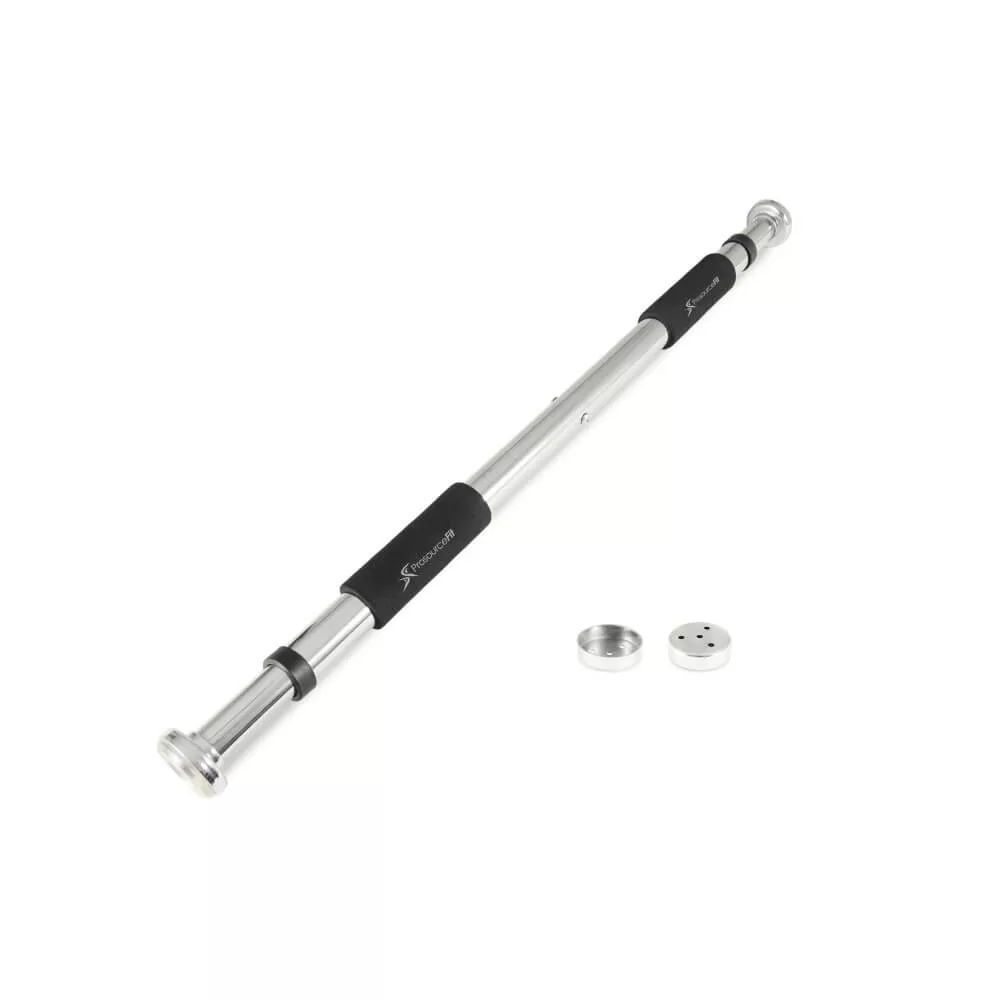
Basic Doorway Pull-Up Bar: Simple, Easy to Assemble
Your grip strength should be compared to your past self,
not someone with a completely different life experience.”
Setting Your Own Grip Goal
After reading this far, you may still be wondering:
“Okay, but what should my goal actually be?” The answer is surprisingly simple.
Your grip should be strong enough to support the life you want to live:
- Carrying groceries without discomfort.
- Performing your favorite activities confidently.
- Completing workouts without your hands giving out first.
- Feeling capable during work and everyday tasks.
- Maintaining hand function as you age.
Everything beyond that is optional.
If you’re a climber, your goals may involve hanging from small holds for extended periods.
If you’re an office worker, reducing hand fatigue might be the priority.
If you’re a retiree, maintaining independence may matter most.
There is no universal “perfect” grip strength number.
Your Beginner Grip Goal Checklist
- Establish a baseline: Perform a grip test or simple self-assessment.
- Track progress: Revisit your measurements every few months.
- Focus on function: Notice improvements in everyday activities.
- Train consistently: Two or three sessions per week is plenty for most beginners.
- Be patient: Grip strength improves gradually over time.
- Celebrate small wins: Every additional second on a dead hang or easier grocery trip is progress.
Key Takeaway
Remember: Strong enough isn’t a number; it’s a feeling.
The best part about grip training is that improvements tend to carry over into almost every aspect of life.
Stronger hands can make you feel more capable, more confident, and better prepared for whatever your day throws at you.
If your hands are helping you live the life you want, you’re already moving in the right direction. And if they’re not, the good news is that you now know exactly where to start.
Thanks for Reading!
How Strong is Your Grip?
Share Your Thoughts in the Comments!