(Last Updated on October 29, 2026 by Henry)

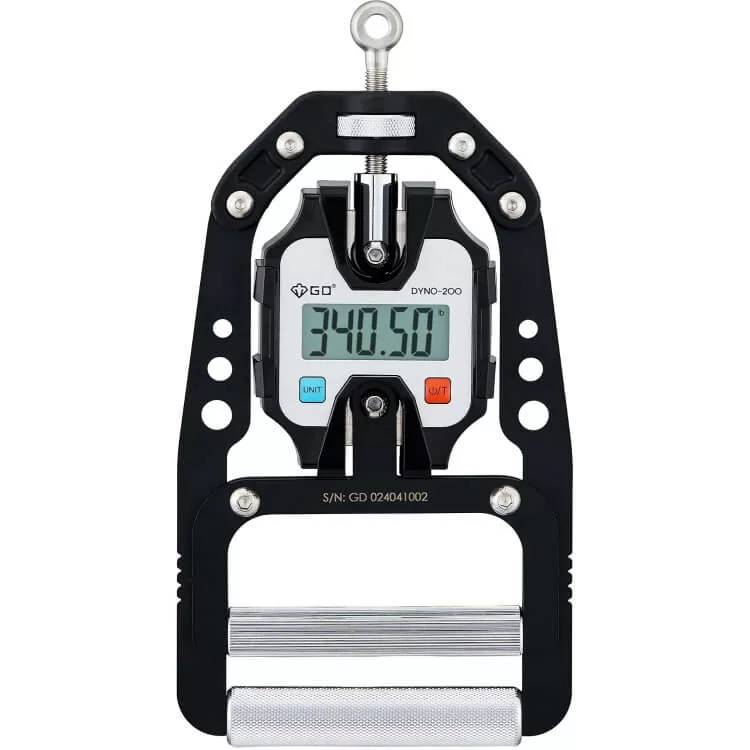
  • Name: GD DYNO-200 Grip Strength Tester
  • Category: Grip Dynamometers
  • Purpose: Measure maximum grip strength
  • Rating: 4.7 / 5 stars
  • Availability: Amazon (Prime Delivery)

Check Price on Amazon

  • High advertised measurement capacity: The DYNO-200 measures up to 200 kg (440 lb), making it suitable for serious grip athletes.
  • Rigid metal construction: Metal frame & textured handles are designed to provide a stable testing interface under high force.
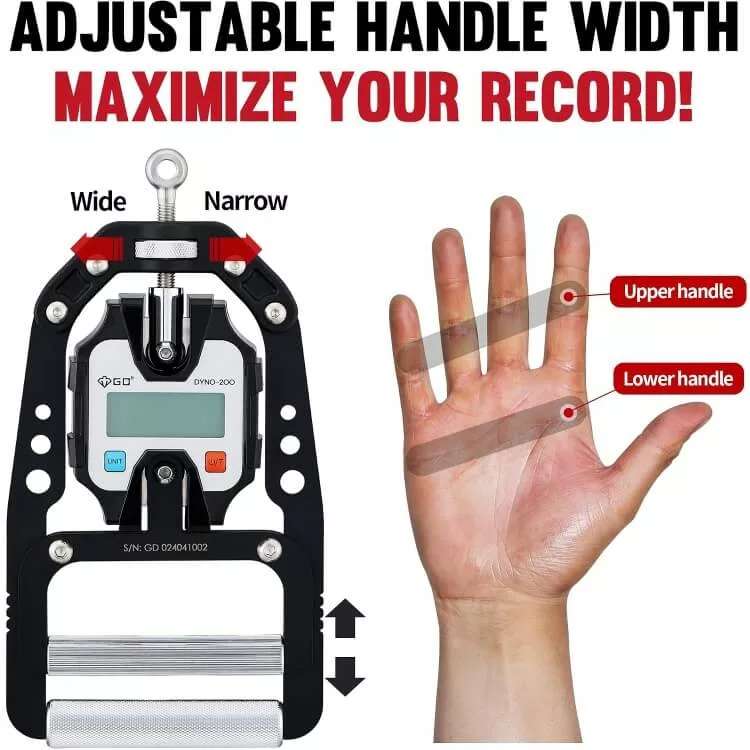
  • Digital readings and adjustable handle width: The display records grip-strength results, while the adjustable handle allows users to establish a consistent testing position.
Want to Track Your Grip Progress?
Learn How to Measure Progress & Break Through Plateaus

✋ Overview: What Does GD DYNO-200 Grip Strength Tester Measure or Track?

Can You Trust Your Grip Strength Numbers?

Grip strength is easy to train but surprisingly difficult to track well. You can close a tougher gripper, hold heavier weights, or complete more repetitions, but those achievements do not always tell you how your maximum crushing strength is changing. A dynamometer gives you a more direct way to measure that specific ability.

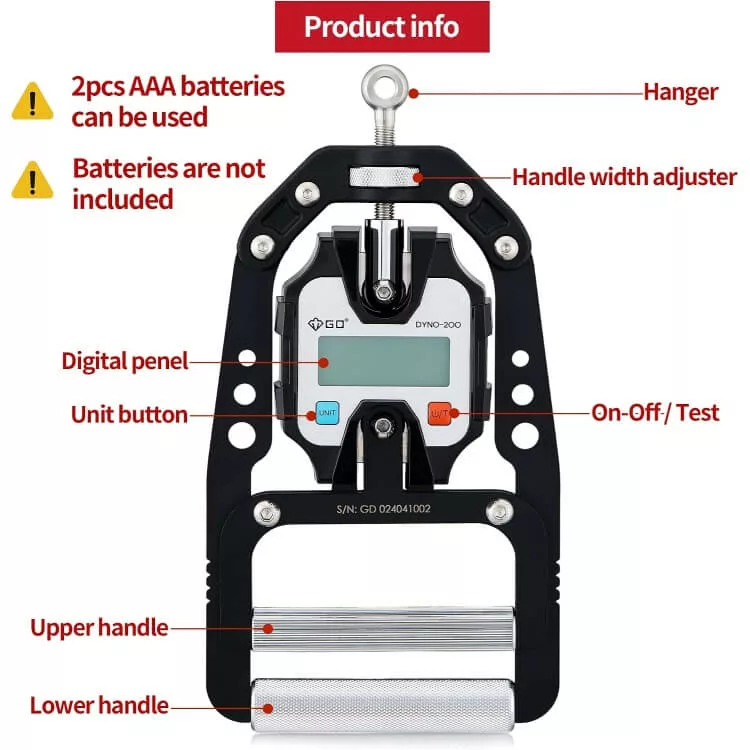
The GD DYNO-200 is designed to measure maximum handgrip force using a digital dynamometer with a rigid metal frame. You squeeze the adjustable handles, and the device records your grip-strength reading on its digital display. According to the supplied instructions, you activate the unit, wait for the signal, position your hand beside your thigh, and squeeze for approximately three seconds to record the maximum result.

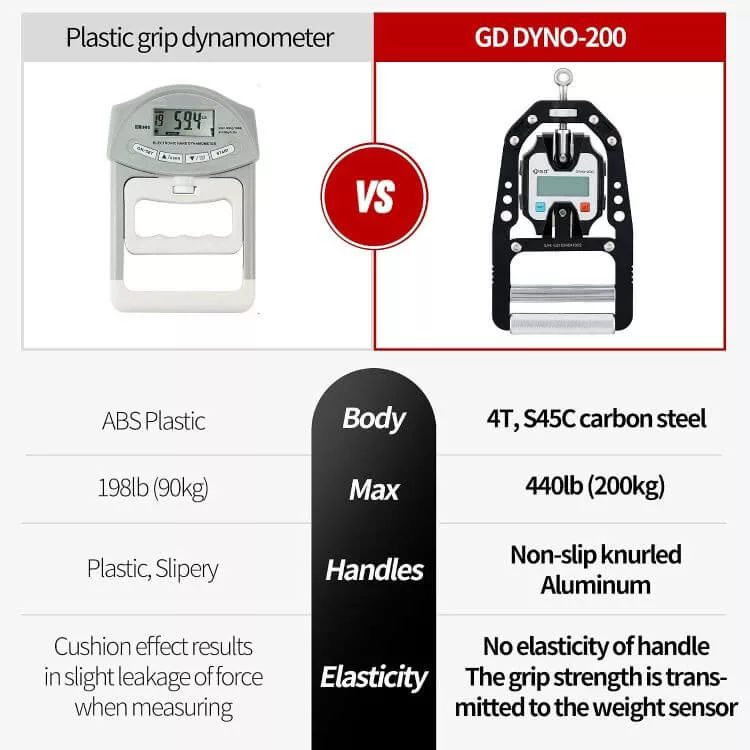
What stands out to me is the combination of a substantial metal construction and a measurement system aimed at serious grip training. Customer feedback frequently praises the solid feel, handle texture, and consistency of the readings. Several reviewers also compare it favourably with less expensive plastic dynamometers, although those experiences are not a substitute for independent calibration testing.

The adjustable handle width is another important feature. Grip position can influence the force you produce, so being able to establish a repeatable handle setting makes it easier to compare results across sessions. If you change the handle position between tests, your readings may reflect both the adjustment and changes in your strength.

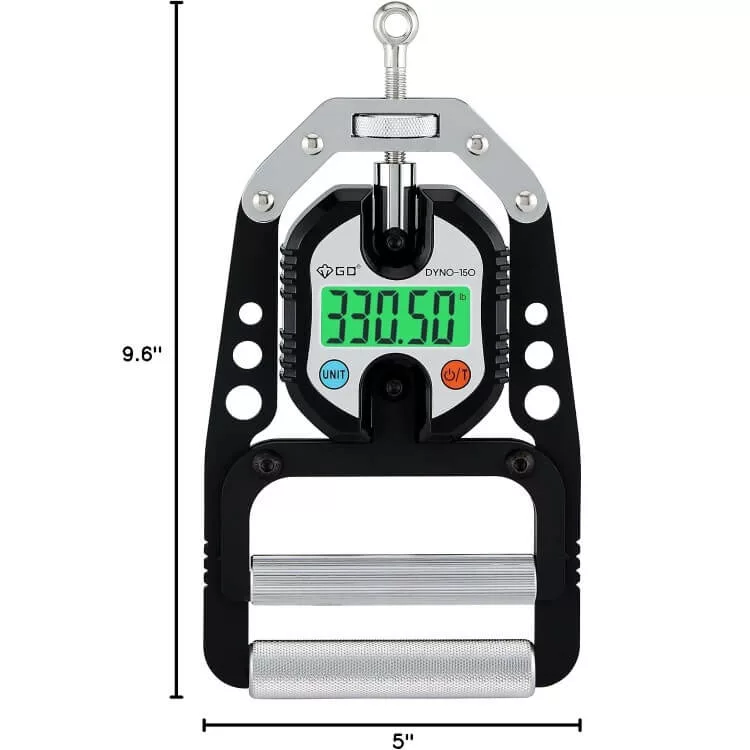
There is, however, a model-identification issue worth taking seriously. The product is advertised as the DYNO-200, with a maximum capacity of 200 kg or 440 lb, yet the supplied product information lists model number GD_DYNO-150. A historical customer review reported receiving the 150 kg version, although that reviewer later suggested the seller might have been clearing older stock. The current product identity and actual supplied capacity should therefore be confirmed before purchase.

For me, the DYNO-200’s appeal is straightforward: it offers a dedicated way to establish a grip-strength baseline, test personal records, and monitor changes over time. Its value depends on getting the correct model and using a consistent testing protocol, rather than simply trusting a high number on the display.

⚖️ Pros & Cons: GD DYNO-200 Grip Strength Tester

MEASUREMENT QUALITY, USABILITY, DATA VALUE, & PRACTICAL LIMITATIONS

Pros:

  • Rigid metal construction: The substantial frame is designed for high-force testing and avoids the flex associated with some lightweight plastic designs.
  • High advertised capacity: The stated 200 kg / 440 lb range makes it potentially suitable for very strong grip athletes.
  • Adjustable handle width: The ability to change the grip position helps users establish a repeatable testing setup.
  • Digital strength readings: The display makes it convenient to record results and compare performance across sessions.
  • Positive customer feedback: Buyers frequently praise the build quality, handle texture, and perceived consistency of the measurements.
Cons:

  • Model specification discrepancy: The listing advertises the DYNO-200 but identifies the model as GD_DYNO-150, creating uncertainty about the actual measurement limit.
  • Accuracy is not independently established: Positive customer experiences support its perceived reliability, but no independent calibration results were supplied.
  • Batteries are not included: The device requires two AAA alkaline batteries, which must be purchased separately.

Still Looking for the Right Measurement Tool? Compare Grip Dynamometers Here
Wondering What Your Results Mean? Learn How Strong Your Grip Should Be

Get it on Amazon See a Cheaper Alternative

GD DYNO-200 Grip Strength Tester: Ranking 94 out of 100

MEASUREMENT QUALITY, USABILITY, & LONG-TERM DATA VALUE

🎯 Who Should Use GD DYNO-200 Grip Strength Tester Grip Measurement Tool?

TRAINING LEVEL, MEASUREMENT NEEDS, & USER IDENTITIES

  • Serious grip-strength athletes: Useful for testing maximum crushing strength and recording personal records alongside gripper training.
  • Arm wrestlers and strength athletes: Provides a quantitative way to monitor one aspect of hand strength that may complement sport-specific training.
  • Progress-focused gym users: Helps establish a baseline, compare repeated tests, and assess whether a training programme is producing measurable changes.
  • Coaches and grip-training enthusiasts: A dedicated dynamometer can support repeatable testing sessions, athlete comparisons, and structured grip-strength challenges when everyone follows the same protocol.

🧩My Rating Summary

  • Build Quality: 4.7 / 5 Customer feedback strongly favours the solid metal construction, textured handles, and stable feel. The rating reflects the reported build quality rather than a verified long-term durability test.
  • Ease of Use: 4.3 / 5 The basic testing procedure is straightforward, with a digital display and a simple activation process. Users still need to establish a consistent handle position and testing routine.
  • Comfort: 4.2 / 5 The textured handles are praised for providing a secure grip, while the adjustable handle width helps accommodate different testing preferences. The firm knurling may not suit every user.
  • Resistance Quality: 4.5 / 5 As a measurement device, this category reflects the perceived stability of the sensing and loading mechanism rather than exercise resistance. Customer feedback is encouraging, but independent verification of measurement consistency is unavailable.
  • Progression Potential: 4.7 / 5 The dynamometer is well suited to baseline testing, repeat measurements, personal records, and tracking strength trends over time. Its usefulness depends on consistent testing conditions and trustworthy readings.
  • Value for Money: 4.0 / 5 The substantial construction and dedicated measurement function help justify its premium positioning for serious users. However, the price is significant, and the model-capacity discrepancy should be resolved before purchase.

⚙️Technical Details

  • Brand: GD
  • Manufacturer: GD
  • Material: Aluminum, S45C carbon steel, and weighing/measurement components, according to the listing
  • Weight: Approximately 2.35 lb (1.07 kg), according to the listing
  • Dimensions: Approximately 9.6 × 5 inches; the measurement orientation is not specified
  • Resistance System: Digital maximum handgrip-force measurement; Adjustable handle width
  • Resistance Range: Maximum: 200 kg / 440 lb
  • Primary Training Focus: Maximum crush-grip strength
  • Included Components: Two AAA alkaline batteries, not included
  • Best For: Grip-strength testing, personal-record tracking, and structured performance comparisons
📊 Accuracy, Consistency & Progress Tracking Potential of GD DYNO-200

📊 Accuracy, Consistency & Progress Tracking Potential of GD DYNO-200

MEASUREMENT ACCURACY, REPEATABILITY, & LONG-TERM DATA VALUE

A good grip dynamometer needs to do more than display a number. It should produce consistent readings under repeatable conditions, and its measurements should be sufficiently accurate for the comparisons the user wants to make.

These are related but different qualities. Accuracy concerns how closely a reading corresponds to the true force being measured. Repeatability concerns whether the device produces similar readings when the same person repeats the same test under comparable conditions. Resolution describes the smallest increment shown on the display. A device can be repeatable without being perfectly accurate, so one quality should not automatically be taken as proof of another.

GD DYNO-200 is encouraging. Readings are consistent, and I’d say it compares favourably with other dynamometers. One customer reports results close to certified devices, while another praises the stable metal construction and the ability to adjust the handle width. These are useful real-world observations, but the supplied information does not include an independent calibration report or a verified accuracy specification.

The rigid frame is a plausible advantage over designs that visibly flex under load. Less unwanted movement may improve the stability of the testing interface, but the construction alone cannot establish sensor accuracy or prove that calibration remains stable over years of use.

For progress tracking, the most useful feature is the ability to repeat the same test and record the maximum result. A simple log can include the date, hand tested, handle setting, number of attempts, and best reading. This makes it easier to distinguish a genuine trend from the natural variation between individual attempts.

The advertised capacity also deserves attention. The listing states 200 kg / 440 lb, while the product information identifies the model as GD_DYNO-150. Until the seller confirms the exact version, the advertised maximum should not be treated as a verified specification of the unit that will arrive.

For the strongest comparisons, use the same dynamometer, handle position, hand posture, warm-up, and rest period each time. Record both hands separately and avoid comparing readings taken under substantially different conditions. If measurement accuracy is critical for professional or clinical use, seek a device with appropriate documented calibration and validation.

💪 How This Tool Helps Improve Grip Training

💪 How This Tool Helps Improve Grip Training

DATA-DRIVEN TRAINING, BASELINES, & PERFORMANCE FEEDBACK

A dynamometer does not directly strengthen your hands. Its contribution is informational: it helps you understand your current performance and determine whether your training is producing measurable changes.

The GD DYNO-200 can support several parts of a structured grip-training routine.

First, it provides a baseline. Testing both hands before starting a programme gives you a reference point against which future readings can be compared. This can be particularly useful if your training includes different exercises for each hand or if you want to monitor an existing left-to-right difference.

Second, it provides a way to track progress beyond the resistance printed on a gripper. Closing a particular gripper is a meaningful achievement, but maximum dynamometer force measures a different aspect of grip performance. Recording both can provide a broader picture of your training.

Third, repeated measurements can help you assess a programme over several weeks. If your training changes, a consistent testing routine can show whether your maximum grip-strength readings are moving in the intended direction. A temporary plateau may prompt you to review recovery, training volume, exercise selection, or the consistency of your testing protocol.

There is no need to test maximum strength every day. Frequent all-out squeezing can create fatigue and interfere with training, while ordinary day-to-day variation can make small changes difficult to interpret. Periodic testing under similar conditions is generally more useful than repeatedly chasing a new record.

Finally, the adjustable handle width can help standardize the test. Choose a setting that suits your hand and follow the same procedure each time. Changing handle position can change the result, so a new setting should be documented rather than treated as directly comparable with earlier measurements.

The most effective role for the DYNO-200 is therefore as a measurement companion to training. Use its readings to inform decisions, not as a substitute for a sensible programme or a guarantee of future strength gains.

Grip Strength Is Only One Part of the Picture
Understand The Difference Between Grip Strength & Endurance

🧠 Performance, Display & Ease of Testing

🧠 Performance, Display & Ease of Testing

TESTING EXPERIENCE, FEEDBACK, DISPLAY, & DATA INTERACTION

The GD DYNO-200 uses a relatively simple testing process. The supplied instructions describe installing two AAA batteries, activating the device, waiting for the signal, positioning the hand beside the thigh, and squeezing for approximately three seconds. The digital panel then displays the recorded maximum.

This straightforward process is a practical advantage. There is no need to connect an app, pair a phone, or manage a complicated digital training system just to obtain a grip-strength reading. The user can test, record the result, and return to training.

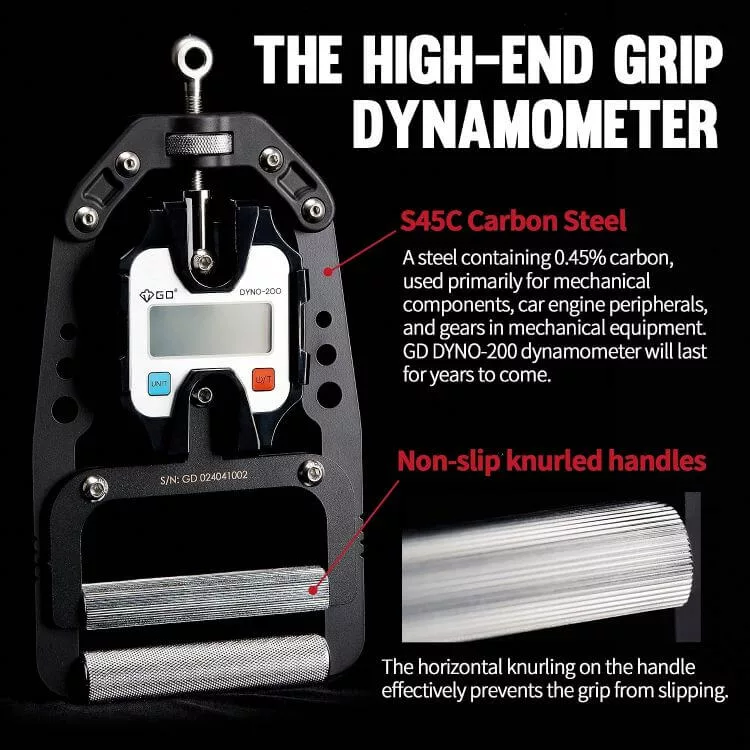
The adjustable handle is an important part of the testing experience. A consistent grip position helps make repeated measurements more meaningful, and the textured surfaces may provide a more secure feel than smooth handles. In the supplied video, the reviewer particularly favours the non-moving handle design and its grip texture, although this reflects personal preference rather than an independent performance test.

The metal construction also gives the device a substantial feel. At approximately 1.07 kg according to the listing, it is portable enough to move between training locations, but noticeably heavier than many inexpensive plastic dynamometers.

The main limitation is that the device’s digital presentation should not be confused with verified accuracy. The supplied information does not establish the display resolution, sensor type, calibration procedure, or independently validated error margin. Those omissions matter most to users who need highly precise comparisons.

The model discrepancy is another practical concern. Before relying on the stated 200 kg / 440 lb capacity, buyers should verify that the unit being sold is the DYNO-200 rather than an older or differently rated version.

Overall, the testing experience appears focused and uncomplicated: adjust the handle, perform the squeeze, read the result, and log the number. Consistent technique remains essential if the readings are to provide useful feedback.

🏗 Build Quality & Long-Term Reliability

🏗 Build Quality & Long-Term Reliability

SENSOR RELIABILITY, CONSTRUCTION, & LONGEVITY

Build quality is one of the strongest themes in the available customer feedback. Buyers frequently praise the solid metal body, substantial feel, and textured handles. Several compare the device favourably with plastic dynamometers, which they believe feel less stable under high loads.

The GD DYNO-200 is described as using aluminum and S45C carbon steel. This construction gives it a more substantial feel than lightweight plastic alternatives and is consistent with its positioning as a serious grip-strength tester.

A rigid frame is beneficial because excessive frame movement can complicate testing and undermine confidence in repeated readings. However, a metal body does not automatically guarantee sensor accuracy, calibration stability, or unlimited service life. Those aspects depend on the complete measurement mechanism and its quality over time.

The available material does not establish a formal service life, a calibration interval, or an independently verified durability standard.

The model-identification issue also affects long-term confidence. If the supplied unit differs from the advertised model, the measurement ceiling and intended use may not match the buyer’s expectations. Confirming the exact model before purchase is therefore part of evaluating reliability, not just a matter of packaging.

For everyday care, store the dynamometer in a dry place, avoid impacts, and follow the manufacturer’s instructions for battery replacement and handling. If the device is used to track long-term progress, consistency of the testing setup and confidence in the instrument matter more than the occasional impressive reading.

🏠 Everyday Usability & Convenience

🏠 Everyday Usability & Convenience

PORTABILITY, STORAGE, TESTING ROUTINE, & DAILY USE

The GD DYNO-200 is compact enough to keep in a home gym or take to a training facility, although its metal construction makes it heavier than basic plastic testers. Its straightforward operation means it can be used for periodic checks without a complicated setup.

Two AAA batteries power the digital display, and the supplied instructions describe a simple activation-and-squeeze procedure. Because batteries are not included, buyers should have a pair available before their first test.

The device can also make grip-strength challenges more engaging. Customer feedback mentions using it at work or in group settings to compare scores, while serious trainees may prefer to use it privately to establish baselines and monitor their own progress. For either purpose, everyone should use a consistent testing method if the results are to be compared meaningfully.

Its greatest everyday benefit is the ability to turn grip strength into a measurable training variable. Instead of relying entirely on subjective impressions, users can keep a record of their best readings and look for longer-term changes.

There is one important qualification: the stated measurement ceiling should match the actual model. Confirming whether the unit is the DYNO-200 or DYNO-150 is especially important for users who expect to test at very high forces.

For users who want regular, repeatable grip-strength measurements, the device’s simple controls and adjustable handle make it a practical option. Casual users who only want an occasional novelty score may not need to spend this much on a metal dynamometer.

✅ Final Verdict: Is GD DYNO-200 Grip Strength Tester Grip Tracking Tool Worth It?

LONG-TERM MEASUREMENT VALUE & IDEAL USER

I see the GD DYNO-200 as a promising grip-strength measurement tool for people who want more than a casual squeeze test. Its metal construction, adjustable handle width, digital readings, and straightforward testing process make it appealing for structured grip training and long-term performance tracking.

The strongest evidence in its favour is the customer feedback about build quality and perceived consistency. It’s frequently described as solid and dependable, and many report that its readings compare well with other dynamometers. That is encouraging, but I would not present it as proof of independently verified accuracy.

The biggest point I would resolve before buying is the model discrepancy. The listing advertises a 200 kg / 440 lb capacity, yet the product information identifies model GD_DYNO-150. Since measurement range is a central reason to choose this device, confirming the exact model and its maximum capacity is essential.

For me, the DYNO-200 makes the most sense for dedicated grip athletes, arm wrestlers, coaches, and strength enthusiasts who will use repeated measurements to guide their training. The ability to establish a baseline, record personal records, and monitor trends can make a dedicated dynamometer a worthwhile long-term investment.

Consider the GD DYNO-200 if you value a rigid metal testing platform and intend to track your grip strength consistently. Before ordering, verify that the seller is supplying the advertised 200 kg version and clarify the measurement specifications if accuracy is critical to your use.

If you only want an occasional grip-strength score, a less expensive tester may be sufficient. If you want a serious training measurement tool, the GD’s construction and feature set are attractive, provided the exact model and its capabilities are confirmed.

Thanks for Checking it Out!

Have You Used GD DYNO-200 Grip Strength Tester Before?
Share Your Experience in the Comments!

Not Seeing the Progress You Expected?
Explore Ways to Overcome Grip Strength Plateaus
& Browse the Grip Training FAQ for Quick Answers

Need to Improve Your Grip? I'm Here to Help. As a fitness enthusiast, I explore grip strength, hand training, performance, injury prevention, & recovery to help you train smarter. Whether you're chasing a competitive edge, getting back from an injury, or simply looking for better ways to use & strengthen your hands, you'll find practical ideas & useful tools right here.

Leave a Reply

Your email address will not be published. Required fields are marked *