
Educational Resources to Better Understand Hand Health, Pain Management, Rehabilitation, & Develop Stronger Hands.
Explore the Library:
-
- Specialized Training Methods
- Grip Strength Fundamentals
- Hand & Wrist Conditions
- Repetitive Strain & RSI
- Pain Management & Recovery
- Rehabilitation Resources
Better Knowledge Leads to Better Decisions
When your hands hurt, your grip stops improving, or you’re unsure how to approach a training challenge, the right information can help you understand your options.
Our Grip Manuals library brings together selected resources covering hand health, grip training, rehabilitation, and strength development. Each resource offers a different perspective, helping you explore a topic in greater depth and identify the information most relevant to your needs.
Use this library to learn, compare approaches, and make more informed decisions about your training and hand health.
#1 UNDERSTAND HAND, WRIST & REPETITIVE STRAIN PROBLEMS
Symptoms can have different causes, & understanding the problem is an important step toward finding appropriate guidance.
Learn about repetitive strain injuries, carpal tunnel syndrome, osteoarthritis, & approaches to managing related difficulties.
Hand Health Manuals: Explore Conditions & Management
Living with hand or wrist pain can leave you searching for answers, wondering what is causing the problem and what might help you move forward.
Explore common conditions, recognize topics worth discussing with a healthcare professional, and learn more about the approaches described for managing symptoms.
Learning about common conditions, recovery approaches, and the different approaches to managing symptoms can give you a clearer picture of the questions worth asking and the options worth exploring.
But understanding a condition is only the first step.
Symptoms that seem similar can have different causes, and an approach that helps one person may not be suitable for another.
Use what you learn as a starting point for informed decisions, not as a substitute for a proper diagnosis or personalized care.
If pain persists, gets worse, returns repeatedly, or appears without a clear explanation, seek advice from a qualified healthcare professional rather than trying to push through it or manage it alone.
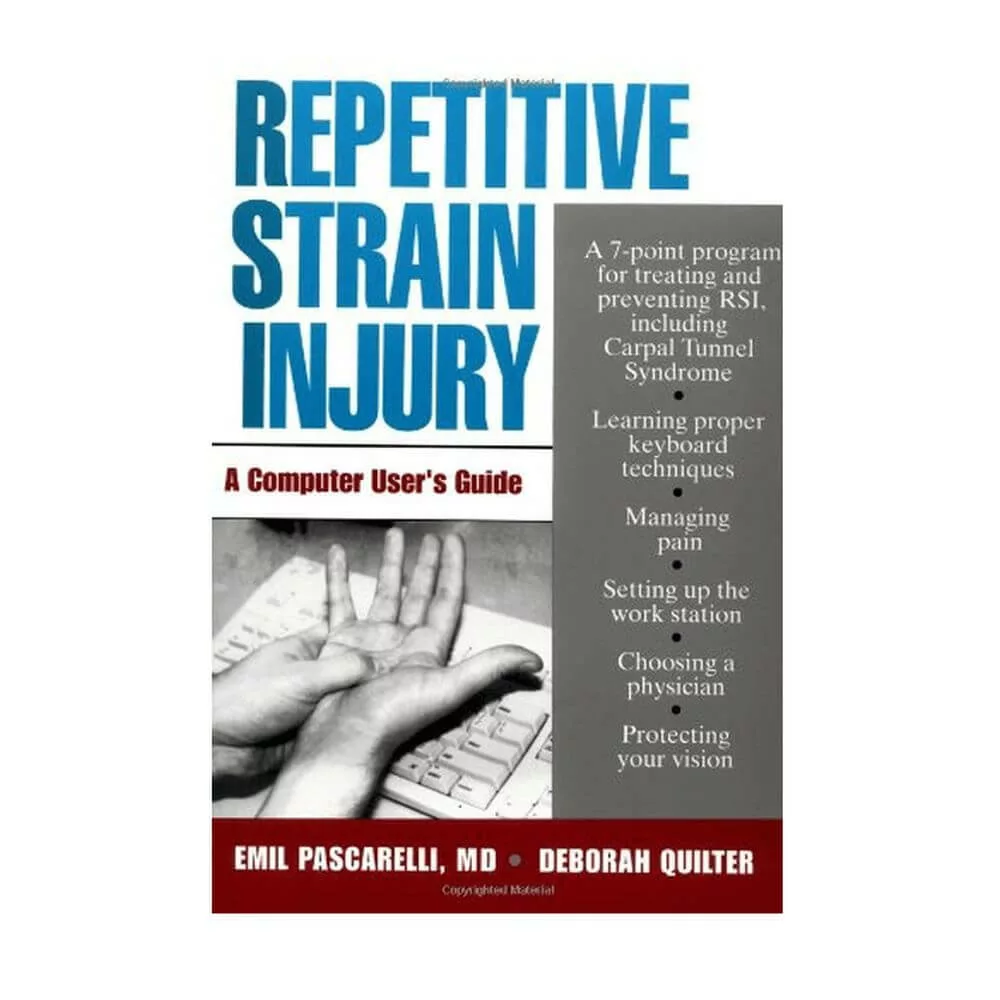
A Wealth of Information to Overcome Repetitive Strain Injury
Understanding what may be happening is an important step toward deciding what to do next.
Don’t confuse learning about a condition with diagnosing it yourself.
#2 UNDERSTAND PAIN, RECOVERY & REBUILDING STRENGTH
Pain can affect more than your workouts.
It can make everyday tasks uncomfortable, interrupt your routine, and leave you wondering how to stay active without making things worse.
Learning about recovery, rebuilding strength, and the approaches people use to manage discomfort can help you better understand your options.
Pain & Recovery Manuals: Explore Ways Forward
When pain keeps getting in the way, you want a quick fix.
But lasting progress often starts with understanding what might be contributing to the problem and what your body needs before you push harder.
Explore practical perspectives on pain, rebuilding strength, and recovery, while keeping in mind that different problems call for different approaches.
Recovery isn’t always about doing more.
Sometimes, it’s about adjusting your routine, understanding your limitations, and giving yourself time to rebuild.
As you explore these approaches, look closely at the reasoning and evidence behind any treatment claims.
A method described in a book isn’t automatically proven to work, and natural remedies aren’t necessarily safe or effective simply because they’re presented as alternatives.
If pain is persistent, severe, unexplained, or interfering with daily activities, a qualified healthcare professional can help you identify the cause and choose an appropriate path forward.

Built From Broken, A Proven Way to Eliminate Pain & Rebuild Strength
Recovery isn’t a race back to where you were.
It’s about understanding what your body needs & finding a sensible way forward.
#3 BUILD GRIP STRENGTH & UNDERSTAND THE FUNDAMENTALS
Building a stronger grip isn’t just about squeezing harder.
Progress comes from understanding how your hands work, choosing suitable exercises, and learning how to develop strength consistently.
Whether you’re new to grip training or looking to refine your approach, the right fundamentals can help you train with greater purpose.
Grip Strength Manuals: Learn the Principles Behind Progress
If you’ve ever wondered why your grip isn’t improving as quickly as you’d hoped, you’re not alone.
It can be difficult to know which exercises matter, how to structure your training, or whether you’re using the right approach for your goals.
These manuals offer different perspectives on grip development, traditional and alternative training methods, and the principles behind building stronger hands.
You don’t need to try every technique or follow every recommendation you encounter.
Start by understanding the basics, then consider which methods fit your current ability, available equipment, and training goals.
Consistent practice, sensible progression, and adequate recovery are more useful than chasing every new trick.
If you’re returning after an injury or experiencing pain during training, address those concerns before pushing for greater resistance.

Unlock Grip Strength with The Grip Master’s Manual
A stronger grip is built through more than effort alone.
Understand the principles, choose your methods wisely, & give yourself room to progress.
#4 EXPLORE SPECIALIZED & APPLIED STRENGTH TRAINING
Grip strength can serve a completely different purpose for everyone.
You might want a firmer hold, better control when carrying heavy loads, or the ability to apply strength quickly and precisely.
Understanding how different training methods work can help you choose an approach that matches the demands you face.
Specialized Grip Manuals: Put Strength Into Practice
Sometimes, general grip exercises aren’t enough to answer a specific training question.
You may need to understand how to use a particular piece of equipment, develop strength for a demanding task, or apply your grip in a more specialized setting.
These manuals explore focused training approaches, from tactical grip development to gripper training and sandbag work, giving you a starting point for learning about methods beyond the basics.
Specialized training works best when the method matches the task.
A gripper-focused routine, for example, develops different skills from handling an awkward sandbag or training for speed and precision.
Before adopting a new approach, consider what it is designed to develop, what equipment it requires, and whether its demands match your current experience.
Build up gradually, pay attention to your technique, and avoid treating every training challenge as a test of maximum effort.

Tactical Grip Training: Learn How to Build Strength with Speed & Precision
The goal isn’t to train every possible way.
It’s to understand what a method develops, why it matters, & when it makes sense for you.
TURN YOUR KNOWLEDGE INTO PRACTICAL GRIP TRAINING
Understanding hand health, recovery, and grip strength is a great starting point.
But when you’re ready to put what you’ve learned into practice, the next step is finding the training approach that fits your goals.
Different hand movements challenge your grip in different ways.
Understanding these differences can help you choose more suitable exercises, make better use of training equipment, and focus on the abilities you want to develop.
Explore Grip Training Gear by Movement
Not sure where to start?
You don’t need to train every movement or buy every type of equipment.
Begin with the ability you want to improve, then explore the tools designed to help you train it.
- Crush Grip Strength:
Explore grippers for developing powerful squeezing strength - Pinch & Thumb Power:
Discover equipment that challenges thumb & pinching ability - Wrist Torque Training:
Explore tools for rotational strength, wrist control, and flexion - Extension & Balance:
Find ways to train finger flexion for hand muscle balance - Support Grip Endurance:
Explore tools for maintaining a secure hold over time - Loaded Carry Grip:
Discover equipment to work your grip while carrying loads - Armwrestling Control:
Explore specialized tools for developing pronation & cupping
Choose a movement that matches your goal, explore the available equipment, and start at a level you can control.
Build gradually, train consistently, and give your hands time to recover.
Knowledge helps you understand the path.
The right training approach helps you take the first step.

The 5 Primary Hand Movements: Gateways To Grip Strength
Find the movement that fits your goal,
explore your options, & build from there.