(Last Updated on September 12, 2026 by Henry)

What to Do When Your Grip Strength Stops Improving

Hitting a plateau in grip strength can be quite frustrating, especially after experiencing those exciting initial gains.

You start training regularly, your numbers improve, your grip feels stronger, and then progress suddenly seems to slow down or stop completely.

This can make you wonder whether your routine is no longer working or whether you simply need to train harder.

The good news is that grip strength plateaus are a normal part of long-term training.

They do not automatically mean that you are doing everything wrong.

Table of Contents – Explore What's Covered Below

A grip strength plateau occurs when improvements stall despite consistent training. However, this is different from simply experiencing a temporary slowdown in progress.

Beginners often make quick gains because their bodies are adjusting to a new training demand. Your muscles, nervous system, technique, and coordination are all learning how to respond. After this initial period, progress naturally becomes slower and less obvious.

An actual plateau usually involves a consistent lack of improvement over several weeks or even months. It may indicate that your training, recovery, exercise selection, or progression strategy needs closer attention.

Common Reasons Grip Progress Stalls

There are several possible reasons why your grip strength may stop improving:

  • Repeating the same workouts – Performing the same exercises with the same resistance and repetitions can eventually stop providing enough challenge.
  • Not increasing difficulty – Your body adapts to training, so resistance, repetitions, hold duration, or another training variable may need to increase gradually.
  • Training too frequently – Repeatedly loading your hands and forearms without enough recovery can limit performance and adaptation.
  • Ignoring certain grip movements – Focusing only on crushing strength while neglecting pinch, support, wrist, or finger-extension work can create weaknesses.
  • Using inconsistent measurements – Testing with different equipment or under different conditions can make real progress difficult to recognize.
  • Changing everything too quickly – Constantly replacing exercises or routines can make it impossible to identify what is actually helping.

Progressive overload remains important. This does not always mean adding heavier resistance. You can also increase repetitions, extend hold duration, improve range of motion, slow down the movement, or introduce a more demanding variation.

At the same time, more training is not always the answer. If fatigue is hiding your progress, adding even more work may make the plateau worse.

The first step is to recognize that a plateau is information. It gives you a reason to examine your training more carefully and make a more intelligent adjustment.

Pinpointing the Exact Grip Strength Stall

Pinpointing the Exact Grip Strength Stall

Identifying the cause of a plateau is essential before changing your routine.

Grip strength is not just one ability. It includes several different movements and qualities, and a problem in one area may be hidden by progress in another.

Maximum Grip Strength vs. Grip Endurance

A useful starting point is to distinguish between maximum grip strength and grip endurance.

Maximum grip strength describes how much force you can produce or how much resistance you can handle for a short effort.

Grip endurance describes how long you can maintain a grip or continue producing force before fatigue becomes limiting.

These qualities overlap, but they are not identical.

You might be able to close a difficult gripper once but struggle to perform several controlled repetitions. Alternatively, you might hold a moderate load for a long time but have difficulty producing a powerful maximum squeeze.

Knowing which quality is actually stalling can help you choose the right adjustment.

Check the Different Grip Movements

Grip categories each place different demands on the hand and forearm:

  • Crush grip – Squeezing an object or closing a gripper with the fingers and palm.
  • Pinch grip – Holding an object between the fingers and thumb.
  • Support grip – Maintaining your hold on a load for time or distance.
  • Wrist torque – Controlling resistance through wrist flexion and extension.
  • Pronation and supination – Rotating the forearm and controlling the hand through different angles.
  • Finger extension – Opening the hand and training the muscles that oppose repeated gripping.

A plateau may simply mean that one specific movement has become the weak link.
For example, your crushing strength may continue improving while your pinch strength remains unchanged. In that situation, adding more gripper work may not solve the problem.

Look at Finger Strength and Wrist Strength Separately

The relationship between finger strength and wrist strength is also important.

Your fingers may be capable of producing significant force, but the wrist still needs to provide a stable foundation for that force.

If the wrist loses position under load, your grip performance may suffer even when your fingers are getting stronger.

Likewise, strong wrists do not automatically guarantee strong fingers.

Consider whether your current routine gives enough attention to both areas. You may not need a completely new program, but you may benefit from adding a small amount of targeted work for the weaker link.

Do Not Rely on One Measurement

A dynamometer can be useful for tracking grip strength, but it only measures one particular type of performance.

Your result can also be affected by:

  • Technique – Small changes in hand position or testing method can change the result.
  • Range of motion – A partial repetition may not represent the same strength as a controlled full repetition.
  • Fatigue – Testing after a demanding workout may produce a lower result.
  • Time of day – Your performance can vary depending on when you test.
  • Recovery – Poor sleep, stress, or insufficient rest may temporarily reduce output.
  • Motivation and concentration – Maximum efforts require focus and consistent effort.

Use multiple indicators when possible. Repetitions, hold duration, resistance, technique, and how quickly you recover between sets can all provide useful information.

Look for Trends, Not Daily Validation

Testing grip strength every session can become misleading.

Day-to-day performance naturally fluctuates. A weaker result on one day does not necessarily mean that you have lost strength.

Instead, compare results across several weeks.

If your performance is gradually improving, even without a new personal record every session, your training may still be working.

The goal is to identify a genuine trend rather than react to every temporary change.

Strategies to Push Past a Grip Strength Plateau

Strategies to Push Past a Grip Strength Plateau

Once you have identified what is actually stalling, you can begin making small adjustments.

You do not need to completely rebuild your routine. In many cases, one or two carefully selected changes are enough.

Gradually Increase Resistance

Progressive overload is one of the most reliable ways to encourage continued adaptation.

If your current resistance has become too easy, gradually increase the difficulty.

For example, you might:

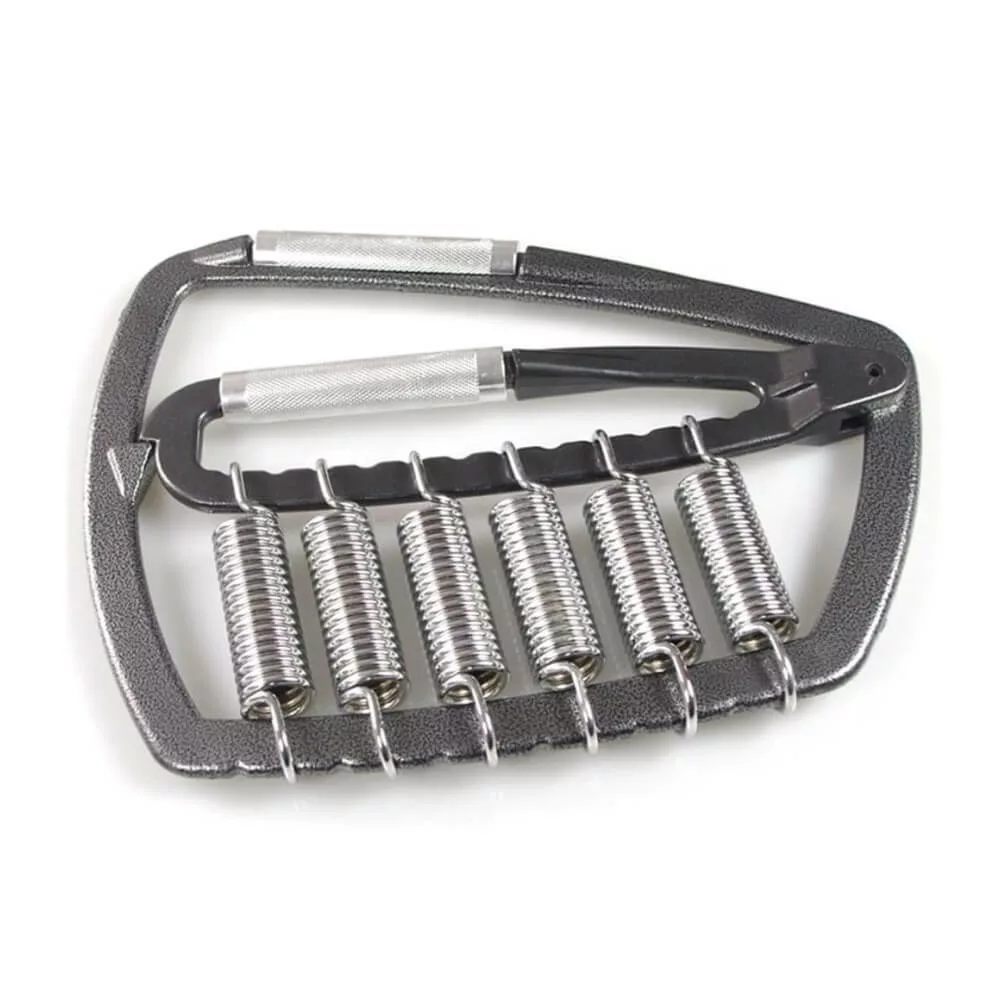
  • Use a slightly heavier gripper.
  • Add a small amount of weight to a pinch exercise.
  • Increase the load during carries.
  • Choose a more demanding wrist-training variation.
  • Use a thicker handle when appropriate.

The increase should be manageable enough that you can maintain good technique.

If resistance becomes so difficult that you have to swing, shorten the range of motion, or lose control, the exercise may no longer be providing the intended stimulus.

Change Sets, Repetitions, or Hold Duration

Resistance is not the only variable you can adjust.

You might make progress by changing the structure of your sets:

  • Increase repetitions – Useful when you can complete the current target comfortably.
  • Extend hold duration – Helpful for support grip and endurance-focused training.
  • Add a set – Can increase total training volume when recovery is already good.
  • Use shorter sets with heavier resistance – May suit a maximum-strength goal.
  • Use longer sets with lighter resistance – May help develop work capacity and endurance.

Choose the adjustment that matches the quality you want to improve.

If your goal is maximum crushing strength, simply adding long endurance sets may not be the most direct solution. If your goal is to hold onto a heavy load for longer, maximum-effort singles may not be enough.

Introduce Pauses and Controlled Repetitions

Sometimes the best way to make an exercise more challenging is to improve how you perform it.

Pauses can remove momentum and make the muscles work harder at a specific point in the movement.

Slower repetitions can increase control and expose weaknesses that fast repetitions may hide.

Controlled negatives may also be useful in certain exercises, provided the movement is appropriate for your experience level and does not aggravate your hands or wrists.

These methods should support good technique rather than become an excuse to use excessive resistance.
Train a Less-Developed Movement

A plateau can occur because your program is too narrow.

If most of your training consists of grippers, consider whether pinch or support work needs more attention.

If you perform many heavy carries, you may benefit from more direct crushing, wrist, or finger-extension training.

Balanced development does not require equal amounts of every exercise. It means giving the relevant movement categories enough attention to support your goals.

Reassess Exercise Order and Training Volume

Exercise order can influence performance.

If you perform exhausting grip endurance work before your main strength exercise, your maximum output may be reduced.

Likewise, performing too many similar exercises in one session can create unnecessary fatigue without providing much additional benefit.

Try placing your most important exercise earlier in the workout.

You may also find that removing one redundant movement improves the quality of the remaining work.

Make One or Two Changes at a Time

When progress stalls, it is tempting to change everything immediately.

You might replace every exercise, increase resistance, add more sets, train more frequently, and introduce several new techniques all at once.

That makes it difficult to know what actually worked.

A better approach is to make one or two deliberate changes and give them enough time to produce a result.

Small adjustments are easier to evaluate, easier to recover from, and less likely to create unnecessary training stress.

The Essential Role of Recovery and Deloading

The Essential Role of Recovery and Deloading

Sometimes, the main reason your grip strength has stalled is that you are doing too much rather than too little.

Increasing training volume or intensity may seem logical when progress stops, but excessive workload can interfere with recovery.

Accumulated Fatigue Can Hide Progress

Your body may be adapting underneath the fatigue.

If you repeatedly train your hands, fingers, wrists, and forearms without enough recovery, your next session may be affected by lingering tiredness.

This can make you perform below your actual potential.

You might feel weaker, struggle to complete your usual repetitions, or find that a previously manageable resistance suddenly feels difficult.

That does not necessarily mean your strength has disappeared. It may mean that you are not fully recovered.

Signs That Fatigue May Be Limiting You

Pay attention to patterns such as:

  • Persistent soreness – Your hands or forearms remain sore when the next session begins.
  • Declining performance – Your repetitions, hold duration, or resistance consistently decrease.
  • Reduced motivation – Training begins to feel unusually difficult or unappealing.
  • Poor-quality technique – You need to compensate or rush through movements.
  • Longer recovery times – You need more time than usual before you feel ready to train again.
  • Irritated joints or tendons – Repeated loading creates discomfort that does not settle normally.

One difficult workout is not automatically a sign of overtraining. The important factor is whether these signs persist or form a clear pattern.

Make Rest Days Count

Recovery is not only about taking a day away from the gym.

Quality sleep, balanced nutrition, and sensible training spacing all contribute to your ability to adapt.

Your grip may also receive significant work from other activities, including:

  • Pull-ups and rows.
  • Deadlifts and loaded carries.
  • Climbing.
  • Arm wrestling.
  • Grappling.
  • Manual work.
  • Long gaming or computer sessions.

These demands should be considered when planning direct grip training.

Use a Deload When Necessary

A deload is a temporary reduction in training stress.

You may reduce resistance, sets, repetitions, hold duration, or overall frequency while continuing to practice the movements.

The purpose is to allow fatigue to decrease without completely abandoning your training routine.

A deload might involve:

  • Reducing resistance – Use lighter loads while maintaining control.
  • Reducing volume – Perform fewer sets or repetitions.
  • Avoiding maximum attempts – Give your hands a break from testing limits.
  • Keeping technique work – Practice the movements without pushing hard.
  • Adding more rest days – Allow more time between demanding sessions.

A lighter week can sometimes help performance return because the fatigue that was hiding your progress begins to dissipate.

Remember That Connective Tissues Adapt Slowly

Muscles are not the only tissues involved in grip training.

Tendons, ligaments, joint structures, and other connective tissues also experience stress. They may adapt more slowly than the muscles that surround them.

This is one reason why increasing resistance too aggressively can create problems even when your muscles feel ready.

A sustainable training plan gives the entire system time to adapt.

Recovery is not a sign of weakness or lost momentum. It is part of the process that allows long-term progress to continue.

Formulating a Long-Term Progression Strategy

Formulating a Long-Term Progression Strategy

Breaking through a plateau is useful, but the bigger goal is to build a training system that reduces the chance of repeatedly getting stuck.

Long-term grip development requires clear goals, consistent records, and enough flexibility to adjust when circumstances change.

Set Specific Performance Goals

A vague goal such as “get stronger grip” can be difficult to measure.

A more specific goal gives your training direction.

For example, you might aim to:

  • Close a particular gripper with controlled technique.
  • Hold a certain load for a specific duration.
  • Improve your pinch-grip performance.
  • Increase wrist-curl resistance.
  • Complete more quality repetitions.
  • Improve grip endurance during carries.
  • Maintain a stronger wrist position during a sport-specific movement.

Your goal will influence the exercises, resistance, repetitions, and testing methods you choose.

Track Training Consistently

Keeping a record of your training helps reveal patterns.

Record the exercises you perform, the resistance used, the number of repetitions, and any changes to your routine.

It can also be useful to note sleep, fatigue, soreness, and other activities that may affect your grip.

You do not need a complicated spreadsheet.

A simple training log can show whether you are gradually increasing workload, repeating the same stimulus, or accumulating too much fatigue.

Make Deliberate Changes

Small changes are easier to understand than sweeping alterations.

If your progress stalls, adjust one element and observe the result.

For example, you might increase resistance slightly while keeping sets and repetitions the same. If that works well, you can continue building from the new baseline.

If performance worsens, you have useful information about whether the increase was too large or whether recovery needs attention.

Accept That Progress Is Not Linear

Grip strength development rarely follows a perfectly straight line.

You may experience rapid progress, a period of slower improvement, a temporary setback, and then another period of progress.

This is normal.

Your training history, sleep, stress, workload, nutrition, and other physical activities can all influence performance.

A plateau should encourage a more careful review of your approach, not an automatic conclusion that you have failed.

Keep a Core of Reliable Exercises

Exercise variety can be useful, but constantly changing your routine can make progress difficult to evaluate.

A balanced approach is to keep a core group of exercises that you know work well, while occasionally rotating in variations that address a specific need.

This gives you both consistency and flexibility.

You can continue developing familiar movements while introducing new challenges when progress requires them.

The best long-term rhythm is one that allows you to train consistently, recover adequately, and make small improvements over time.

Grip strength plateaus are frustrating, but they are also a normal part of developing stronger hands over the long term.

The solution is rarely to train harder without a plan.

Instead, begin by identifying what has actually stalled. Is the problem maximum strength, endurance, pinch strength, support grip, wrist control, or simply inconsistent testing?

Once you understand the problem, make a small and deliberate adjustment.

You may need more progressive overload, a different exercise, better balance between grip movements, or a temporary reduction in training stress.

Recovery deserves just as much attention as resistance. Fatigue can hide improvements, and connective tissues may need more time to adapt than the muscles themselves.

The most reliable approach is to set clear goals, track your training, make changes gradually, and accept that progress will not always be perfectly linear.

Recommended Next Reads

  • Advanced Grip Training Principles
  • Tracking Grip Progress Effectively
  • When to Increase Resistance
  • Balancing Strength, Endurance & Recovery
  • How to Build Long-Term Hand Resilience
  • How to Train Crush Grip
  • How to Train Pinch Grip
  • How to Train Support Grip

A plateau is not the end of progress.
It is a signal that your training may need a smarter direction.

Key Takeaway

To overcome a grip strength plateau, first identify what has stopped improving. Then adjust your resistance, repetitions, exercise selection, training volume, or recovery strategy gradually.

Do not rely on one test or one workout to judge your progress. Look for trends over several weeks, keep a consistent training record, and give your body enough time to adapt.

Thanks for Reading!

What Has Helped You Break Through a Grip Strength Plateau?
Share your experience in the comments!

Need to Improve Your Grip? I'm Here to Help. As a fitness enthusiast, I explore grip strength, hand training, performance, injury prevention, & recovery to help you train smarter. Whether you're chasing a competitive edge, getting back from an injury, or simply looking for better ways to use & strengthen your hands, you'll find practical ideas & useful tools right here.

Leave a Reply

Your email address will not be published. Required fields are marked *