(Last Updated on October 11, 2026 by Henry)

How to Adjust & Recover Without Losing Progress

Knowing when to train and when to rest is one of the most important skills you can develop as you build stronger hands.

It is easy to fall into either extreme.

You might feel some fatigue and assume you need several days away from training, or you might notice discomfort and decide to push through because you do not want to lose progress.

Neither approach works particularly well over the long term.

Your hands are exposed to more stress than the work you deliberately perform during a grip workout.

Typing, gaming, climbing, lifting, manual work, carrying objects, and ordinary daily activities can all contribute to your total hand workload.

That means deciding whether to train should not depend entirely on what your workout schedule says.

Instead, learn to pay attention to how your hands are responding.

Why Knowing When to Rest Matters

Grip training provides a stimulus that your body needs time to adapt to. Training harder or more frequently does not automatically produce better results if your hands are not recovering adequately between sessions.

At the same time, recovery does not mean you should wait until your hands feel completely fresh before doing anything. Some training days will naturally feel easier than others, and normal fatigue is not necessarily a reason to abandon your workout.

The real skill is learning how to adjust.

If your hands feel normal and your performance is stable, there may be no reason to change your planned session. If you are noticeably fatigued, reducing the workload may be enough. And if something feels unusual or is interfering with normal hand function, continuing to load the same area may not be a sensible choice.

This is why rest should not be viewed as the opposite of training.
Rest is part of the training process.

The goal is not to avoid every uncomfortable sensation. It is to recognize when your current condition calls for normal training, a lighter session, more recovery, or a complete break from aggravating activity.

Fatigue is a sign of tiredness & it means you’re not recovering enough.
How do you know if you might be exercising too much & how do you reverse it?

Learn to Distinguish Normal Fatigue From Warning Signs

Learn to Distinguish Normal Fatigue From Warning Signs

One of the most useful skills in grip training is learning the difference between ordinary training fatigue and something that deserves more caution.

What Normal Training Fatigue May Feel Like

After a demanding grip session, your hands and forearms may simply feel tired.

Your grip may temporarily feel weaker. Your endurance may be reduced. Muscles that were heavily involved in the workout may feel worked or mildly sore, particularly if you have introduced a new exercise or increased your workload.

These responses can be a normal part of training.

The important point is that ordinary fatigue generally improves with recovery rather than becoming progressively worse. Normal movement remains comfortable, and your hands continue to function normally during everyday activities.

You do not need to treat every tired feeling as a warning that something is wrong.

Signs That Deserve More Caution

A different situation exists when you notice symptoms that are persistent, worsening, unusual, or affecting how your hands function.

Persistent pain, noticeable swelling, numbness or tingling, unusual weakness, reduced coordination, or restricted movement deserve more attention than ordinary post-workout fatigue.

The same applies when a particular movement repeatedly causes discomfort or when symptoms begin affecting activities that normally feel easy.

That does not mean you should attempt to diagnose the problem yourself. It means you should avoid treating persistent or unusual symptoms as though they were simply another form of productive training fatigue.

If symptoms are significant, persistent, worsening, or affecting normal function, reducing aggravating activity and seeking appropriate professional guidance is more sensible than repeatedly testing the same area with heavier resistance.

Signs That You May Be Ready to Train

Signs That You May Be Ready to Train

Being ready to train does not mean feeling completely fresh.

Your hands can still have some residual fatigue and be perfectly capable of handling an appropriate workout. What matters is whether your current condition allows you to train comfortably and with reasonable control.

Your Everyday Hand Function Is Normal

Start with something simple: how do your hands feel outside the gym?

If you can comfortably type, write, hold objects, open containers, use tools, or perform your usual activities without unusual symptoms, that provides useful information.

Everyday function is not a substitute for professional assessment, but it is an important part of understanding how your hands are responding to your overall workload.

Your Symptoms Are Stable or Improving

If you experienced some ordinary soreness or fatigue from a previous session and it is gradually settling down, you may be able to train again.

You do not necessarily need to wait until every trace of fatigue has disappeared.

However, if discomfort is becoming more noticeable rather than less noticeable, repeatedly returning during the same movement, or interfering with normal activity, that is a different situation.

Your Performance Is Within Its Normal Range

You will not perform identically every time you train.

Sleep, stress, nutrition, workload, and simple day-to-day variation can all influence your performance. One weaker workout does not automatically mean that you need several days of complete rest.

Look for patterns instead.

If your grip repeatedly feels weaker, your endurance keeps dropping, or you cannot perform movements that normally feel manageable, it may be worth reducing your workload rather than continually trying to force your usual numbers.

There is also little value in chasing a personal record when fatigue is affecting your technique or control.

Your Recent Workload Allows Recovery

Finally, consider what your hands have actually been doing.

A grip workout may look reasonable on paper, but your hands may already have accumulated substantial work from climbing, lifting, gaming, typing, manual work, or other activities.

Your body does not separate these workloads just because your training plan does.

Being ready for another hard grip session depends partly on the total amount of stress your hands have recently experienced.

You do not have to feel completely fresh to train.
You need to be in a condition where the planned training can be performed without unnecessarily increasing stress or irritation.

When to Reduce or Skip a Hard Grip Session

When to Reduce or Skip a Hard Grip Session

Sometimes the right answer is not simply “train” or “rest.”

You can also modify the session.

Reducing resistance, performing fewer sets, avoiding particularly demanding movements, or choosing easier exercises can allow you to maintain some training consistency without repeating the same high workload.

Persistent or Increasing Pain

Persistent or increasing pain should not automatically be treated as normal training soreness.

If a particular movement consistently produces discomfort, repeatedly loading that movement more heavily is unlikely to be a useful way of finding out whether the problem will go away.

Instead, consider reducing or avoiding the aggravating activity and paying attention to how the symptoms respond.

If the problem persists or becomes more significant, appropriate professional guidance may be warranted.

Unusual Weakness or Loss of Control

Fatigue can make your grip weaker after a hard workout. That is expected.

Unexpected weakness that feels different from your normal training fatigue is another matter.

If you suddenly have difficulty holding objects, coordinating your fingers, or controlling a movement that you normally perform comfortably, do not turn the workout into a repeated strength test.

Your training session is not a diagnostic tool.

Significant Stiffness, Swelling, or Restricted Movement

Some post-training stiffness can occur after unfamiliar or demanding exercise.

However, significant swelling, substantial stiffness, or restricted movement should make you more cautious about continuing to load the same area.

Forcing painful movements or aggressive stretches simply because they are part of your normal routine is not necessary.

The priority is to avoid making an existing problem worse and to get appropriate advice when symptoms are persistent or concerning.

Symptoms Affecting Everyday Activities

One of the clearest reasons to reconsider a hard grip workout is when your hands are already struggling with ordinary activities.

If typing, writing, using tools, carrying everyday objects, or other familiar tasks suddenly become difficult or uncomfortable, your hands are giving you information that should not be ignored.

A workout may be optional.

Your ability to use your hands comfortably throughout the day is much more important.

What to Do Instead of a Hard Training Session

What to Do Instead of a Hard Training Session

Taking a break from heavy grip training does not necessarily mean doing absolutely nothing with your hands.

The appropriate alternative depends on why you are reducing your normal training.

Use Gentle, Comfortable Movement

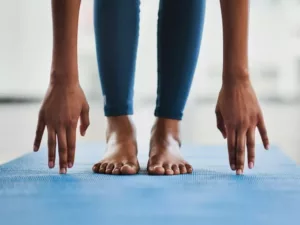
If your hands simply feel stiff or tired, gentle movement may be preferable to another demanding workout.

Easy finger and wrist movements can help you maintain normal movement without deliberately creating another source of fatigue.

The key is to keep the activity comfortable.

Recovery movement should not become a disguised endurance session where you continue adding resistance until your hands are exhausted.

If a movement increases pain or unusual symptoms, stop rather than forcing your way through it.

Focus on Movement Variety and Balance

Your regular training may emphasize particular grip qualities, such as crushing, pinching, supporting, or twisting.

Recovery days can provide an opportunity to step away from the most demanding version of those movements.

For example, you might perform comfortable mobility work or very light finger extension work rather than another heavy gripping session.

The objective is not to find a different exercise that allows you to train just as hard.

It is to reduce the overall demand on your hands while maintaining comfortable movement where appropriate.

Train Another Body Area, If It Truly Reduces Hand Stress

A common mistake is assuming that any workout counts as rest for the hands.

It does not.

A lower-body workout might provide a useful alternative if it does not require substantial gripping. But replacing a grip session with heavy dumbbell work, kettlebell training, pull-ups, or another exercise that heavily loads your hands may simply shift the workload rather than reduce it.

Think about what your hands actually have to do during the alternative activity.

If the goal is to give your grip a break, choose activities that genuinely reduce the demands placed on it.

Take Complete Rest When Necessary

Sometimes the most useful alternative is simply doing less.

You do not have to replace every missed grip session with another exercise.

If your hands are significantly fatigued or you are dealing with symptoms that make ordinary movement uncomfortable, taking time away from aggravating activity can be more appropriate than searching for another way to train through it.

A rest day is not a failed workout.

It is simply a different part of the training process.

Use Training Trends Instead of Judging One Day

Use Training Trends Instead of Judging One Day

Your hands will not feel exactly the same every day.

Trying to make a training decision based on every small change in sensation can make your routine unnecessarily complicated. Instead, look for meaningful patterns.

One Bad Session Does Not Tell the Whole Story

Maybe your grip feels weaker than usual today.

That could be related to poor sleep, a demanding day at work, a previous workout, stress, nutrition, or simply normal variation.

You do not necessarily need to redesign your entire training program because of one disappointing session.

Pay attention to what happens next.

If performance returns to normal after appropriate recovery, the weaker session may have been nothing more than a temporary fluctuation. If the same pattern continues across multiple sessions, however, it becomes more useful information.

Track a Few Useful Details

You do not need a complicated spreadsheet to learn how your hands are responding.

A few simple observations can provide enough context:

  • Training intensity: How challenging the previous session was.
  • Training volume: How many sets, repetitions, holds, or other work you performed.
  • Hand condition: Whether your hands feel fresh, tired, stiff, sore, or unusually uncomfortable.
  • Everyday workload: How much typing, gaming, climbing, lifting, manual work, or other hand-intensive activity you performed.
  • Next-session performance: Whether strength, endurance, coordination, and comfort are returning normally.

Over time, these observations can help you recognize patterns that are difficult to see when you judge every workout independently.

Account for Your Total Hand Workload

Imagine you perform a moderate grip workout three times per week.

That might be perfectly manageable for one person.

But if you also spend several hours gaming, work with your hands all day, climb regularly, and perform additional pulling exercises, the actual workload on your hands may be considerably higher than the grip program suggests.

This is why training frequency cannot be separated completely from everything else you do.

The same workout schedule can produce very different recovery demands depending on the person’s total activity.

Avoid the Two Common Extremes

Avoid the Two Common Extremes

There are two mistakes that can make recovery unnecessarily difficult.

The first is training through everything.

This happens when every sensation is interpreted as something that should simply be overcome. Persistent pain gets dismissed as weakness. Recurring discomfort gets treated as evidence that the exercise is working. A declining performance is met with even more effort.

That approach can turn a manageable training problem into a much bigger interruption.

The second extreme is resting whenever you feel anything at all.

If you expect your hands to feel perfectly fresh before every workout, you may end up avoiding perfectly reasonable training sessions. Normal fatigue is part of demanding physical activity, and you do not need to eliminate every trace of it before training again.

The balanced approach sits between these extremes.

Train when your hands are responding normally. Reduce the workload when recovery is incomplete. Avoid aggravating activity when you are experiencing concerning symptoms. And give yourself permission to change the plan when your current condition calls for it.

Consistency does not mean following the original workout plan regardless of circumstances.

It means continuing to make sensible decisions that allow you to train over the long term.

Build a Simple Rest-or-Train Decision Framework

Build a Simple Rest-or-Train Decision Framework

You can make this process much easier by using the same short check before demanding grip sessions. Ask yourself a few basic questions.

  • How do my hands feel during normal activities? If everyday movements feel normal, that is useful information. If ordinary tasks are suddenly difficult or uncomfortable, pay closer attention.
  • Am I experiencing ordinary fatigue or something unusual? Tired muscles after training are different from persistent pain, numbness, unusual weakness, or other symptoms that do not fit your normal experience.
  • Has my recent hand workload increased? Consider yesterday’s workout, the last several training sessions, and everything else your hands have been doing.
  • Can I perform the planned movements comfortably and with control? If you cannot maintain normal movement quality, forcing the planned workload may not be worthwhile.
  • Would reducing the intensity or volume make more sense today? You do not always have to choose between your full workout and complete rest.

This gives you a simple range of responses:

Current condition Possible response
Hands feel normal and recovery appears adequate Continue with the planned session
Mild fatigue but comfortable movement and normal function Consider a lighter session or reduced volume
Repeated performance decline or recurring discomfort Reduce workload and reassess recovery
Persistent pain, unusual weakness, swelling, numbness Avoid aggravating training and seek guidance

This is not a diagnostic system. It is simply a way to make your training decisions more deliberate instead of automatically following the calendar.

Make Adaptability Part of Long-Term Progress

A good training plan needs structure, but it also needs enough flexibility to respond to reality.

You may have planned a heavy grip session on Tuesday and discover that your hands are still unusually fatigued. Moving that session to Wednesday does not erase your progress.

Likewise, you may have expected to take a complete rest day but wake up feeling recovered and ready for a normal session. There is no rule saying that every rest day must remain completely fixed if your overall program allows appropriate flexibility.

The important thing is not to use flexibility as an excuse to train harder every time you feel good. It works both ways.

Sometimes flexibility means adding training when recovery is clearly adequate. Sometimes it means reducing a workout. Sometimes it means taking the day completely off.

A lighter session is not automatically a failed session.
A rest day is not wasted time.
And one missed workout does not undo weeks or months of consistent training.

The goal is to build a routine that your hands can tolerate and sustain, not simply to complete as many individual workouts as possible.

Rest or Train With Better Awareness

Knowing when to rest and when to train becomes easier once you stop treating every day as an isolated decision. Look at the bigger picture.

Consider how your hands feel during everyday activities, what you have trained recently, how much additional work they have performed, and whether your current symptoms resemble normal fatigue or something unusual.

If your hands are functioning normally and your recovery is adequate, you can usually approach training with confidence.
If you are simply a little tired, reducing the workload may be enough.

But if you are experiencing persistent or worsening pain, unusual weakness, swelling, numbness, restricted movement, or symptoms that interfere with normal function, continuing to aggravate the area is not a sensible way to chase progress.

The strongest training routine is not necessarily the one that asks the most from your hands.
It is the one that allows you to keep training consistently while giving recovery the attention it deserves.

Key Takeaway

Train when your hands are ready, adjust when recovery is incomplete, & rest when your body is giving you a reason to stop.

Instead of asking, “Am I supposed to train today?” ask a better question:

“What level of training makes sense for my hands today?”

That small change in mindset can make your grip training more sustainable, more adaptable, and easier to maintain for the long term.

Thanks for Reading!

How Do You Decide When to Train & When to Rest?
Share Your Thoughts in the Comments!

Recommended Next Reads

Need to Improve Your Grip? I'm Here to Help. As a fitness enthusiast, I explore grip strength, hand training, performance, injury prevention, & recovery to help you train smarter. Whether you're chasing a competitive edge, getting back from an injury, or simply looking for better ways to use & strengthen your hands, you'll find practical ideas & useful tools right here.

Leave a Reply

Your email address will not be published. Required fields are marked *