(Last Updated on August 6, 2026 by Henry)
What Grip Strength Really Means (And Why Beginners Should Care)
Grip strength is one of those things most people never think about until it starts limiting them.

Maybe you’ve noticed your hands giving out while carrying groceries.
Perhaps your grip fails before your back during deadlifts, or forearms burn after a few minutes of climbing, gaming, or working with tools.
Whatever the case, your hands are often the first place your body tells you that something needs attention.
At its simplest, grip strength is the amount of force you can produce and control through your hands.
But it’s much more than simply squeezing as hard as possible.
Grip strength is a combination of your fingers, thumbs, wrists, and forearms working together to help you interact with the world around you.
Everyday activities depend on it.
You perform these actions without a 2nd thought until they become difficult:
- Carrying shopping bags.
- Opening stubborn jars.
- Lifting weights.
- Holding a steering wheel.
- Using hand tools.
- Playing sports.
- Typing on a keyboard.
- Picking up your children.
Grip strength isn’t just about building stronger hands.
It’s about improving your ability to perform the activities that matter most to you.
A strong grip doesn’t begin and end with your hands. Your wrists provide stability, while your forearms generate much of the force and endurance needed to hold, carry, pull, and control objects. When one part of that system is weak or fatigued, the entire chain becomes less efficient.
That’s why grip strength shows up in so many different areas of life.
Athletes rely on it for performance. Tradespeople depend on it throughout the workday.
Office workers and gamers use their hands for hours at a time, while older adults often find that maintaining grip strength helps preserve independence as they age.
For beginners, understanding grip strength can completely change how you think about
movement. It’s not just another fitness metric or a party trick involving a hand gripper:
it’s a foundational physical skill that supports countless activities throughout your life.
The Mechanics of Grip: A Beginner’s Exploration
Grip strength works much like a well-coordinated team. Every part has a role to play, and when one member falls behind, the entire system becomes less effective.
When you pick up a suitcase, hang from a pull-up bar, or turn a screwdriver, you’re not using a single muscle. Instead, you’re relying on a network of structures working together: your fingers create force, your thumb provides opposition, your wrist stabilizes the movement, and your forearm muscles generate the strength and endurance needed to keep everything functioning smoothly.
Your fingers and thumb are the most visible players in this process. They’re responsible for grabbing, pinching, and manipulating objects of all shapes and sizes. Behind the scenes, however, your wrists help maintain proper positioning and control, while the muscles in your forearms do much of the heavy lifting.
Grip strength can be broken down into three key components:
- Strength: Your ability to produce force.
- Endurance: Your ability to maintain that force over time.
- Control: Your ability to apply force accurately and efficiently.
All three are important.
For example, someone may have enough strength to carry a heavy bag from the store, but lack the endurance to carry it all the way to the car. Another person may possess plenty of strength and endurance but struggle with fine motor control when performing delicate tasks.
Understanding this distinction is useful because it helps explain why grip training isn’t simply about squeezing a hand gripper until your forearms are exhausted. Building capable hands means developing a balance between strength, stamina, and coordination.
“Many beginners discover that their hands aren’t necessarily weak,
they’re simply undertrained.”
The more attention you pay to how your hands move throughout the day, the more you’ll realize how frequently they’re involved. From holding a coffee mug to navigating a game controller or swinging a tennis racket, grip strength quietly supports many of the activities we enjoy.
And that’s good news, because unlike some physical qualities, grip strength responds remarkably well to consistent practice.
Exploring the Types of Grip Strength
Grip strength isn’t a single ability. It’s better thought of as a collection of movement patterns, each serving a different purpose.
This is one of the biggest surprises for beginners. Many people assume grip training begins and ends with hand grippers, when in reality, your hands perform a wide variety of tasks every single day.
Understanding the major types of grip strength will help you identify your strengths, weaknesses, and training goals.
Crush Grip
You’ll use crush grip when:
- Shaking hands.
- Squeezing a stress ball.
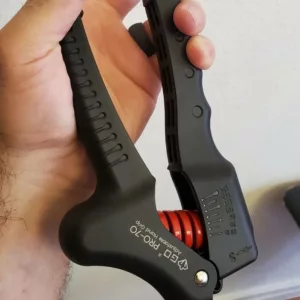
- Closing a hand gripper.
- Holding gym equipment.
This is the type of grip most people immediately think of when they hear the term “grip strength.”
Pinch Grip
Pinch grip involves holding an object between your fingers and thumb without significant assistance from the palm.
Common examples include:
- Holding a book.
- Carrying weight plates.
- Picking up coins.
- Using pliers.
Pinch strength plays a major role in dexterity and hand coordination.
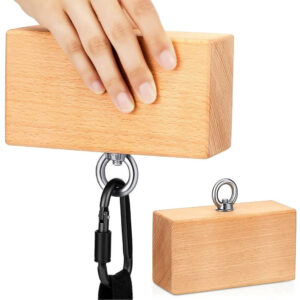
Support Grip
Support grip is your ability to hold onto an object for an extended period of time.
You’ll rely on support grip during:
- Farmer’s carries.
- Pull-ups.
- Carrying groceries.
- Hanging exercises.
- Long work tasks involving tools.
For many people, support grip is where fatigue becomes noticeable first.
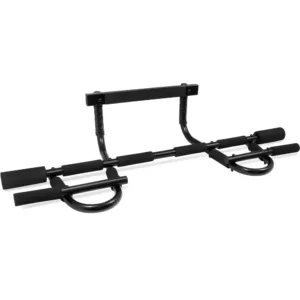
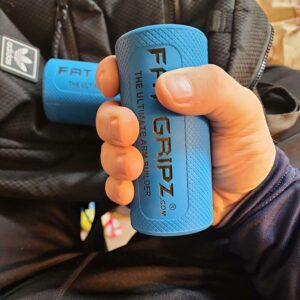
Open Hand Grip
Open hand grip becomes important when handling larger objects that your fingers can’t fully wrap around.
Examples include:
- Holding a basketball.
- Climbing.
- Using thick bars.
- Carrying large containers.
Training open hand strength can improve both hand endurance and overall grip capacity.
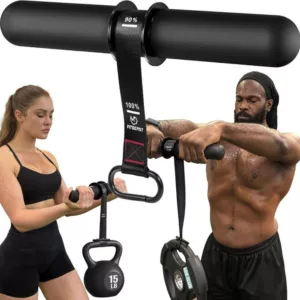
Wrist Strength
Although technically separate from grip itself, wrist strength supports nearly every hand movement.
Strong wrists contribute to:
- Better control.
- Improved stability.
- Reduced injury risk.
- More efficient force transfer.
Weak wrists can often become the limiting factor during sports and strength training.
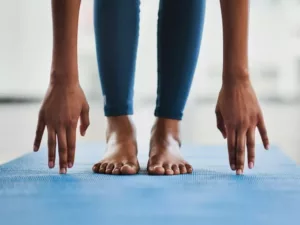
Finger Extension
Grip isn’t only about closing the hand; it’s also about opening it.
Finger extension exercises help:
- Balance hand development.
- Improve mobility.
- Reduce muscle imbalances.
- Promote healthier joints.
Many beginners overlook finger extension entirely, despite its importance for long-term hand health.
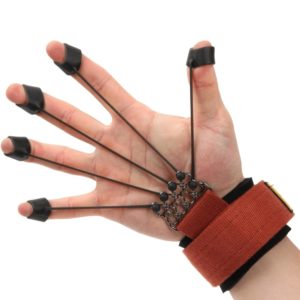
Understanding these different forms of grip strength can completely change how you approach training.
Rather than focusing exclusively on squeezing exercises, you’ll begin to see your hands as a complete movement system capable of producing strength, endurance, & control in many different ways.
Real-World Implications of Grip Strength: Why It’s Important
Grip strength has a way of showing up when you least expect it.
You might notice it while carrying luggage through an airport, tightening a loose screw around the house, or realizing your hands are more tired than your legs after a workout. In many ways, grip strength acts as the bridge between your body and the objects you interact with every day.
That’s why stronger hands can benefit people from virtually every walk of life.
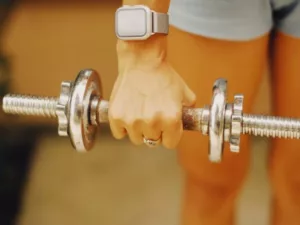
For fitness beginners, improving grip strength can lead to better exercise performance and confidence in the gym. Exercises like rows, deadlifts, pull-ups, and carries all become easier when your hands can keep up with the rest of your body.
“Your grip is often the first point of contact between you and the world around you.
The stronger and more reliable it is, the easier many everyday tasks become.”
Athletes rely on grip for control, power, and precision. Whether it’s holding a tennis racket, controlling a basketball, swinging a golf club, or maintaining position during a grappling exchange, grip strength is rarely the star of the show, but it’s almost always involved.
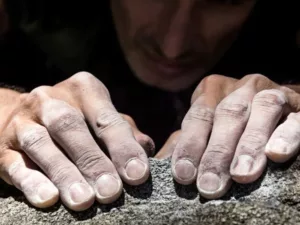
Climbers depend heavily on grip endurance, while gamers and office workers place significant demands on their hands through prolonged keyboard, mouse, and controller use. Even though these activities aren’t traditionally associated with strength, maintaining healthy and resilient hands can help reduce fatigue and improve comfort over time.
Tradespeople experience this firsthand every day. Electricians, mechanics, carpenters, plumbers, and countless others spend hours handling tools, lifting materials, and performing repetitive movements that require both strength and endurance.
Older adults may have one of the most compelling reasons to prioritize grip strength. Research has repeatedly associated grip strength with overall physical function and independence later in life. Maintaining the ability to confidently carry objects, open containers, and perform daily tasks can have a meaningful impact on quality of life.
Ways Grip Strength Impacts Daily Life
- Improves physical performance: Stronger hands support better results in sports, fitness, and recreational activities.
- Reduces everyday fatigue: Tasks like carrying groceries, gardening, or using tools become less demanding over time.
- Supports hand and wrist health: Balanced grip training can help maintain strength, mobility, and resilience.
- Increases confidence: Knowing your hands can handle physical tasks often translates into greater confidence elsewhere.
- Promotes long-term independence: Maintaining grip strength becomes increasingly valuable as we age.
Perhaps the biggest takeaway is this: grip strength isn’t reserved for athletes or fitness enthusiasts. It’s a practical skill that serves almost everyone, regardless of age, occupation, or activity level.
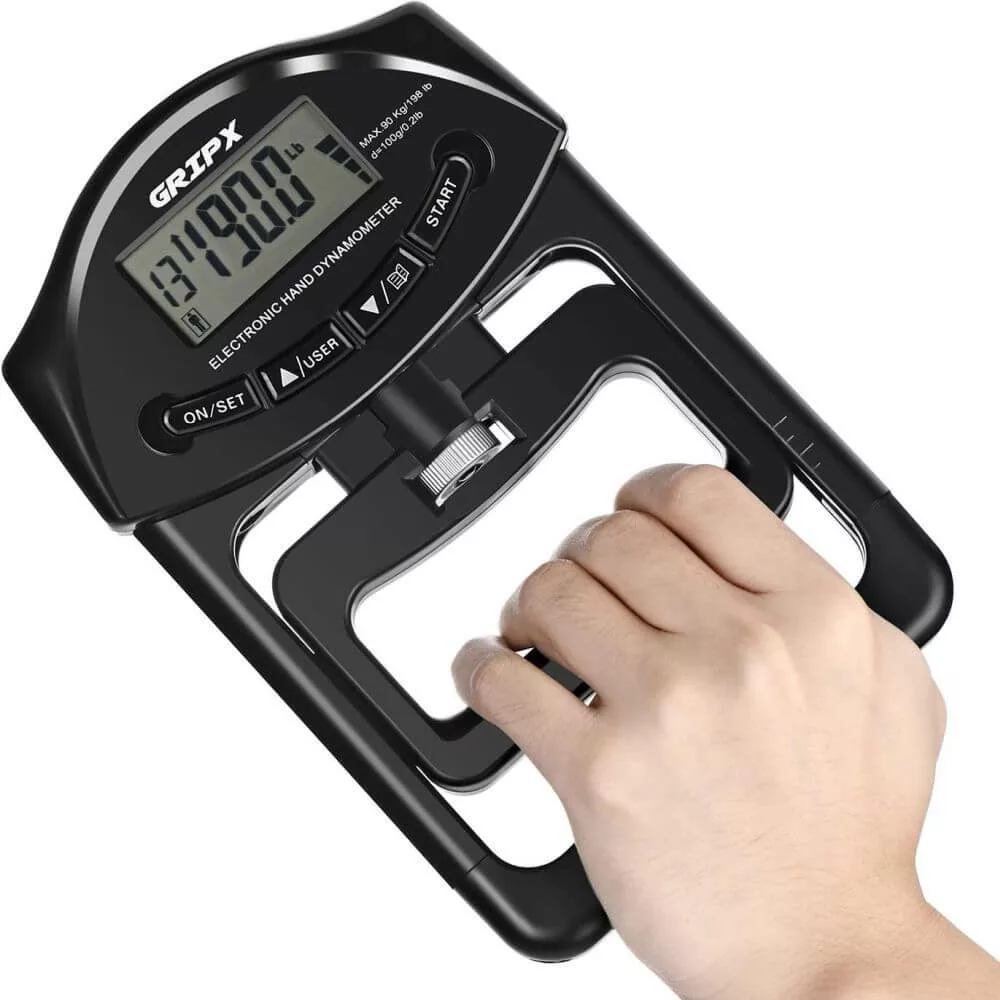
The Best Grip Dynamometer for Home, Sports, & Clinical Use?
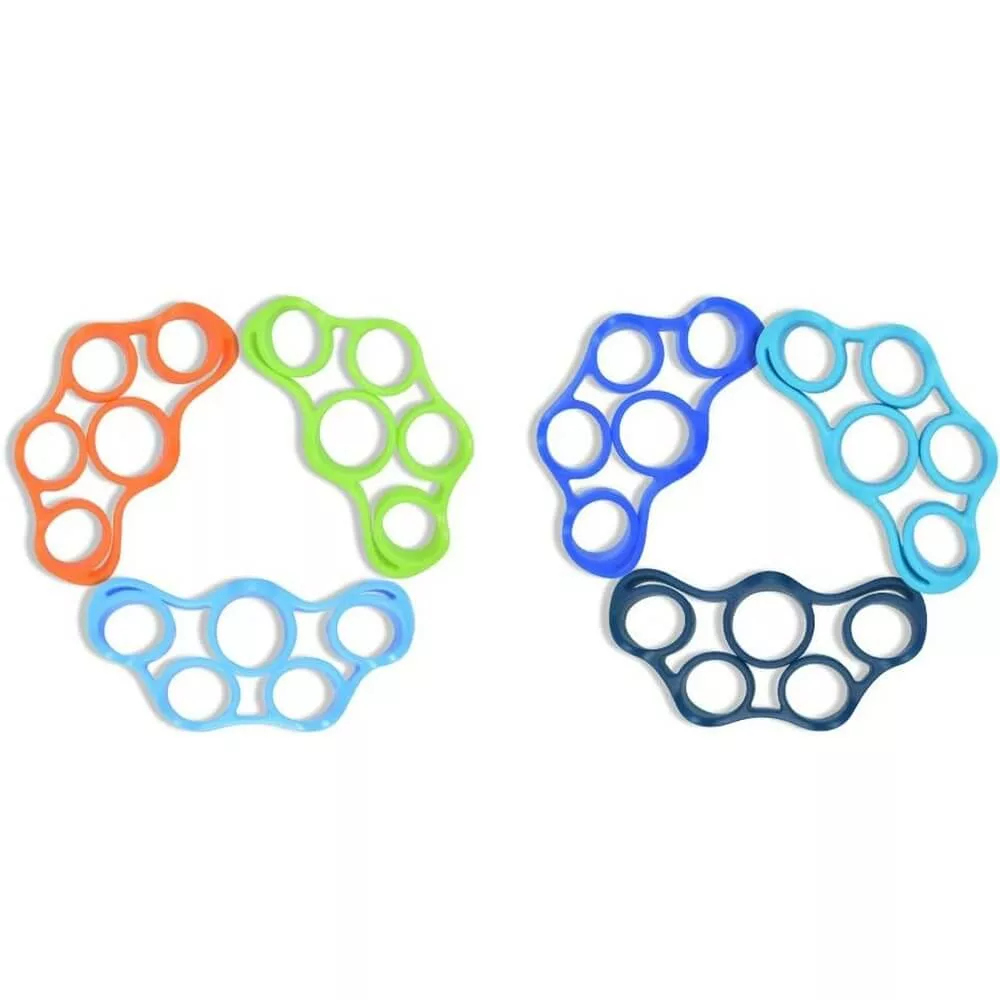
Avoid Elbow Pain with Simple Finger Exerciser
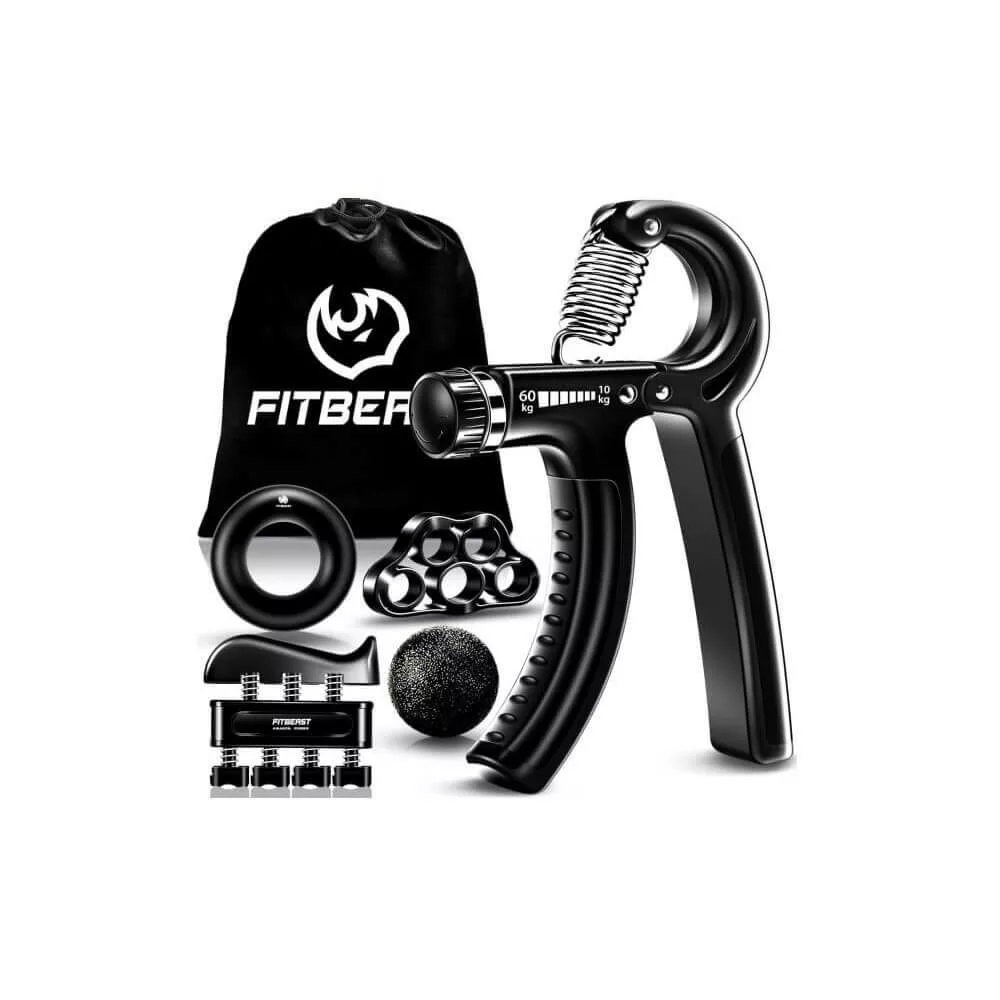
Budget Grip Strengthener Kit With 5 Trainers
Starting Your Journey to Improve Grip Strength
The good news is that improving your grip strength doesn’t require an expensive home gym or years of experience. Like most physical qualities, it responds well to consistency and patience.
If you’re just getting started, begin by focusing on the basics. Train a variety of movements rather than obsessing over squeezing as hard as possible. Your goal should be to build capable, balanced hands that can perform well in everyday life.
Simple exercises like carries, hangs, wrist movements, and finger extension drills can provide an excellent foundation. Over time, you’ll begin to notice that tasks that once felt challenging, whether it’s carrying heavy bags or hanging from a pull-up bar, become much easier.
Your hands contain many small muscles, tendons, and connective tissues that benefit from steady progression rather than sudden increases in training volume.
Remember: It’s important to progress gradually:
- Consistency beats intensity.
- Balance beats specialization.
- Patience beats rushing the process.
If your hands fatigue quickly, struggle with everyday tasks, or simply feel like the weakest link during physical activity, don’t be discouraged.
Everyone starts somewhere, & grip strength is one of the most trainable qualities you can develop.
By taking the time to understand how your hands work and training them intentionally, you’re investing in a skill that can benefit you for decades to come.
Continue Learning
If you’re ready to take the next step in your grip strength journey.
These beginner-friendly guides are a great place to continue:
“Strong hands aren’t built by training one movement repeatedly.
They’re built by developing a balanced and reliable grip over time.”
Whether your goal is to perform better in sports, feel more confident in the gym, reduce hand fatigue at work, or simply maintain your independence as you age, stronger hands are an excellent place to start.
Thanks for Stopping By!
What Does Grip Strength Mean for You?
Share Your Thoughts in the Comments!