(Last Updated on October 1, 2026 by Henry)
Adapt Grip Training to Changing Hands
Your hands don’t have to stay the same throughout your life for grip training to remain useful.
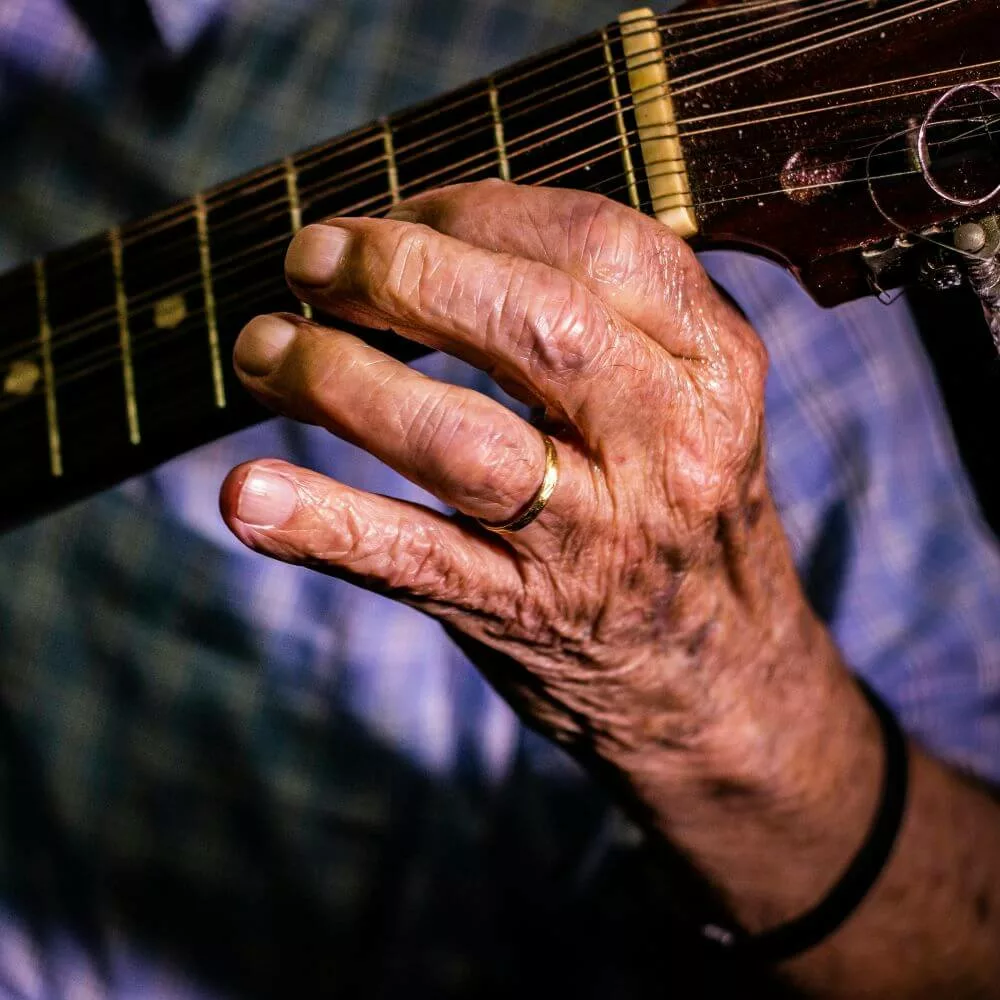
As we get older, it is normal for strength, endurance, mobility, and recovery to change.
Arthritis and other joint problems can also make certain gripping movements feel different from the way they once did.
That doesn’t necessarily mean you need to stop using your hands or avoid resistance altogether.
It means your approach may need to change.
Table of Contents – Explore What's Covered Below
ToggleThe goal isn’t always to squeeze harder, lift heavier, or chase a new personal record.
For aging hands, useful grip training can be about maintaining enough strength and control to handle everyday tasks comfortably and confidently.
If you have a diagnosed joint condition, persistent pain, swelling, or a significant change in hand function, your training approach should also take guidance from an appropriate healthcare professional.
Do your fingers feel stiff when you first wake up in the morning?
Hands feel weak when pulling up your pants, or trying to open a refrigerator?
Hand arthritis can make it really challenging. Here’s where grip exercises can help.
1. Why Grip Strength Still Matters as You Age
Grip strength is closely connected to the things you actually do with your hands.
Opening containers, carrying bags, holding tools, using kitchen equipment, turning handles, exercising, and performing countless small everyday tasks all require some combination of grip strength, endurance, coordination, and finger control.
That makes maintaining useful hand capacity worthwhile even when maximum strength is no longer the main objective.
Everyday Strength Is Still Strength
A strong grip isn’t only useful when you’re lifting a heavy weight.
Being able to hold something securely, control an object without dropping it, or use your fingers for repeated tasks can be just as relevant to everyday independence.
This is one reason grip training for aging hands doesn’t need to revolve around impressive numbers.
A moderate amount of well-tolerated resistance can still give your hands something to work against while keeping the emphasis on useful function.
Strength Can Decline When Activity Declines
Some loss of strength with age is normal, but inactivity can also contribute to declining physical capacity.
If your hands gradually do less, they may become less accustomed to sustained gripping, carrying, squeezing, and other demanding tasks.
That creates an important distinction:
Maintaining capacity isn’t the same as maximizing capacity: You don’t necessarily need to train your hands as hard as possible to benefit from keeping them active and capable.
2. How Arthritis and Aging Can Change Your Hands
Arthritis isn’t one single condition, and people can experience very different symptoms.
Depending on the individual and the joints involved, hands may feel stiff, less mobile, weaker, more sensitive, or simply less comfortable during certain activities.
Age-related changes can also affect strength, recovery, coordination, and tolerance for repeated workloads.
Stiffness Can Change How Movement Feels
A movement that once felt completely ordinary may feel more restricted after periods of inactivity or stiffness.
That doesn’t automatically mean the movement is harmful. It does mean that forcing a joint through an uncomfortable range or immediately applying heavy resistance may not be the most sensible starting point.
Gentle movement can be useful for keeping your hands active, while resistance can be adjusted according to what you can comfortably tolerate.
Comfort Matters More Than the Number on the Gripper
A very strong gripper or heavy resistance tool isn’t automatically a better choice for an older hand.
In fact, a resistance level that is too demanding can make it much harder to control the exercise and may turn a simple training session into an unnecessarily stressful one.
Your training equipment should give you enough resistance to create a useful challenge without requiring you to fight through significant discomfort.
Your Hands May Have Different Good and Bad Days
One of the biggest advantages of adaptable grip training is that you don’t have to use exactly the same resistance every time.
Some days your hands may feel ready for light resistance work. Other days, gentle movement may make more sense.
That isn’t failure or lost progress.
It’s simply a way of matching the training demand to your current capacity.
3. Choose Comfortable Resistance Instead of Maximum Resistance
When training aging or sensitive hands, resistance should be something you can control rather than something you have to survive.
A useful starting point is often a light resistance that allows smooth repetitions without excessive gripping, awkward compensations, or a need to force the final repetitions.
Start Easier Than You Think You Need To
There is very little benefit in discovering that your starting resistance was too high only after your hands have become irritated.
Start with an amount of resistance that feels manageable and see how your hands respond during the session and afterward.
If that level is consistently comfortable, you can gradually increase the challenge later.
Controlled Repetitions Beat Forced Repetitions
Grip exercises don’t have to become a battle.
Squeeze smoothly, hold when appropriate, and release under control. Pay attention to how the fingers, thumb, wrist, and surrounding joints feel rather than focusing entirely on completing a certain number of repetitions.
This also makes it easier to notice when an exercise isn’t agreeing with you.
Gentle Tools Can Be Useful Starting Points
Soft resistance and therapy-oriented tools can make it easier to control how much force you apply.
They can also provide more variety than repeatedly squeezing a hard gripper.
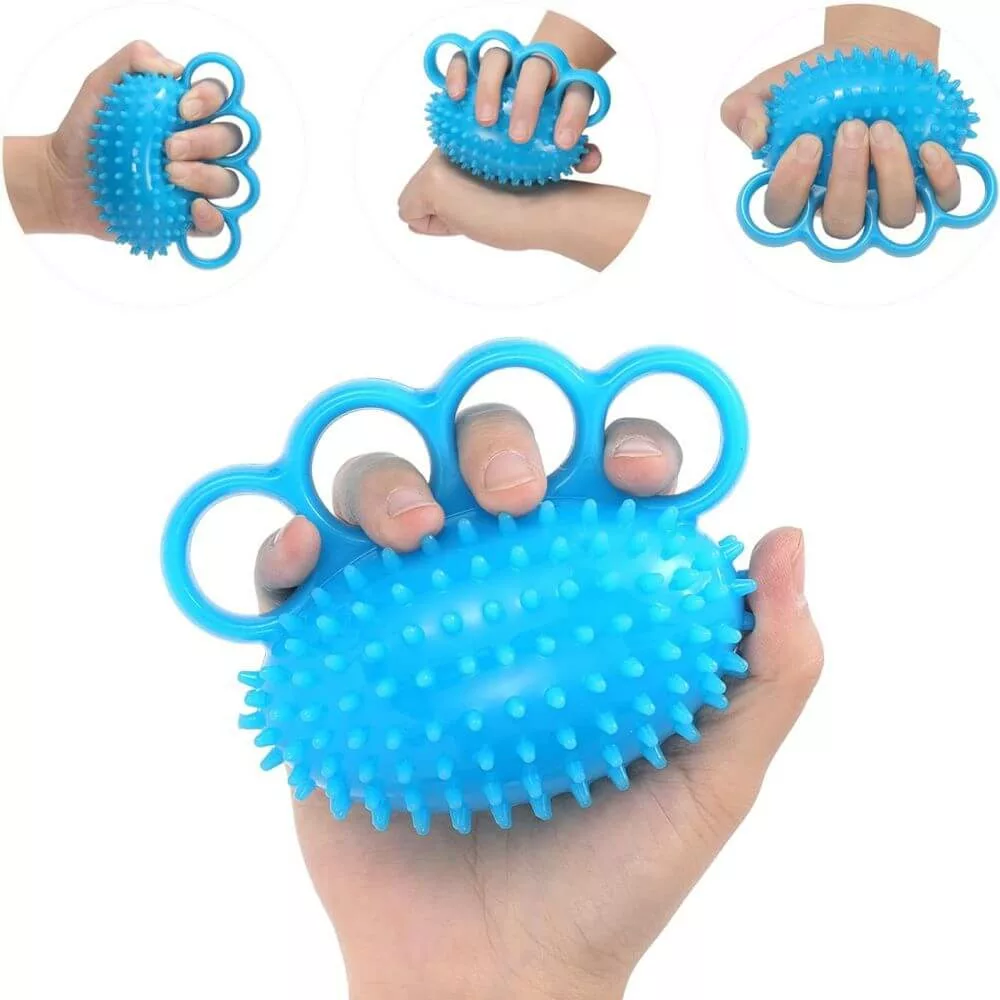
Therapy-Grade Stress Relief & Rehab Crush Grip Trainer
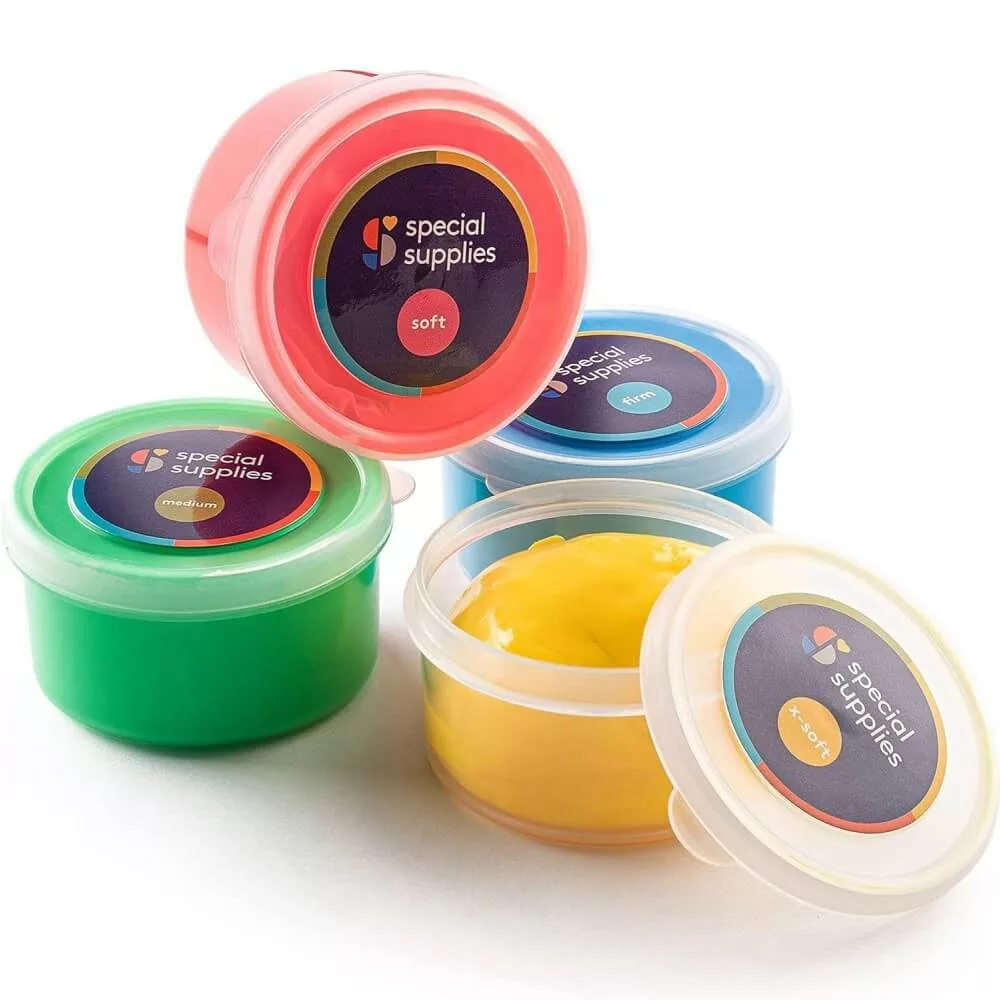
Therapy Putty: Rehab-Grade Hand Recovery & Grip Training?
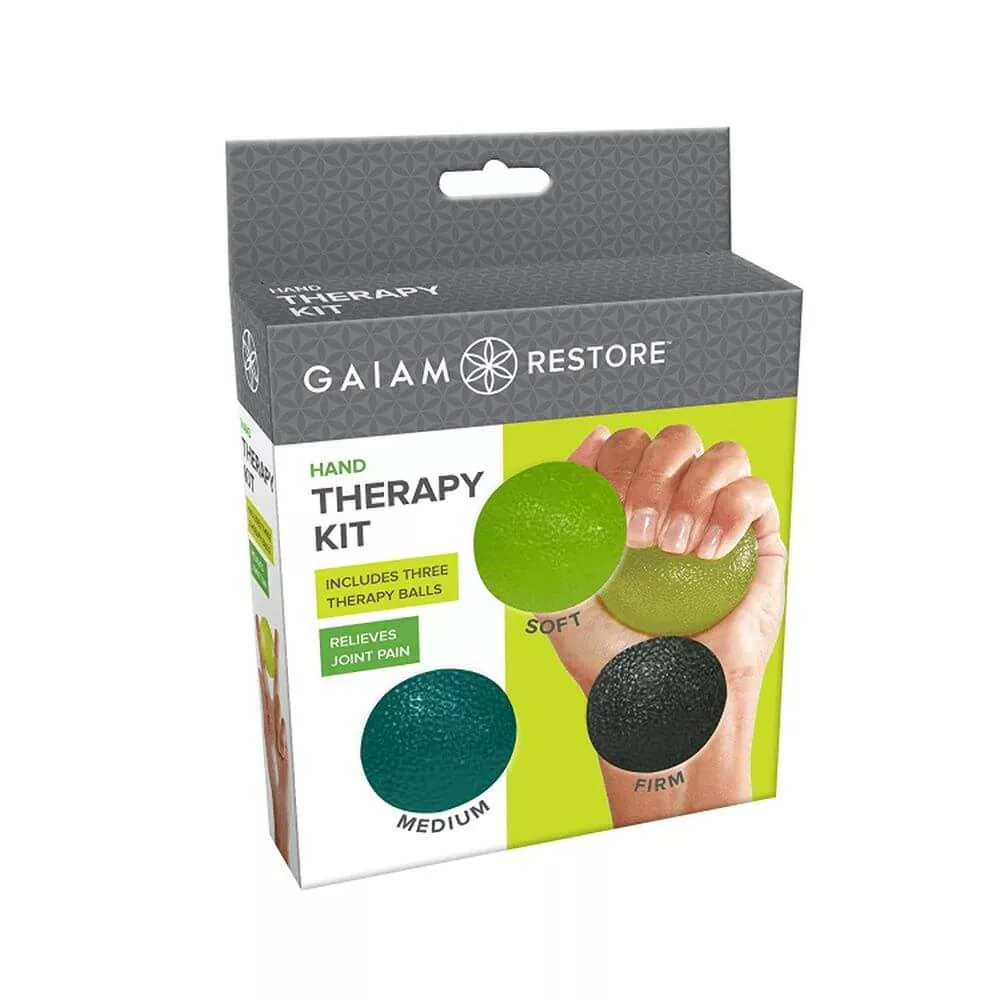
Hand Exercise Balls: Simple Relief & Strength for Tired Hands
The Fanwer Finger Therapy Ball, Therapy Putty, and Gaiam Hand Therapy Kit are examples of tools that can provide relatively gentle ways to work with the hands.
The important part isn’t the product itself. It’s having a resistance level and exercise style that allows you to work within your current tolerance.
4. Don’t Train Grip Strength in Isolation
Your grip doesn’t operate as a single muscle or movement.
Your fingers, thumb, wrist, and forearm all contribute to how you hold and control objects. Training only repeated squeezing can therefore leave out other useful forms of hand movement.
Give Your Fingers More Than One Job
Opening the hand, spreading the fingers, moving the thumb, flexing and extending the wrist, and performing gentle gripping movements can all provide different challenges.
This variety can also make training more interesting and reduce the temptation to repeatedly stress exactly the same movement.
Don’t Neglect Finger Extension
Grip training naturally emphasizes closing the hand.
Finger extension provides the opposite movement and can be a useful complement to a grip routine.
You don’t need to make finger extension another hard workout. A small amount of controlled resistance can simply give the fingers a different task.
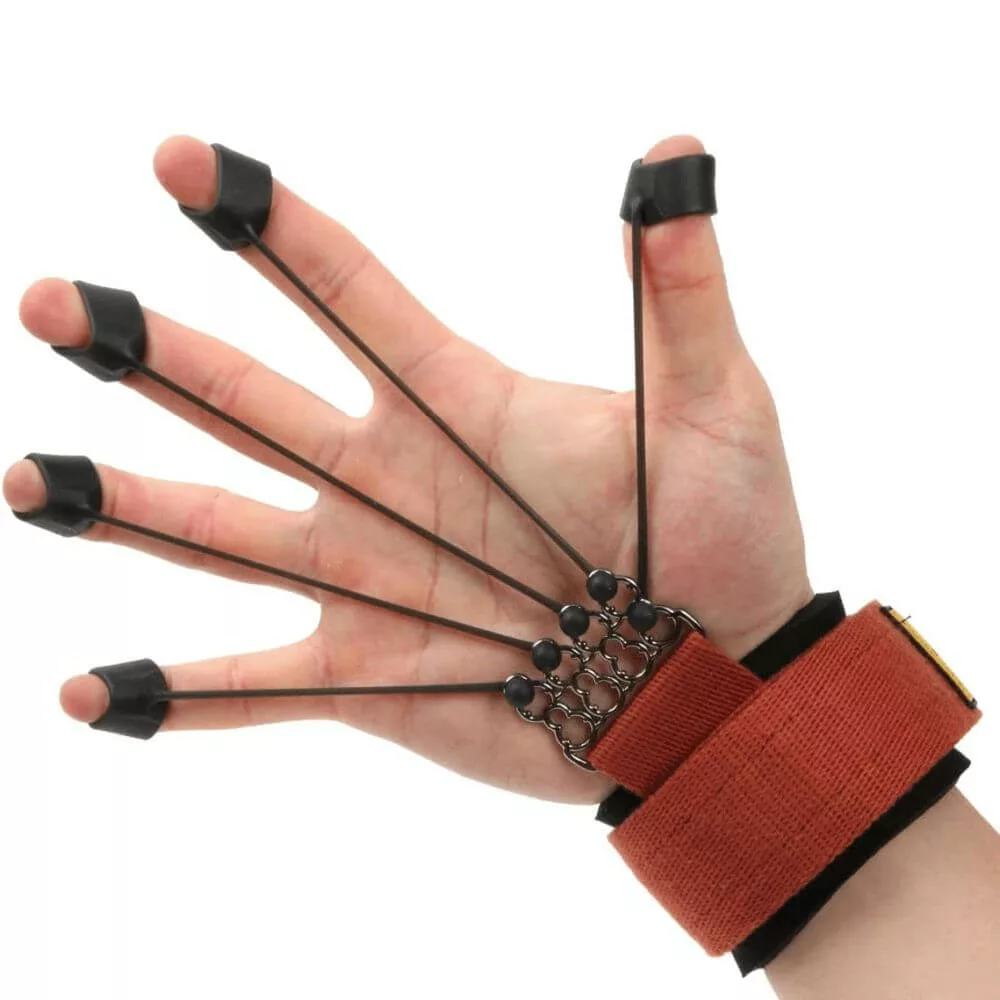
Fancy Finger Exerciser to Build Functional Grip Strength
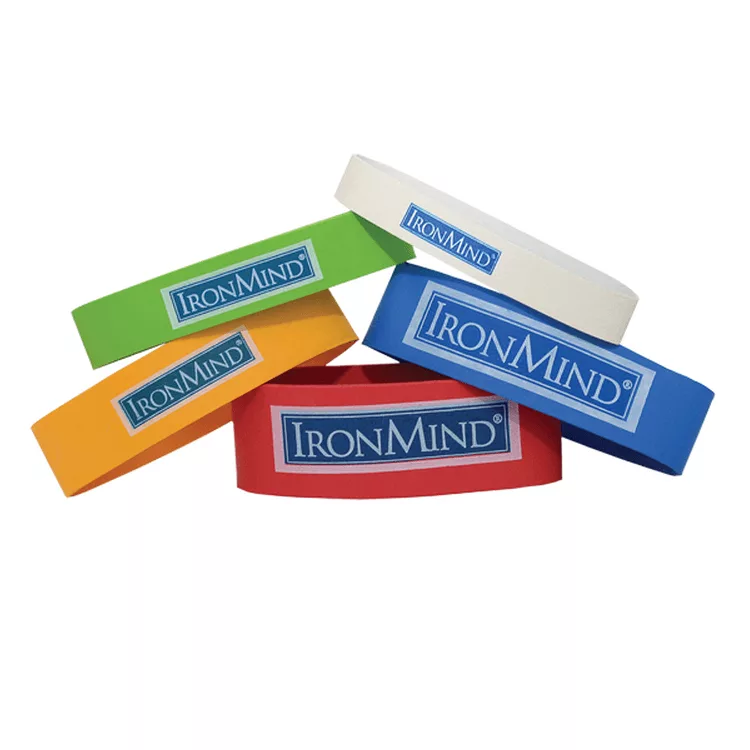
Why are Handbands Staple to Build Hand Muscle Balance?
The Expand-Your-Hand Bands by IronMind and Joagym Hand Extensor Exerciser provide two ways to add finger-extension work alongside gripping exercises.
For a broader look at this type of training, see Finger Extension for Recovery & Balance.
Keep the Wrist and Thumb Moving Too
The thumb plays an especially important role in many forms of grip.
Gentle thumb movements, wrist mobility, and simple opening-and-closing movements can help keep your training broader than repeated squeezing alone.
This doesn’t mean every movement needs resistance.
Sometimes the most useful thing you can do is simply move the hand through a comfortable range.
5. Simple Grip Exercises for Aging Hands
Grip training for aging hands doesn’t need to be complicated.
A small collection of controlled movements can cover several useful aspects of hand strength and movement without turning the session into a demanding workout.
Gentle Squeeze and Release
Use a soft therapy ball, putty, or another comfortable object.
Squeeze gently, hold briefly if comfortable, and release completely.
The emphasis should be on control rather than maximum force.
If squeezing the object produces significant joint discomfort, reduce the resistance or choose a different movement.
Light Putty Work
Therapy putty gives you several ways to involve the fingers and thumb.
You can gently squeeze it, press individual fingers into it, or manipulate it with the thumb and fingertips.
Because the resistance can be relatively low, it can be easier to adjust than a fixed-resistance gripper.
Gentle Pinching
Pinching is useful for everyday tasks such as holding small objects, turning controls, or manipulating items between the thumb and fingers.
Use a light object and focus on controlled movement rather than trying to produce a maximum pinch.
Finger Opening
After gripping or pinching, deliberately opening the hand can provide a simple movement contrast.
Finger-extension bands can add resistance if that feels appropriate, but they aren’t mandatory.
Even opening and closing the hand without resistance can be a useful movement break during long periods of inactivity.
Add Gentle Wrist Movement
Your wrist affects how force is transferred between the hand and forearm.
Simple wrist movements can therefore complement your hand training without requiring heavy resistance.
For ideas on building wrist movement into a grip routine, see Wrist Mobility for Grip Training.
6. How to Adapt Grip Training on Stiff or Sensitive Days
One of the biggest advantages of a sustainable routine is that it can change from day to day.
You don’t have to treat every training session as a test.
Reduce the Resistance
If your usual resistance feels harder than normal, simply use less.
There is no requirement to maintain the same resistance level regardless of how your hands feel.
Reduce the Repetitions
You can also keep the same exercise but perform fewer repetitions.
A shorter session can still provide useful movement and practice without creating the same overall workload.
Change the Exercise
Sometimes the resistance isn’t the only issue.
The particular movement may be what your hands don’t tolerate well.
Instead of forcing it, try another movement that trains a similar quality with less stress.
For example, if repeated squeezing doesn’t feel good, you might use gentle finger extension, light putty manipulation, or comfortable hand-opening movements instead.
Take a Rest Day When You Need One
Rest isn’t the opposite of progress.
If your hands are unusually tired, irritated, or recovering from a demanding period of activity, giving them some time without resistance can be more useful than trying to complete another scheduled workout.
You can still keep normal daily movement as comfortable, while avoiding the temptation to turn every day into a training day.
7. How to Build a Sustainable Hand-Training Routine
The best routine for aging hands is one you can continue adapting over time.
You don’t need a complicated program with many exercises. A few well-tolerated movements performed consistently can be enough to maintain a useful training habit.
Keep Sessions Short and Manageable
Start with a small amount of work.
A few minutes of gentle hand training may be easier to recover from than a long session filled with repeated gripping.
If that level works well, you have plenty of room to gradually build from there.
Consistency Matters More Than Intensity
A sustainable routine doesn’t depend on constantly increasing resistance.
The objective is to keep your hands participating in useful movement and strength work without repeatedly exceeding what they can comfortably recover from.
That makes consistency a more useful target than maximum effort.
Track How Your Hands Respond
Pay attention not only to how your hands feel during the exercise, but also to how they respond later.
If a particular movement repeatedly leaves you more uncomfortable afterward, that’s useful information.
You can reduce the resistance, reduce the volume, change the exercise, or leave it out altogether.
Use Measurements as Information, Not a Test
A hand dynamometer can provide an objective way to observe changes in grip strength over time.
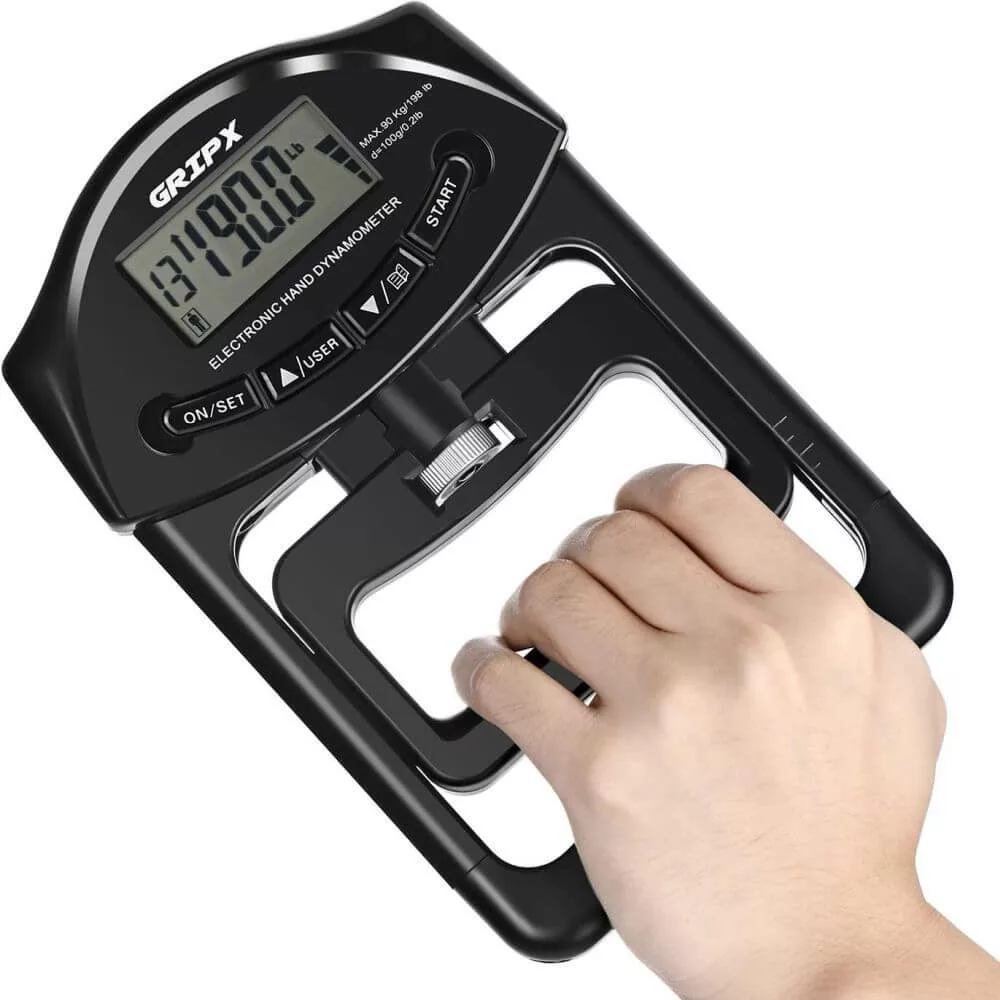
The Best Grip Dynamometer for Home, Sports, & Clinical Use?
The GRIPX Digital Hand Dynamometer can be useful for this type of trend monitoring.
The key is not to turn every measurement into a maximum-effort test. If testing itself aggravates your hands, it defeats the purpose.
Instead, consistent conditions and occasional measurements can help you see whether your general grip capacity is changing over time.
8. When Hand Symptoms Deserve Professional Attention
Grip training can be useful for maintaining physical capacity, but it shouldn’t be used to explain away significant or persistent symptoms.
Sometimes the right next step isn’t another exercise.
Persistent or Worsening Pain
Pain that keeps returning, becomes more intense, or continues despite reducing your training workload deserves attention.
Rather than repeatedly changing exercises and hoping the problem disappears, consider getting appropriate professional guidance.
Significant Swelling or Changes in Function
Noticeable swelling, major changes in hand function, or difficulty performing normal activities are reasons to take the situation seriously.
The same applies if your hand suddenly becomes much weaker than usual.
Numbness or Tingling
Numbness, tingling, or other unusual sensations shouldn’t automatically be treated as ordinary training fatigue.
If these symptoms persist or interfere with normal activities, professional evaluation can help determine what is actually going on.
Don’t Let a Training Plan Override Your Symptoms
A written program is never more important than what your hands are telling you.
Grip training is supposed to support your ability to use your hands, not become another source of problems.
If something repeatedly causes significant symptoms, step back and reassess rather than simply trying to push through.
Keep Your Hands Capable at Every Age
Aging doesn’t mean you have to stop training your grip.
It does mean that the purpose of training may change.
Instead of constantly chasing heavier resistance or higher numbers, you may get more value from maintaining useful strength, comfortable movement, coordination, and confidence with everyday tasks.
The same basic principle applies throughout the routine: Train what you can tolerate,
adapt what you can’t, & give your hands enough recovery to respond.
Some days that might mean light resistance. Other days it might mean gentle movement. And occasionally, the smartest training decision may be to rest.
Recommended Next Reads
The goal isn’t to make aging hands behave like younger hands.
It’s to keep them as capable, useful, & active as possible
while respecting how they change over time.
Key Takeaway
Grip training for arthritis and aging hands isn’t about proving how strong you can still be.
It’s about maintaining useful capacity while adapting resistance, exercise selection, volume, and recovery to what your hands can comfortably handle.
Keep the training controlled, keep your movement varied, and don’t ignore persistent or significant symptoms.
Thanks for Reading!
How Do You Prefer to Maintain Your Hand Health?
Share Your Thoughts in the Comments!