(Last Updated on October 6, 2026 by Henry)

Progress Without Letting Fatigue Outpace Recovery

More grip training isn’t automatically better grip training.
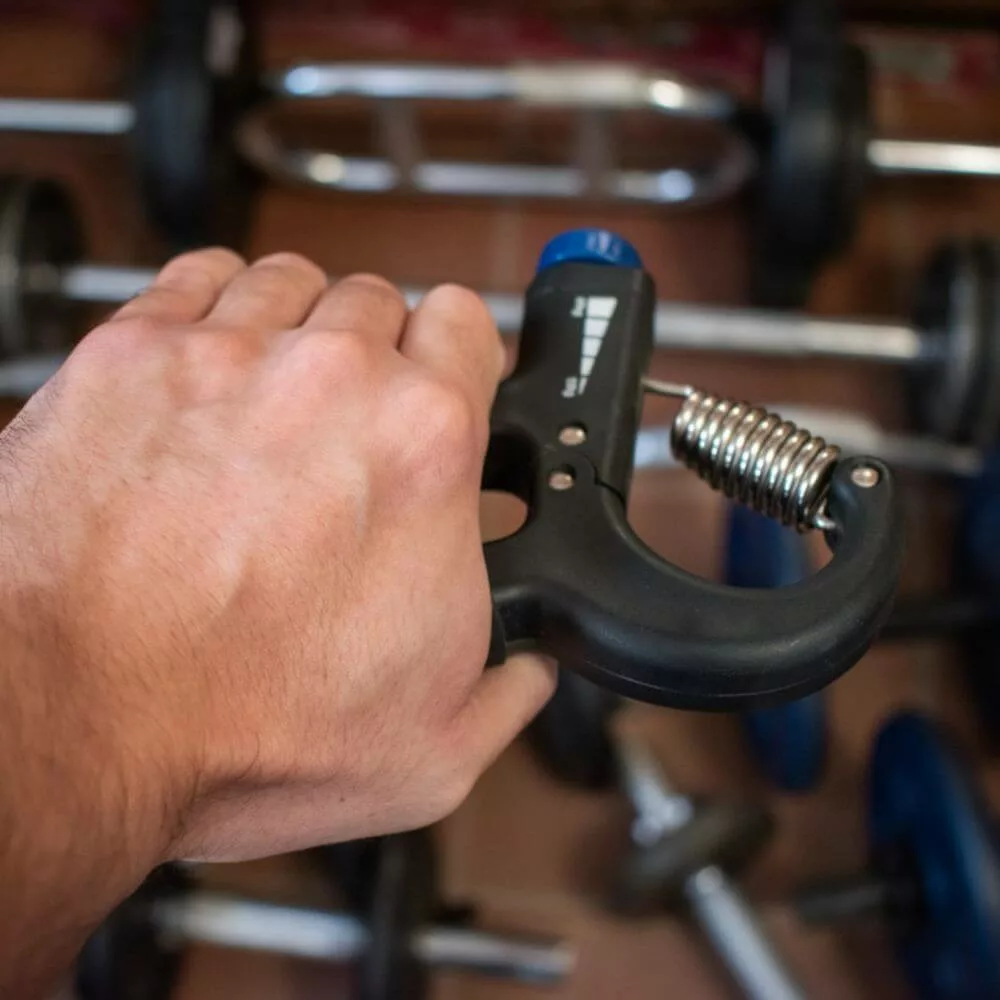
It can be tempting to add another set, another exercise, or another hard session when you want to get stronger.

But your hands and forearms still need enough time to recover from the work you give them.

And grip training volume isn’t limited to what happens during your dedicated grip session.

Your hands may also be working hard during lifting, climbing, grappling, manual work, gaming, typing, or other repetitive activities.

Table of Contents – Explore What's Covered Below

All of that contributes to the workload your hands have to handle.

The goal, then, isn’t to find one perfect number of sets or repetitions.

It’s to find a level of training volume that you can recover from, adapt to, and repeat consistently.

The hardest part about hypertrophy training is not to chase weight increases
because it only reduces the amount of stimulus to the muscle.

1. What Does Grip Training Volume Actually Mean?

1. What Does Grip Training Volume Actually Mean?

Before you can manage your training volume, it helps to understand what you’re actually counting.

Volume Is More Than Sets and Reps

When people talk about training volume, they often think only about sets and repetitions.

Those are useful measurements, but they aren’t the whole picture.

A grip workout can include repeated squeezes, timed holds, pinch work, carries, hangs, wrist exercises, finger extensions, and other movements. The duration of a hold and the resistance you’re using can also change how demanding that work is.

For some exercises, three sets of ten repetitions might be a useful way to describe the workload. For others, three sets of thirty-second holds tell you more.

You don’t need to calculate a perfect volume score for every exercise.

You simply need to recognize that more work, longer work, heavier work, and more frequent work can all increase the demand on your hands.

Your Other Activities Count Too

This is one of the most important things to remember when managing grip training volume.

Your hands don’t know whether the workload came from a gripper, a barbell, a climbing wall, a grappling session, a toolbox, or a keyboard.

If you train grip hard on Monday and then spend Tuesday doing hours of manual work, your hands aren’t experiencing a true rest day just because you didn’t pick up a gripper.

The same applies to other hand-heavy activities.

Your weekly workload matters more than the number written at the top of one particular grip workout.

Volume and Intensity Aren’t the Same

Volume and intensity are related, but they aren’t interchangeable.

Ten easy sets aren’t necessarily equivalent to ten near-maximal sets.

A high-resistance gripper used for a few difficult repetitions can create a very different training demand from a lighter gripper used for higher repetitions. The same principle applies to pinch holds, hangs, carries, and wrist exercises.

This is why simply counting sets can sometimes give you a misleading picture.

You need to consider how much work you’re doing and how demanding that work actually is.

2. Start With a Manageable Amount of Work

2. Start With a Manageable Amount of Work

You don’t need to find your maximum recoverable volume before you can start making progress.

In fact, deliberately starting below that point is usually a much better approach.

Start Below Your Maximum Capacity

A training session should challenge you without requiring you to find out how much work your hands can barely survive.

Start with an amount of work that feels manageable and gives you room to increase it later.

This is particularly important when you’re new to grip training or starting a new exercise.

You don’t yet know exactly how your hands will respond to the movement, resistance, and frequency.

Giving yourself some margin makes that information easier to interpret.

Give Your Hands Time to Adapt

A workload that feels easy during the first session can produce more fatigue than expected afterward.

Your fingers, hands, wrists, and forearms still need time to adapt to new movements and loading patterns.

That doesn’t mean you should avoid challenging training.

It means you shouldn’t assume that being capable of completing a workout automatically means you’re ready to repeat or increase it immediately.

Add Work Only When You Need It

If your current volume is producing steady progress and you are recovering well, there may be no reason to add more.

This is an important mindset shift.

Increasing volume should have a purpose.

You might add work because your current training has become too easy, because you want to develop a particular quality, or because you’re deliberately progressing your program.

You don’t need to add another set simply because you finished the planned ones and still feel like you could have done more.

Sometimes that extra capacity is exactly what gives you room to recover well before the next session.

3. Learn How to Tell When Your Volume Is Working

3. Learn How to Tell When Your Volume Is Working

Managing volume isn’t only about identifying problems.

You also need to recognize when your current workload is doing its job.

Performance Is Stable or Improving

One of the clearest signs that your training volume is reasonable is that your performance remains stable or gradually improves.

You don’t need to set a personal best every session.

If your repetitions, resistance, hold times, or overall training quality are moving in the right direction over time, your current workload may already be appropriate.

Recovery Between Sessions Is Reasonable

Some fatigue after training is normal.

The important question is what happens before your next session.

If your hands feel reasonably recovered and you can perform your next workout without constantly carrying fatigue from the previous one, that’s a useful sign that your workload is manageable.

Your Hands Still Feel Capable Outside Training

Grip training shouldn’t make ordinary hand use feel like a second workout.

You should still be able to perform your normal activities without your hands constantly feeling exhausted.

Of course, demanding jobs and hobbies can change this picture. That’s another reason to consider your total weekly workload rather than looking only at your formal training.

You Can Repeat the Workload Consistently

A workout that feels fantastic once but leaves you unable to train productively for several days isn’t necessarily better than a slightly easier workout you can repeat consistently.

Progress comes from repeated exposure to useful training.

Consistency requires recoverable workloads.

4. Recognize When Grip Training Volume Is Too High

4. Recognize When Grip Training Volume Is Too High

Sometimes the problem isn’t the exercise itself.

The problem is that you’re asking your hands to handle more work than they can currently recover from.

Fatigue Keeps Carrying Into the Next Session

If every grip session begins with fatigue from the previous one, your training schedule may not be giving you enough recovery space.

One tired session isn’t automatically a problem.

A repeated pattern is more meaningful.

Performance Starts Declining

If your usual resistance suddenly feels much harder, your repetitions are consistently falling, or your ability to produce force is declining across several sessions, your workload deserves a closer look.

Don’t automatically respond by training harder.

Sometimes the more productive response is to reduce the workload and allow performance to recover.

Soreness or Irritation Keeps Returning

Repeated soreness, tenderness, or irritation can be another sign that something about your workload needs attention.

That doesn’t automatically tell you exactly what the problem is.

It does give you a reason to look at resistance, volume, exercise selection, training frequency, and everything else your hands are doing during the week.

Everyday Activities Start Feeling Harder

This is an especially useful piece of feedback.

If ordinary tasks begin feeling unusually tiring or uncomfortable after you increase your grip training, don’t dismiss that information simply because your workouts are going well.

Your training is supposed to support your ability to use your hands.

It shouldn’t steadily reduce that capacity outside the gym.

Watch for these signs that your volume may need adjusting:

  • Persistent fatigue: Your hands repeatedly feel tired before the next planned session.
  • Declining performance: Your normal resistance, repetitions, or hold times become harder to maintain.
  • Repeated soreness or irritation: The same areas keep becoming uncomfortable after training.
  • Reduced grip quality: Your hands feel less coordinated, secure, or capable during normal training.
  • Longer-than-usual recovery: You need increasingly more time before your hands feel ready again.
  • Problems across multiple activities: Training, work, sports, or everyday hand use all start becoming harder to tolerate.

The key is to look for a pattern rather than reacting to one difficult workout.

5. Adjust Volume Before You Have to Stop Training

5. Adjust Volume Before You Have to Stop Training

If your workload is too high, you don’t necessarily need to abandon grip training altogether.

Often, a smaller adjustment is enough.

Reduce Sets

The simplest option is often to remove some sets.

If you’ve been doing five hard sets of an exercise, dropping to three may preserve the movement and training stimulus while reducing the total demand.

You don’t have to change everything at once.

Reduce Repetitions or Hold Time

You can also keep the same exercise while reducing how much work each set contains.

For example, shorter holds or fewer repetitions may allow you to keep practicing the movement without accumulating the same amount of fatigue.

Increase Rest Between Sessions

Sometimes the volume of each workout is reasonable, but the sessions are simply too close together.

Adding another recovery day between demanding grip sessions can change the overall weekly workload without requiring you to remove the exercise.

Keep the Movement but Lower the Demand

You don’t always have to choose between full training and complete rest.

A lighter version of the same movement may be appropriate when your hands aren’t ready for another hard session.

That could mean using less resistance, performing fewer repetitions, shortening a hold, or choosing a simpler variation.

Remove Redundant Exercises

Another useful question is whether you are training the same quality repeatedly without getting much additional benefit.

For example, you might perform several different crushing exercises that all place a similar demand on your hands.

Adding another exercise isn’t automatically adding another useful stimulus.

Sometimes the smartest way to manage volume is to remove work that isn’t contributing enough to justify its recovery cost.

6. Don't Increase Everything at Once

6. Don’t Increase Everything at Once

Progressive training works best when you can tell what changed.

If you increase resistance, sets, repetitions, hold duration, and frequency at the same time, you may make a large jump in total workload without realizing it.

Change One Variable at a Time

You can progress by increasing resistance.

Or you can add a set.

Or you can increase repetitions.

Or you can extend a hold.

Or you can train the movement more frequently.

You don’t necessarily need to increase all of them together.

Changing one variable at a time gives your hands an opportunity to adapt and gives you much better feedback about how the new workload is affecting you.

New Exercises Also Add Volume

A new exercise can be more demanding than it looks.

Even if you perform the same number of sets and repetitions as before, the movement may place stress on different tissues or require a different type of grip.

That’s why adding several new exercises to an established routine can produce a surprisingly large increase in total workload.

When introducing something new, give it some room.

You can always add more later.

Harder Isn’t Always Better

It’s easy to equate progress with making every workout harder.

But productive training doesn’t require constant escalation.

Sometimes progress means maintaining a useful workload while your hands become more capable of recovering from it.

Other times, progress means reducing unnecessary work so that the training you keep becomes more effective.

The best workload is the one that helps you move forward.

7. Manage Volume Across Your Whole Week

7. Manage Volume Across Your Whole Week

Your grip training program doesn’t exist in isolation.

Your weekly schedule is what your hands actually experience.

Look Beyond Your Grip Session

Imagine someone performs a hard gripper workout on Monday, heavy deadlifts on Tuesday, climbing on Wednesday, and grappling on Thursday.

Their dedicated grip program may look perfectly reasonable when viewed by itself.

Their hands may still be receiving a substantial amount of high-demand work across the week.

This is why managing volume requires a wider view.

Space Out High-Demand Activities

If several activities place heavy demands on your grip, consider how they interact.

You don’t necessarily need to eliminate them.

You may simply need to avoid stacking your most demanding sessions together whenever possible.

A hard grip workout followed immediately by another activity that heavily loads the same structures can create more cumulative fatigue than either session would suggest on its own.

Give Your Hardest Sessions Room to Recover

Not every day needs to be a hard day.

If you have a few activities that create particularly high grip demands, give your hands enough space around them.

This can be as simple as making some sessions lighter, reducing redundant work, or allowing more recovery between the hardest exposures.

Your hands don’t care which calendar category the workload belongs to.

They only experience the total demand.

8. Use Easier Days to Control Your Total Workload

8. Use Easier Days to Control Your Total Workload

One useful way to manage volume is to stop treating every training day as if it needs to produce the same level of effort.

Hard Days

A hard day might include challenging resistance, heavier carries, difficult hangs, or near-maximal grip work.

These sessions create a meaningful training stimulus.

They also create a meaningful recovery requirement.

Moderate Days

Moderate sessions can provide useful training without approaching your maximum.

You might use lighter resistance, fewer sets, easier variations, or more controlled repetitions.

These sessions can help you maintain training consistency without making every workout a major stressor.

Recovery-Oriented Days

Some days may be better suited to gentle movement, light finger extension, mobility work, or simply rest.

The right choice depends on what your hands have already experienced and how they’re responding.

An easier day isn’t wasted training time.

It can be what allows your harder sessions to remain productive.

9. Track Your Volume Without Making It Complicated

9. Track Your Volume Without Making It Complicated

You don’t need a complicated spreadsheet to learn how your training volume affects you.

A simple record can be enough.

Record the Basics

Exercise → Resistance → Sets → Reps/Hold Time → How It Felt

You can also make a brief note about your overall energy or how your hands felt the following day.

The purpose isn’t to create a perfect database.

It’s to make changes visible.

Look for Trends

Suppose you increase your grip training volume and everything feels fine for one session.

Then you feel increasingly fatigued over the following week.

That pattern is more useful than any single workout.

Likewise, if you gradually increase your workload and your performance improves while recovery remains reasonable, that’s useful information too.

Look at what happens repeatedly.

Use Measurements as Feedback

Objective measurements can sometimes help you see changes that are difficult to judge by feel alone.

A hand dynamometer, for example, can provide a simple way to monitor grip strength occasionally.

But measurement shouldn’t become another form of max-effort training.

You don’t need to test yourself every day to know whether you’re progressing.

Use measurements as information that complements your training log and your subjective response.

The goal is to understand your trend, not to turn every session into a test.

10. When to Reduce Volume or Take a Break

10. When to Reduce Volume or Take a Break

Sometimes adjusting volume isn’t enough.

If you experience persistent or increasing pain, significant swelling or sensitivity, numbness or tingling, unusual weakness, or a meaningful loss of hand function, don’t simply keep modifying your sets and hoping the problem disappears.

The same applies if normal activities are becoming difficult or symptoms continue to worsen despite reducing your training workload.

In situations like these, stepping away from aggravating activity and seeking appropriate professional evaluation is more sensible than trying to solve the problem by manipulating your training numbers.

Training volume is something you can adjust.

It isn’t something you should use to explain away symptoms that need proper attention.

Manage Volume So You Can Keep Training

Managing grip training volume isn’t about discovering the highest amount of work you can tolerate.

It’s about finding the amount of work that produces a useful stimulus while leaving enough recovery capacity for your hands to adapt.

Start → Observe → Adjust → Recover → Progress

Start with a manageable workload.
Observe how your hands and performance respond.

Adjust the volume when your workload is clearly too high or when progress has stalled.

Recover before accumulating unnecessary fatigue.
Then progress again when your hands are ready.

Remember that your grip training session is only one part of your weekly workload.

Lifting, climbing, grappling, manual work, gaming, typing, and everyday activities all contribute to what your hands have to handle.

Recommended Next Reads

The goal isn’t to train as much as possible.
The goal is to train enough that you can keep training.

Key Takeaway

Grip training volume isn’t just about counting sets and repetitions.

The resistance, duration, frequency, intensity, exercise selection, and your other weekly activities all contribute to the workload your hands experience.
Start with a manageable amount, watch how you recover, adjust before problems accumulate, and increase one variable at a time.

The best grip-training volume is the amount you can recover from, adapt to, and repeat consistently.

Thanks for Reading!

Have You Adjusted Training Because of Work or Recovery?
Share Your Thoughts in the Comments!

Need to Improve Your Grip? I'm Here to Help. As a fitness enthusiast, I explore grip strength, hand training, performance, injury prevention, & recovery to help you train smarter. Whether you're chasing a competitive edge, getting back from an injury, or simply looking for better ways to use & strengthen your hands, you'll find practical ideas & useful tools right here.

Leave a Reply

Your email address will not be published. Required fields are marked *