(Last Updated on October 10, 2026 by Henry)
- Name: TWO STONES Hangboard
- Category: Hangboard / Finger Strength Training
- Purpose: Finger strength, grip endurance, and climbing progression
- Rating: 4.8 / 5 stars
- Availability: Amazon (Prime Delivery)
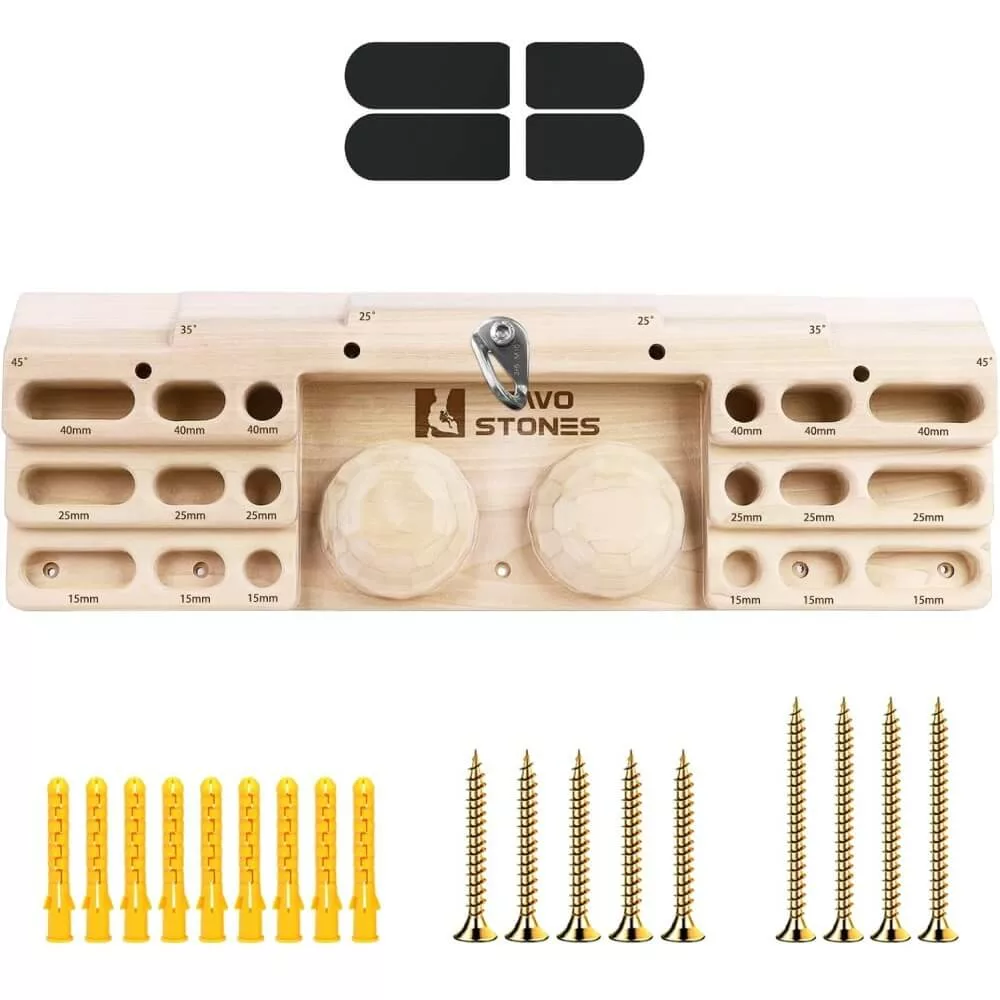
- Grip Variety: Slopers, pockets, spherical holds, and rails
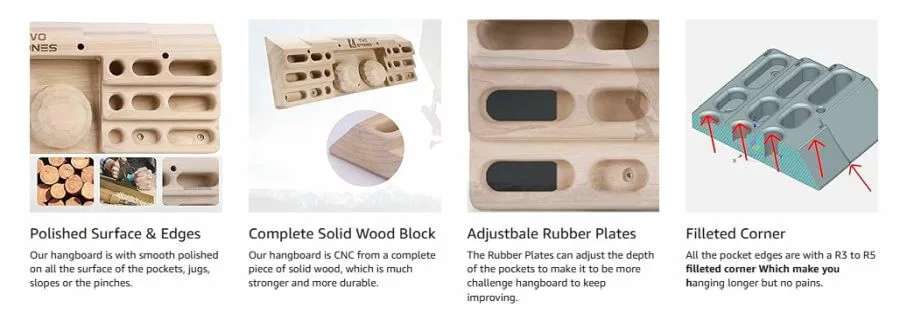
- Wooden Construction: CNC-milled wood with rounded ergonomic edges
- Progressive Training: Adjustable accessories for scalable hangs


Can Your Hands Hold On When Everything Else Says Let Go?
Learn How to Build a Stronger Support Grip
✋ Overview: What Problem Does TWO STONES Hangboard Solve?
Natural Wood Feel & Scalable Finger Strength Progression
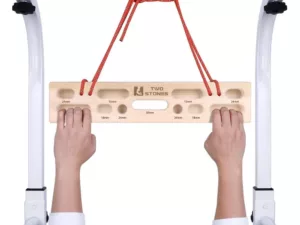
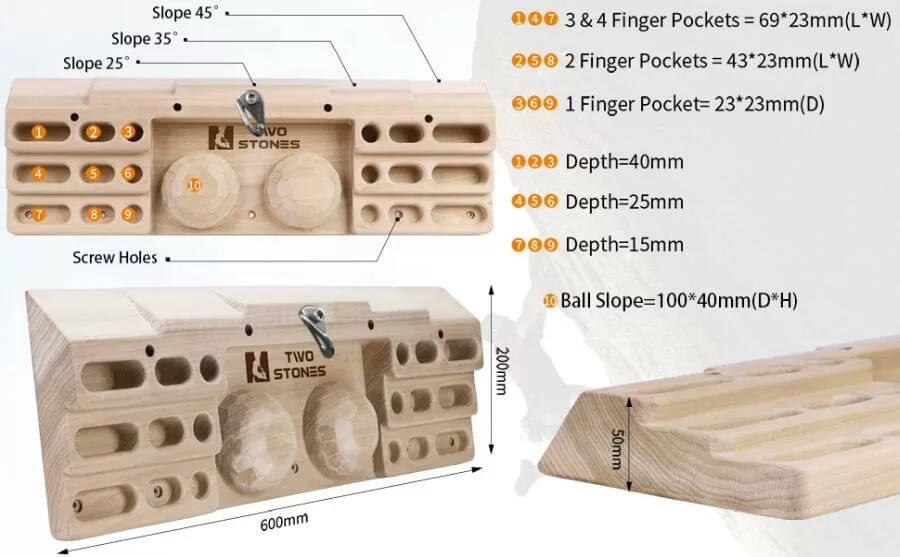
The first thing I noticed about this hangboard was how smooth and skin-friendly the wood felt compared to harsher resin boards. The rounded edges immediately made longer hangs feel more comfortable, especially during warm-up sets and moderate-volume training sessions. Instead of aggressively digging into the skin, the holds feel controlled and predictable.
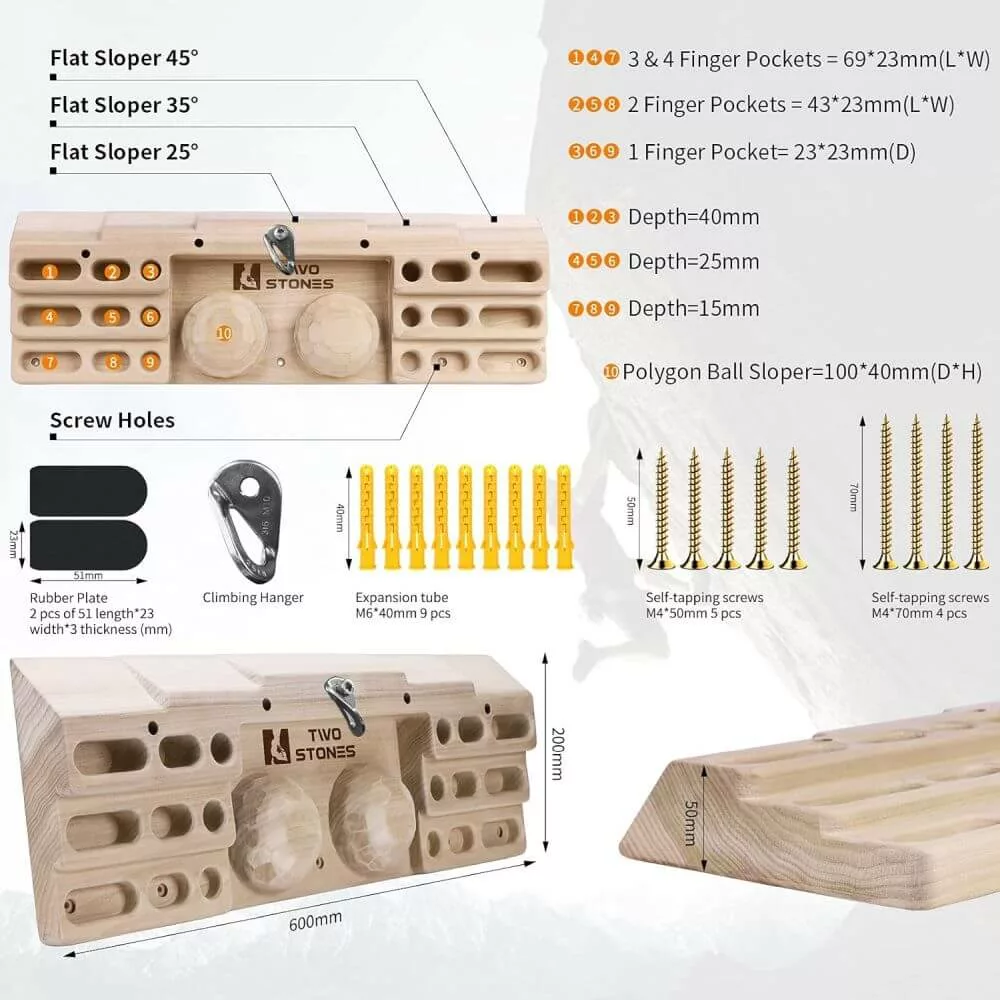
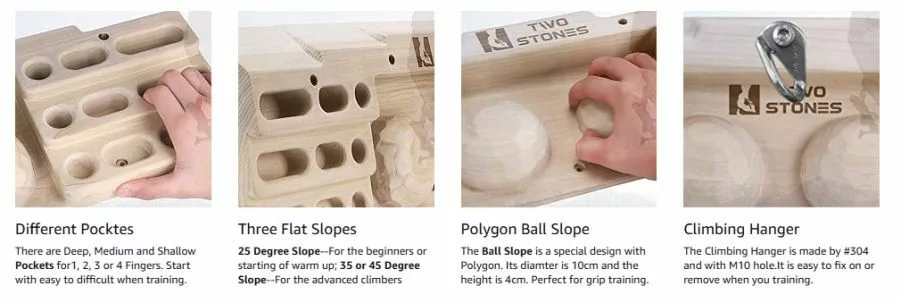
What stood out most to me was the variety of grip options packed into a relatively compact board. The mix of pockets, slopers, spherical holds, and edge depths creates a setup that feels suitable for both newer climbers and more experienced athletes trying to refine finger strength. I especially liked how the pocket depths gradually increase in difficulty rather than jumping straight into extremely small edges.
The spherical slopers add a different training stimulus than traditional hangboards. They create more instability through the hands and wrists, which increases forearm engagement during hangs and pull-up variations.
The board also feels solid overall. Since it’s CNC-milled from a single wood block instead of assembled from multiple pieces, the structure feels dense and durable during use. Even under dynamic movement and weighted hangs, the setup appears stable once mounted correctly.
For climbers building long-term finger strength progression at home, this feels like a balanced and approachable training tool rather than an overly aggressive specialist board.
⚖️ Pros & Cons: TWO STONES Hangboard
Grip Variety, Comfort, And Long-Term Usability
The TWO STONES Hangboard balances progression-focused grip training with skin-friendly comfort extremely well. The wide grip variety keeps sessions versatile, while the rounded wooden edges reduce discomfort during repeaters and long dead hangs.
It feels approachable for developing climbers, yet still challenging enough for more advanced athletes using smaller pockets and spherical holds. The only real downsides involve the included mounting hardware and slightly compact spacing for broader users.
- Skin-Friendly Texture: Smooth wooden surface feels comfortable during hangs
- Grip Variety: Large range of pockets, slopers, and rails
- Rounded Ergonomics: Reduces finger discomfort during longer sessions
- Spherical Holds: Improves wrist stability and grip engagement
- Wide Skill Range: Suitable for beginners and advanced climbers
- Hardware Quality: The included mounting hardware could be better
- Compact Layout: May feel narrow for broader shoulders
- Advanced Ceiling: Elite climbers may want smaller edge options
Still Looking for the Right Tool?
Explore Similar Support Grip Trainers
TWO STONES Hangboard: Ranking 92 out of 100
Balanced Progression, Comfort, And Long-Term Climbing Utility
🎯 Who Should Use TWO STONES Hangboard?
Climbers Focused On Progression & Tendon Conditioning
This hangboard works especially well for climbers who want a versatile home training station without immediately jumping into extremely aggressive edge sizes. The varied pocket depths and more forgiving hold shapes make it approachable for intermediate climbers while still offering enough progression potential for experienced users.
- Beginners: Can safely build tendon strength and hanging endurance
- Intermediate Climbers: Great for repeaters, offsets, and progression work
- Advanced Athletes: Slopers and spherical holds increase grip complexity
- Home Gym Users: Compact setup for year-round grip development
Beginners can use the deeper pockets and positive edges to safely build tendon strength, hanging endurance, and finger conditioning. The smoother wooden surface also helps reduce excessive skin wear during early adaptation phases.
Intermediate climbers will likely get the most value from this board. The combination of 1, 2, 3, and 4-finger pockets creates plenty of opportunities for structured progression work, offset hangs, repeaters, and pull-up variations.
Advanced athletes can still benefit from the slopers, smaller pockets, and instability created by the spherical holds. The added grip complexity challenges wrist positioning and hand engagement in a way that traditional flat-pocket boards sometimes do not.
This setup also fits well for boulderers, sport climbers, calisthenics athletes, obstacle course racers, and home gym users wanting stronger hands and forearms.
For people trying to consistently train grip strength indoors without relying entirely on climbing gym access, this board covers a wide range of training needs.
My Rating Summary
- Build Quality: 9.4 / 10
- Ease of Use: 9.1 / 10
- Comfort: 9.5 / 10
- Resistance Quality: 9.0 / 10
- Progression Potential: 9.2 / 10
- Value for Money: 9.1 / 10
Technical Details
- Weight: 2.1 kg
- Dimensions: 600 x 20 x 4.8 cm
- Material: Natural CNC-milled wood block
- Use case: Grip, wrist, finger, and forearm strength training
📈 Where TWO STONES Hangboard Fits In Grip Strength Progression
Balanced, Long-Term Progression, & Tendon Conditioning
This hangboard sits in a balanced position within grip strength progression. It is challenging enough to develop serious finger strength, but not so extreme that newer climbers are forced into risky positions immediately. That balance makes it useful across a surprisingly wide range of skill levels.
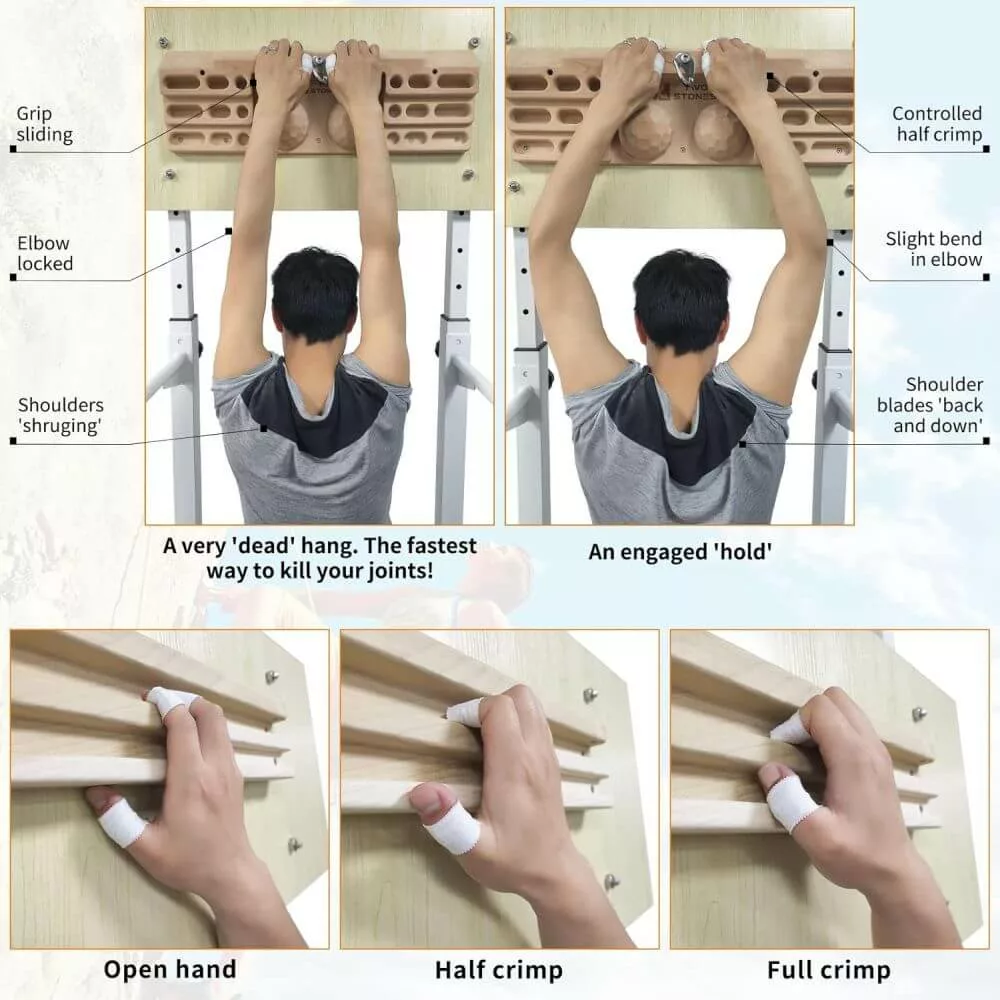
The deeper pockets and larger holds allow beginners to safely introduce hanging volume while gradually adapting connective tissue and finger tendons. This is important because finger strength usually develops more slowly than muscular pulling strength. A board that is too aggressive too early often leads to overuse problems instead of sustainable progress.
As users improve, the smaller pockets, slopers, and edge variations provide progressively harder loading options. The gradual pocket depth transitions make structured progression easier to manage without massive jumps in difficulty.
The spherical slopers also add a unique layer of instability and open-hand grip training. This improves overall hand engagement and wrist control rather than only focusing on strict crimp strength.
Most climbers will not outgrow this board quickly. While elite climbers may eventually want smaller edges or more specialized micro-hold systems, this setup still works extremely well for maintenance sessions, warm-ups, repeaters, rehabilitation work, and endurance-focused training cycles.
💪 Training Benefits & Strength Transfer Potential
Finger Endurance, Pulling Strength, Wrist Stability, And Climbing-Specific Grip Control
The biggest benefit of this hangboard is how many different grip patterns it trains within a single compact setup. Instead of only targeting crimp strength, the combination of slopers, pockets, and spherical holds develops broader hand engagement and forearm recruitment.
The pocket progression helps improve finger flexor strength and tendon conditioning over time. Climbers performing repeaters, dead hangs, or offset hangs will likely notice improved grip endurance during longer climbing sessions and better control on smaller holds outdoors.
The slopers create a different stimulus than traditional edge hangs. Open-hand grip positions place more emphasis on friction control, wrist positioning, and forearm tension management. That transfer becomes noticeable on volume climbing, compression movements, and slope-heavy boulders.
I also noticed that the spherical holds increase overall hand fatigue faster than standard pockets. Since the grip position is less stable, the thumb, wrist stabilizers, and smaller forearm muscles have to work harder to maintain positioning. That added instability can improve overall grip coordination and body tension.
The board also works well for pull-up variations, lock-off training, assisted one-arm hangs, scapular engagement drills, and core integration exercises.
Because the texture is smoother than aggressive resin boards, longer sessions feel easier on the skin. That allows for more consistent weekly training volume without tearing up the hands.
For climbers focused on sustainable finger strength gains and better overall climbing control, this board offers strong real-world transfer potential.
Good at Squeezing, But Can You Hang On?
Learn How Support Grip Builds Holding Strength
🧠 Performance & Feel During Training
Smooth Wooden Control, Progressive Loading, And Stable Grip Feedback
During training, this board feels noticeably more comfortable than many aggressive resin hangboards. The polished wooden texture creates enough friction for controlled hangs while remaining gentle on the skin during higher-volume sessions. Even after multiple sets, the holds avoid the abrasive “sandpaper” sensation that some climbing boards produce.
The varying pocket depths create a smooth progression in resistance. The deeper pockets feel stable and confidence-inspiring during warm-ups, while the smaller edges quickly increase forearm tension and finger recruitment. That gradual transition makes it easier to scale sessions based on fatigue and recovery levels.
I also noticed the spherical holds create a very different type of fatigue compared to standard pockets. The instability forces the wrists and thumbs to work harder, especially during pull-ups and offset hangs. The forearms light up quickly when maintaining tension on those rounded surfaces.
Hand positioning generally feels natural thanks to the rounded R5 edge shaping. Even during longer dead hangs, pressure distribution across the fingers feels more controlled and less sharp than on many smaller-edge training boards.
The slopers also provide useful open-hand training without feeling excessively punishing. They require careful tension management rather than brute-force crimping, which helps develop more balanced grip strength.
Overall, the board feels versatile during training sessions. It supports everything from light tendon conditioning work to more demanding finger strength sessions without feeling overly specialized in one direction.
🏗 Build Quality & Long-Term Durability
Solid CNC Wood Construction, Stable Load Handling, And Long-Term Reliability
The overall build quality feels strong and confidence-inspiring. Since the board is CNC-milled from a complete block of natural wood instead of assembled from multiple sections, the structure feels dense and rigid during use.
The machining quality is one of the better aspects of the board. The edges are smooth, the pockets are evenly finished, and there are no rough transitions or sharp pressure points that would require sanding before use. That attention to finishing improves both comfort and long-term durability.
The wooden surface should also age well over time. Unlike aggressive resin boards that can chip or become overly abrasive, natural wood tends to maintain a more consistent feel even after years of regular training. Minor chalk buildup can be cleaned easily with light brushing.
Several user reviews also noted that the board remains stable under repeated heavy loading without visible wear or loosening once mounted properly.
The included mounting hardware appears functional, although stronger third-party screws and anchors may provide extra long-term security depending on wall type and installation method. That is probably the weakest aspect of the overall package.
Outside of that, the board itself feels highly durable and capable of handling years of regular finger training.
🏠 Everyday Usability & Practicality
Compact Home Setup, Multi-Function Training, And Consistent Daily Use
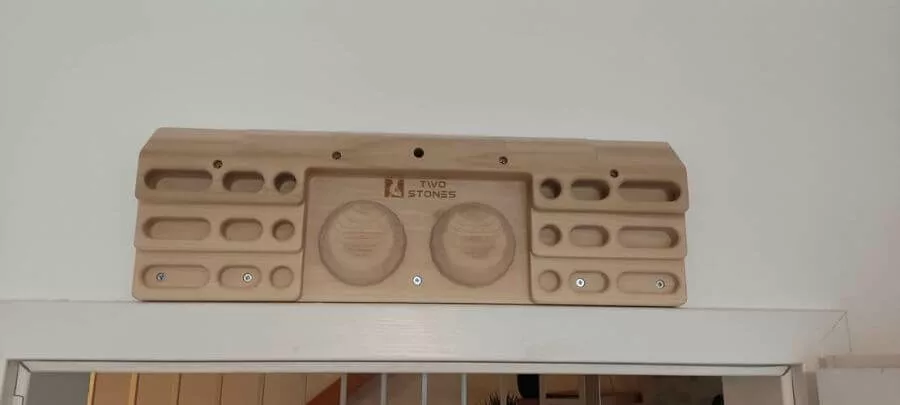
One of the biggest advantages of this board is how practical it feels for daily use. The compact footprint allows it to fit comfortably above doorways or inside smaller home gym setups without taking over an entire room.
The hold variety also reduces the need for multiple separate grip tools. Since the board combines pockets, slopers, edges, and spherical grips, it supports a wide range of exercises within one station.
The setup is relatively straightforward overall. Once mounted securely, the board works well for quick warm-up sessions, short finger maintenance workouts, structured hangboard routines, and supplemental forearm training throughout the week.
I also like that the smoother wooden texture makes frequent sessions more manageable on the skin. That becomes especially useful during periods of higher climbing volume where recovery matters more.
The included rubber plates add another practical progression option. Instead of immediately jumping between large difficulty gaps, users can create smaller progression steps for more controlled strength development.
For home climbers trying to stay consistent with grip training year-round, this board integrates very naturally into everyday routines.
✅ Final Verdict: Is TWO STONES Hangboard Worth It?
Balanced Progression, Strong Comfort, And Long-Term Climbing Value
This hangboard strikes a strong balance between accessibility and long-term progression. It avoids feeling overly beginner-oriented while still remaining approachable enough for climbers who are newer to structured finger training.
What impressed me most was the combination of comfort and versatility. The rounded wooden holds feel significantly friendlier on the skin than many harsher training boards, yet the variety of pockets, slopers, and spherical grips still creates plenty of training intensity when needed.
The board also feels thoughtfully designed for progression. Instead of forcing climbers into extreme edge sizes immediately, it provides manageable difficulty scaling that supports safer tendon adaptation and more sustainable long-term strength development.
I especially like the inclusion of the spherical holds because they create additional wrist and forearm engagement that many standard hangboards lack. That extra instability adds variety to training sessions and improves overall grip control.
The mounting hardware could certainly be improved, and larger athletes may wish for slightly wider spacing between some holds. Still, those are relatively minor complaints compared to the overall training value the board delivers.
For climbers building finger strength at home, maintaining climbing fitness between gym sessions, or improving overall grip endurance, this is a capable and well-rounded training tool.
Thanks for Checking it Out!
Which Progressive Hangboard Do You Prefer?
Share Your Experience in the Comments!
Climbing With Finger Pain? Learn About Finger Pulley Injuries & How to Train Smarter
& Browse the Grip Training FAQ for Quick Answers