(Last Updated on October 10, 2026 by Henry)
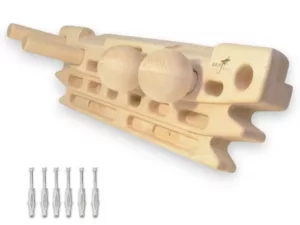
- Name: TWO STONES Portable Hangboard
- Category: Support Grip Strength Equipment
- Purpose: Portable finger strength & climbing grip progression
- Rating: 4.6 / 5 stars
- Availability: Amazon (Prime Delivery)
- Portable Wooden Design: Lightweight travel-ready finger trainer
- Progressive Pocket System: Multiple hold depths for scalable hangs
- Single-Block Construction: Durable CNC-milled wood structure
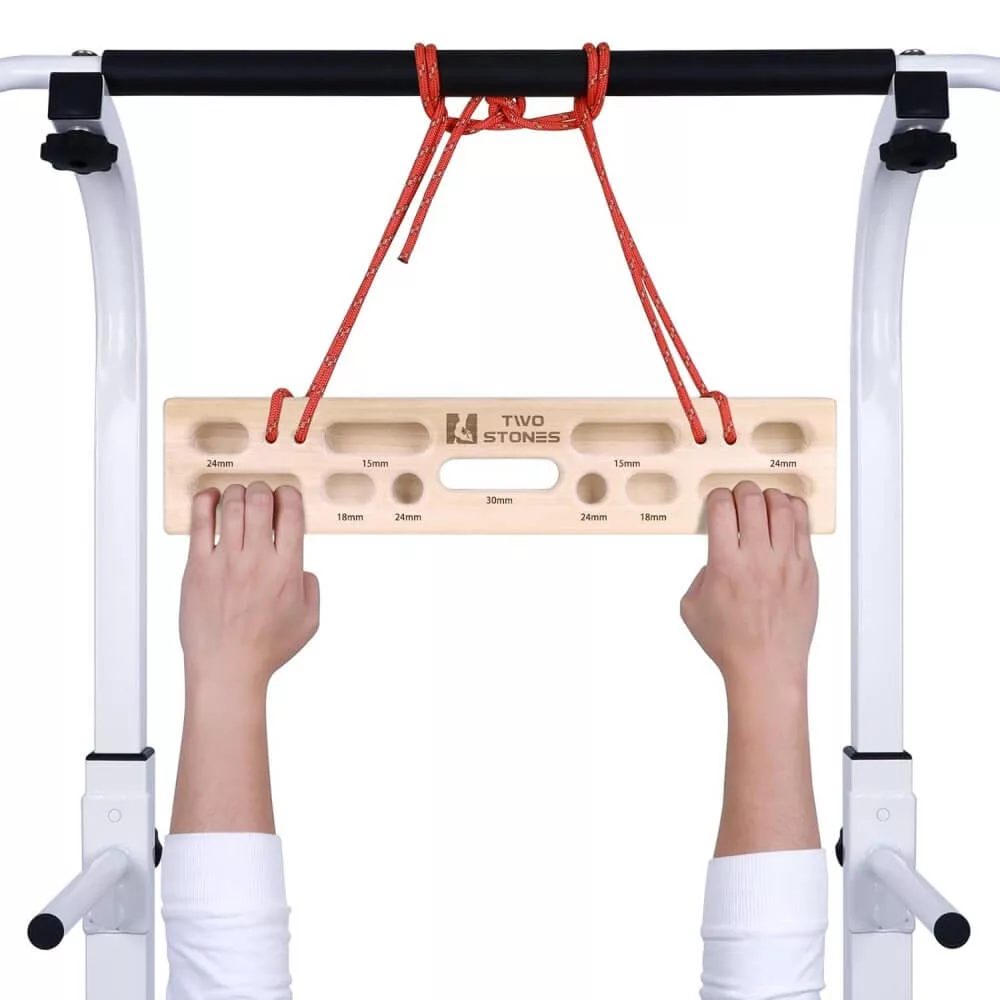
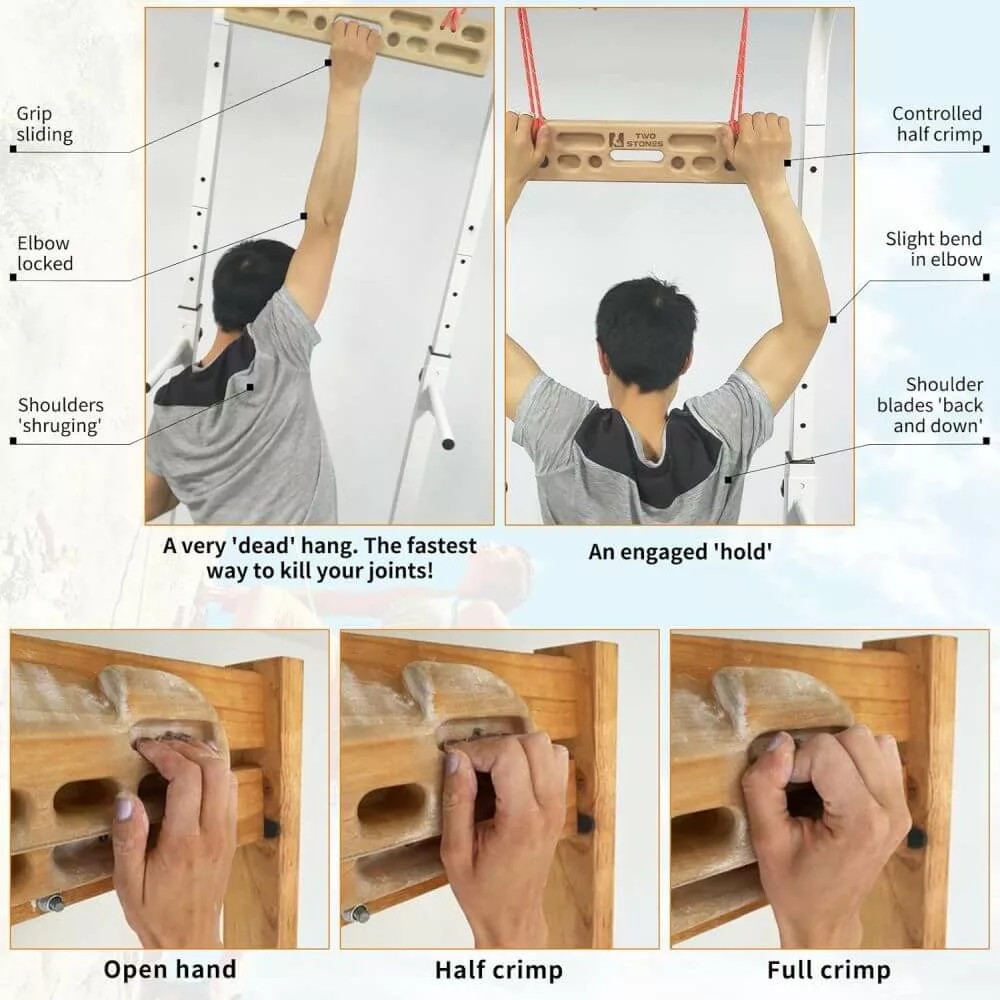
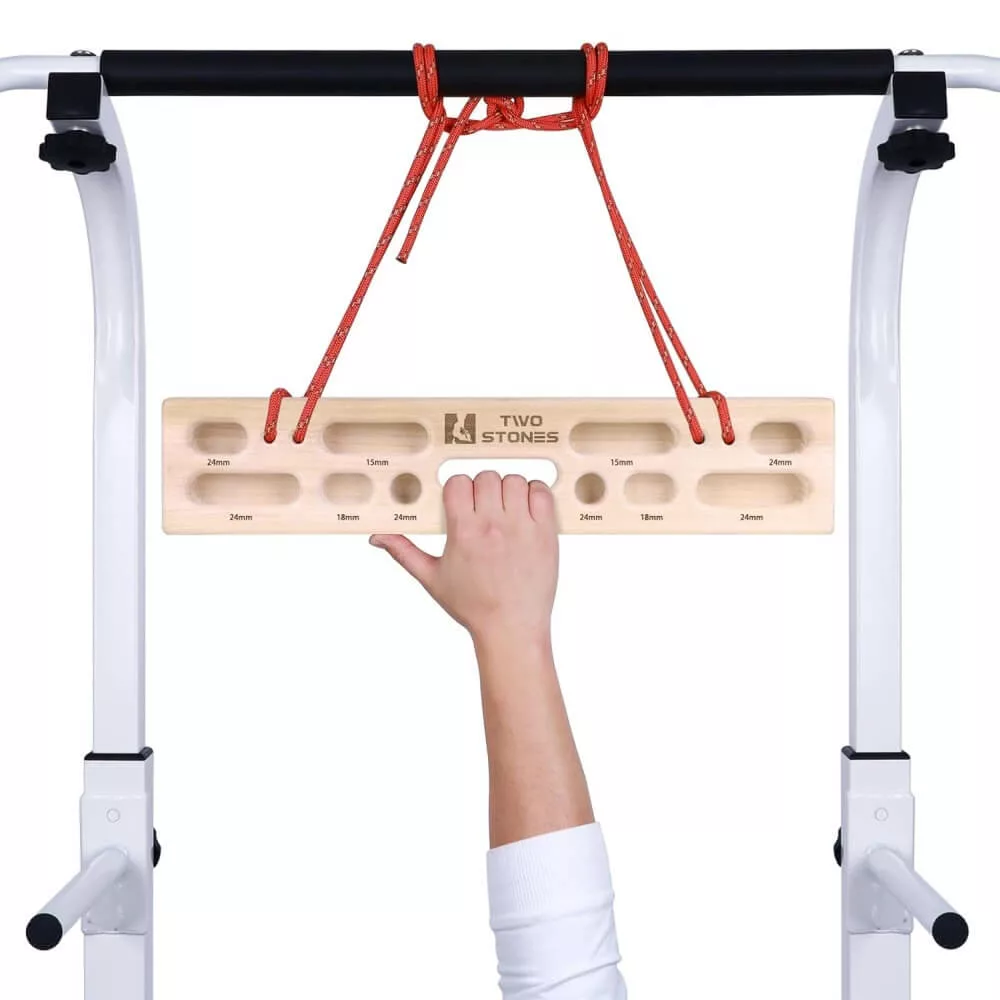
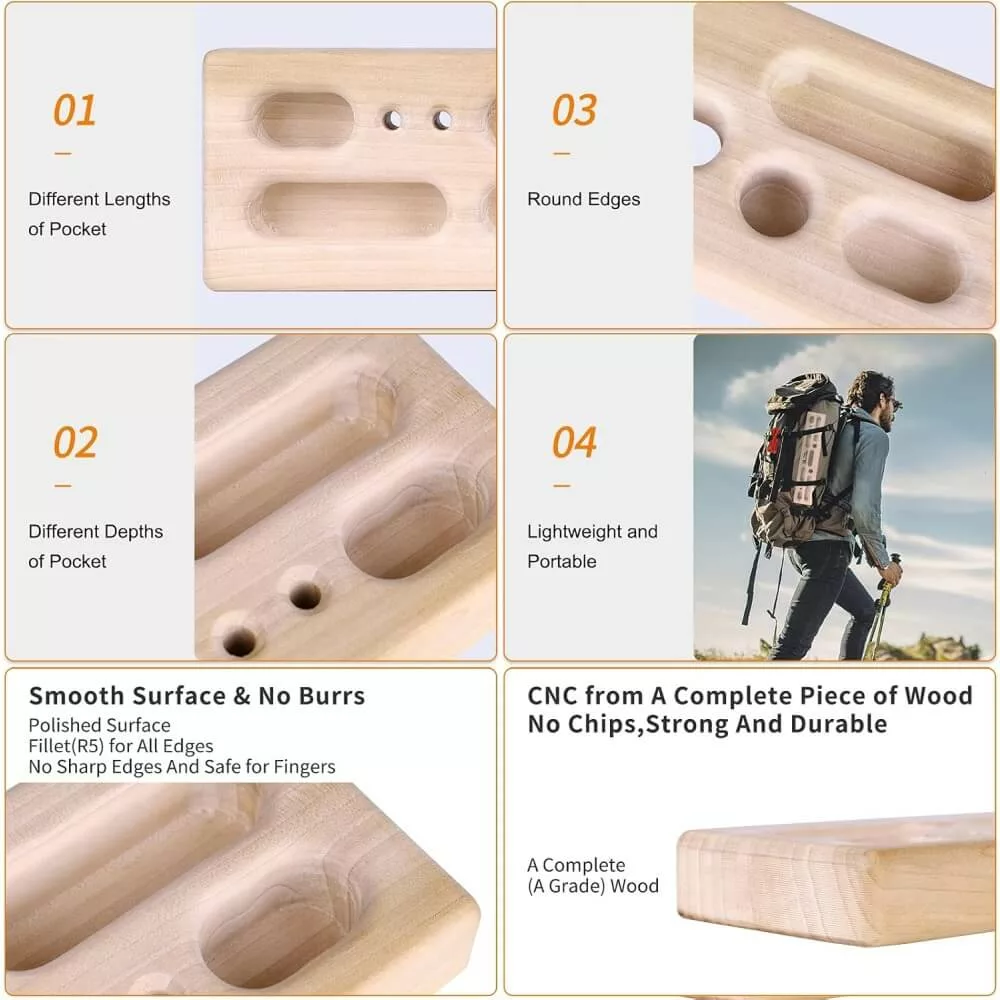
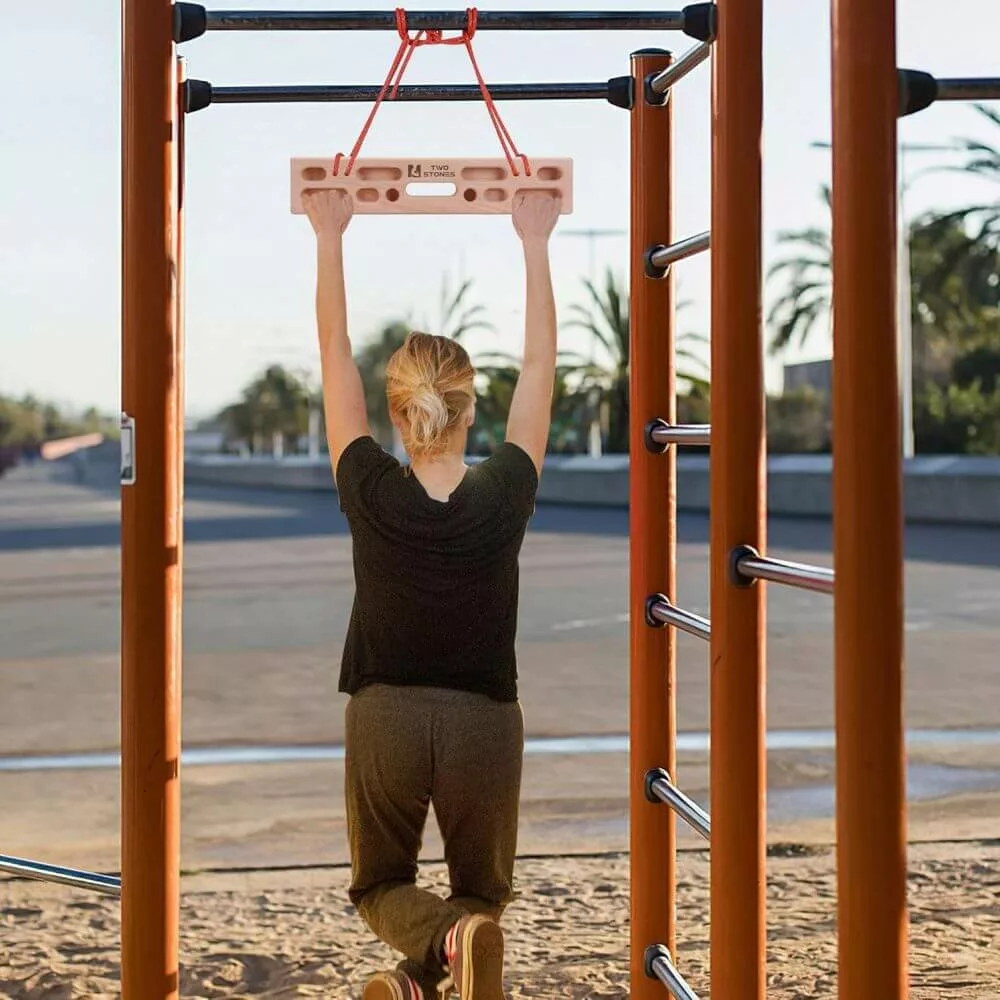
Can Your Hands Hold On When Everything Else Says Let Go?
Learn How to Build a Stronger Support Grip
✋ Overview: What Problem Does TWO STONES Portable Compact Hangboard Solve?
First Contact Feel, Portability, And Training Intent
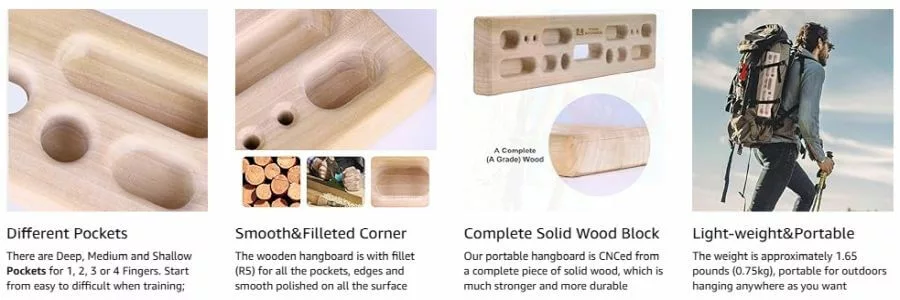
The first thing I notice about this board is how intentionally minimal it feels. There’s no excess weight, no bulk, no unnecessary complexity. It’s built to be taken anywhere, and that shows immediately the moment I pick it up. The wood has a clean, natural finish, and the edges are rounded in a way that feels comfortable even before chalk is involved.
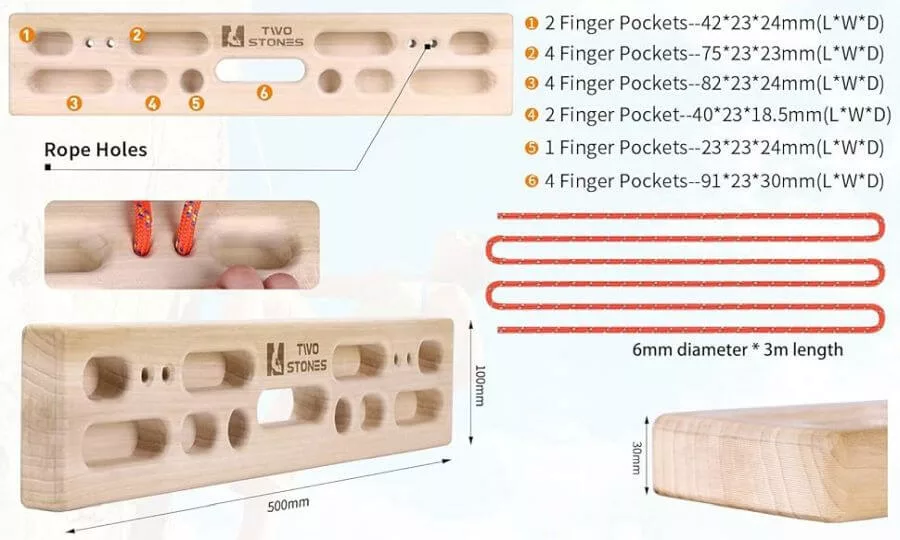
When I start running my fingers across the different pockets, the progression becomes obvious. The deeper holds feel welcoming, almost like warm-up jugs, while the smaller edges and tighter pockets immediately shift the focus toward controlled finger engagement. It doesn’t feel aggressive, which is important for something designed to be used both indoors and outdoors.
In hand, the board feels stable despite its size. There’s a slight rawness to the compact design, but not in a negative way: more like a tool that prioritizes function over aesthetics. I also appreciate how quickly it can be mounted or tied into different setups, whether that’s a pull-up bar or a fixed beam.
From a progression standpoint, this feels like an “always available” training tool. Something that removes excuses. Even short sessions can become structured finger training blocks, which is where its real value starts to show.
⚖️ Pros & Cons: TWO STONES Portable Compact Hangboard
Usability, Portability, And Training Practicality
The board balances portability and progression surprisingly well for such a compact design. It feels approachable during warm-ups and recovery sessions while still offering enough resistance variety for structured grip training.
- Travel-Friendly Design: Extremely lightweight and easy to transport
- Skin-Friendly Surface: Smooth wood feels comfortable during longer hangs
- Progressive Holds: Good variety of pocket depths for scaling difficulty
- Flexible Setup: Easy to mount on bars, beams, or outdoor anchors
- Versatile Sessions: Works for warm-ups and structured finger training
- Reduced Stability: Less stable than permanently mounted hangboards
- Compact Layout: Limited variety for elite-level progression
- Setup Sensitivity: Requires careful mounting for safe use
Still Looking for the Right Tool?
Explore Similar Support Grip Trainers
TWO STONES Portable Compact Hangboard: Ranking 89 out of 100
Portable Finger Training With Consistent Progression Potential
🎯 Who Should Use TWO STONES Portable Compact Hangboard?
Training Identity And User Suitability
This board is clearly aimed at climbers and grip trainees who want flexibility rather than a fixed training station.
- Beginner Climbers: Safely building foundational finger strength
- Intermediate Athletes: Needing a portable progression tool
- Travelling Users: Maintaining training consistency on the move
- Home Gym Owners: Training effectively in limited spaces
It also works well for general strength athletes who want a simple way to integrate grip work into travel routines or warm-ups. While it is beginner-friendly, it still has enough progression depth to remain useful beyond early training phases, especially when added resistance or timed hangs are introduced.
My Rating Summary
- Build Quality: 8.9 / 10
- Ease of Use: 9.3 / 10
- Comfort: 9.2 / 10
- Resistance Quality: 8.7 / 10
- Progression Potential: 8.8 / 10
- Value for Money: 9.5 / 10
Technical Details
- Weight: approx. 0.75 kg
- Dimensions: 500 × 100 × 30 mm (19.6 × 4.0 × 1.2 in)
- Material: CNC-milled natural wood (single-block construction)
- Use case: Finger strength, grip endurance, portable climbing training
📈 Where TWO STONES Portable Compact Hangboard Fits In Grip Strength Progression
Scalability, Adaptation, And Long-Term Use
From a progression perspective, this board sits in the “foundation to intermediate transition” category. The structure supports early adaptation through larger, more forgiving pockets while gradually introducing smaller edge variations for increased finger loading.
Its biggest advantage is accessibility. Because it is portable, it encourages consistency, and consistency is often more important than intensity in early grip development phases. Beginners can safely build tendon tolerance, while intermediate users can manipulate difficulty through hang duration, grip type, and added bodyweight variation.
However, the ceiling is naturally limited. Advanced climbers may eventually outgrow its fixed geometry, especially when seeking highly specific edge sizes or micro-crimp precision. That said, it still holds value as a warm-up or travel conditioning tool.
In long-term training systems, this type of board fits best as a secondary device, something used for maintenance, activation, or off-day volume work rather than maximal strength development.
💪 Training Benefits & Strength Transfer Potential
Grip Carryover And Real-World Strength Adaptation
Despite its small size, the training effect is more substantial than it initially appears. The variety of finger positions forces different levels of engagement across the flexor tendons, especially when alternating between full-hand pockets and tighter two-finger or offset grips.
Over time, this type of loading improves finger endurance, grip control, and positional awareness. It also encourages more frequent micro-sessions, which can accumulate meaningful adaptation in connective tissue strength without requiring long gym sessions.
There’s also a noticeable carryover into climbing-specific movement. The ability to hold controlled tension in partial grips translates well into crimp-heavy routes and sustained bouldering sequences. Wrist stability improves indirectly through repeated stabilization under hanging load.
Because of its portability, it also supports higher training frequency. That consistency plays a bigger role in strength adaptation than occasional high-intensity sessions alone. Used correctly, it becomes a bridge between structured climbing sessions rather than a replacement for them.
Good at Squeezing, But Can You Hang On?
Learn How Support Grip Builds Holding Strength
🧠 Performance & Feel During Training
Grip Feedback, Tension Quality, And Finger Engagement
The first thing that stands out during actual use is how direct the feedback feels. There’s no cushioning or artificial texture, just clean wood contact that responds immediately to pressure. Even during short hangs, the board communicates exactly how much force is being applied through the fingertips.
On deeper pockets, the grip feels secure and forgiving, which makes warm-ups and longer endurance sets much easier to control. As I move into smaller holds, the tension shifts noticeably into the fingertips and forearm flexors. That transition is sharp but predictable, which is exactly what you want for progression training.
The board remains stable when properly mounted, though because of its portability, slight movement can occur depending on the setup. When tied or fixed well, however, it feels surprisingly solid for its size.
Grip fatigue builds steadily rather than explosively. That makes it useful for controlled endurance work instead of maximal power sessions. The surface is smooth enough to avoid skin damage, but still grippy enough that chalk becomes optional rather than mandatory.
Overall, the training feels simple, honest, and functional: no distractions, just load and adaptation.
🏗 Build Quality & Long-Term Durability
Structural Integrity And Wear Resistance
The CNC-milled one-piece wood construction is the key strength here. There are no seams, joints, or glued segments that could weaken over time, which immediately improves confidence in long-term use.
The wood density feels consistent throughout, and there’s minimal flex under load when properly mounted. Even after repeated hangs, the surface maintains its finish without noticeable degradation or splintering.
Because it is a compact board, stress distribution is relatively even, which reduces long-term wear hotspots. The rounded pocket edges also help minimize localized pressure damage from repeated finger loading.
The main limitation is not durability, but exposure. Being portable means it may experience more environmental variation (humidity, transport impact, mounting changes), which could affect finish longevity over time if not stored properly.
Still, for its price range, the build quality sits above expectations for portable wooden hangboards.
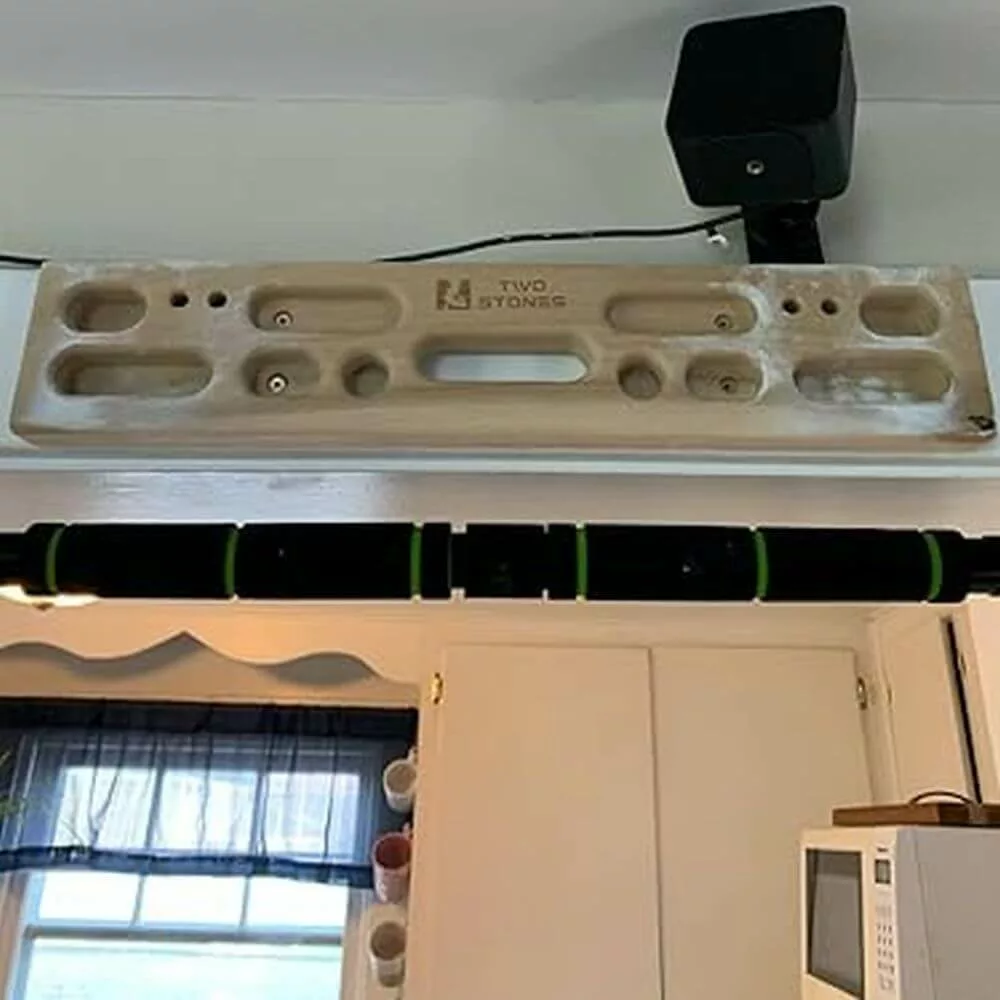
🏠 Everyday Usability & Practicality
Setup Flexibility, Convenience, And Daily Integration
This is where the board really stands out. It is designed to remove friction from training, literally and figuratively.
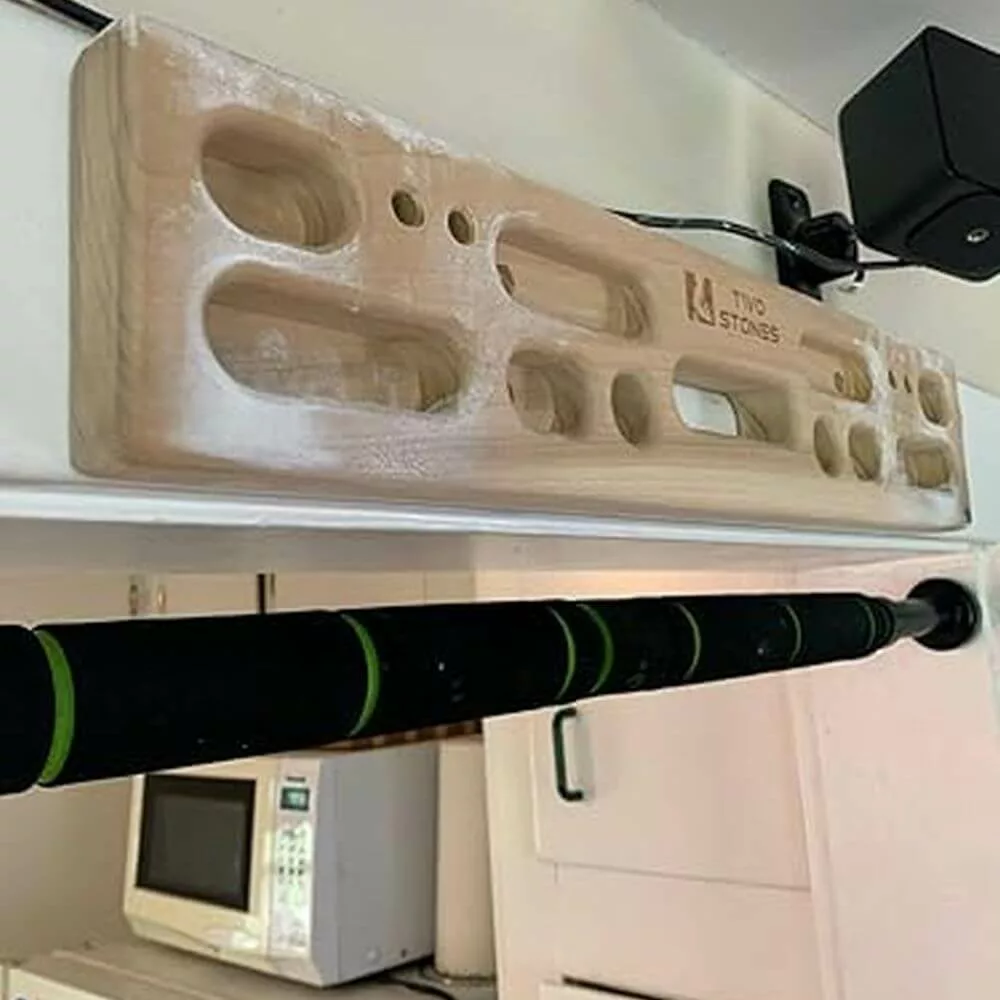
Setup is fast. Whether attaching it to a pull-up bar, beam, or outdoor anchor point, it can be deployed in minutes. That makes it ideal for short training sessions rather than structured gym blocks.
Storage is equally simple. It can be placed in a bag, kept in a car, or stored in a small home space without issue. That level of convenience encourages more frequent use, which is often the missing factor in grip training consistency.
In daily use, it integrates best as a “micro-session” tool. A few hangs between tasks or short structured sets during warm-ups can add up quickly over time. It also works well outdoors, which opens up training environments beyond the home or gym.
The only real limitation is that it requires attention to mounting safety. Because it is portable, setup quality directly affects training quality. Once properly secured, however, it becomes extremely practical.
✅ Final Verdict: Is TWO STONES Portable Compact Hangboard Worth It?
Long-Term Value, Training Role, And Recommendation
This is a straightforward, highly practical training tool that prioritizes accessibility over complexity.
I see it as a “consistency builder” more than a peak strength developer. It removes barriers to training by being lightweight, portable, and easy to deploy anywhere. That alone makes it valuable for climbers who struggle to maintain structured finger training routines.
It is best suited for beginners and intermediates, but it still has a place in advanced training systems as a warm-up or travel conditioning tool. It will not replace a full-size hangboard, but that is not its purpose.
The real strength of this board is habit formation. It encourages frequent, low-friction training sessions that accumulate meaningful adaptation over time. That’s where its long-term value lies.
Personal recommendation: If you want a portable, no-nonsense hangboard that you’ll actually use consistently, this is an easy yes. If you need maximum progression depth or elite-level loading options, it should sit alongside a more advanced wall-mounted system rather than replace it.
Thanks for Checking it Out!
Which One is Your Go-To Portable Hangboard?
Share Your Experience in the Comments!
Climbing With Finger Pain? Learn About Finger Pulley Injuries & How to Train Smarter
& Browse the Grip Training FAQ for Quick Answers