(Last Updated on October 10, 2026 by Henry)
- Name: Gripnatic FingerPeg 1.0 Hangboard
- Category: Grip Strength / Forearm Training
- Purpose: Progressive Finger Strength & Grip
- Rating: 4.6 / 5
- Availability: Amazon (Prime Delivery)
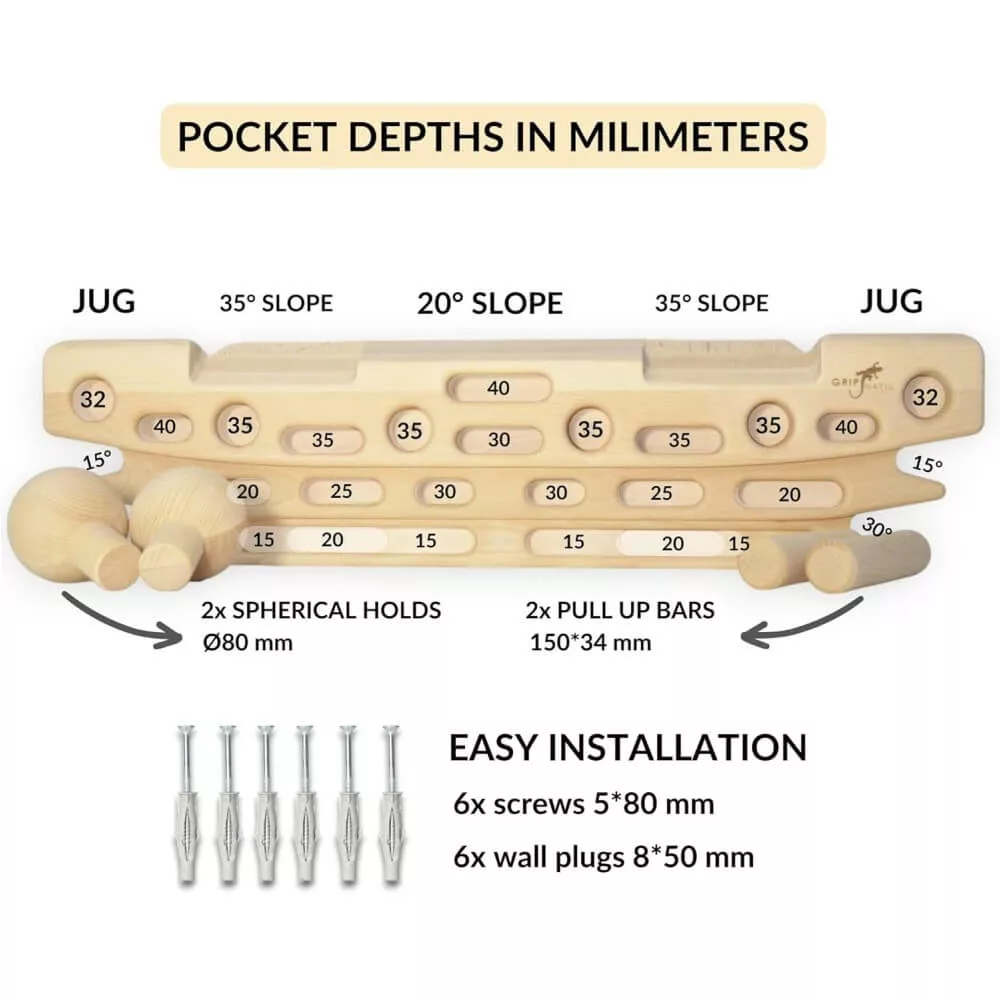
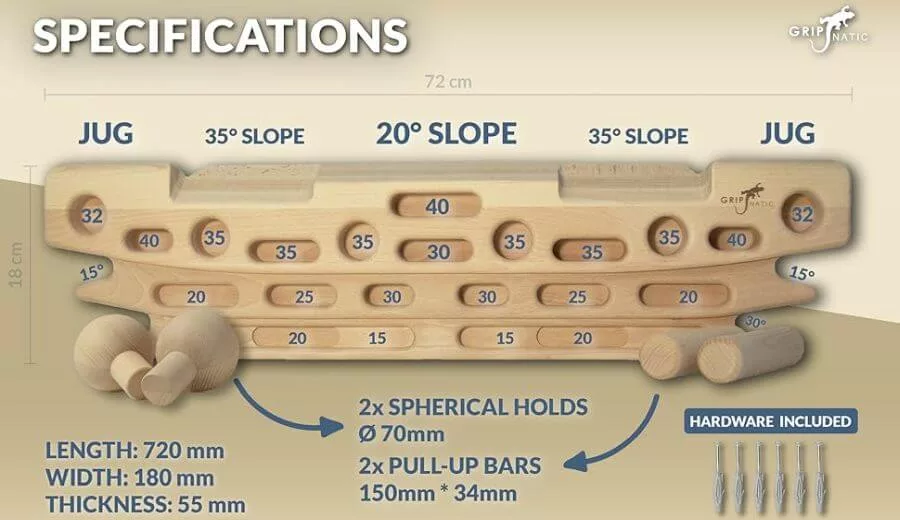
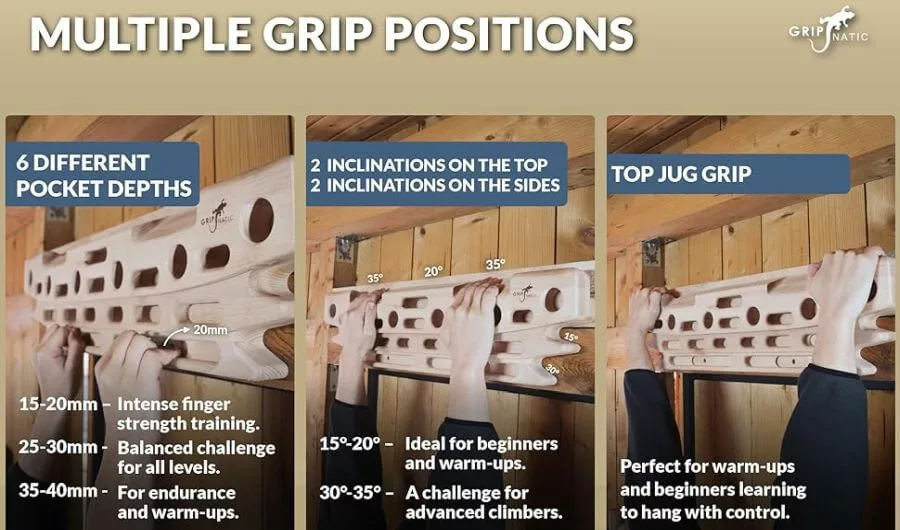
- Progressive Pocket Depths: Six scalable edge depths for overload
- Multi-Grip Versatility: Spherical holds and pull-up integration
- Premium Hardwood Build: Rounded beech wood improves comfort


Can Your Hands Hold On When Everything Else Says Let Go?
Learn How to Build a Stronger Support Grip
✋ Overview: What Problem Does Gripnatic FingerPeg 1.0 Solve?
Wooden Texture, Training Flow, & Multi-Grip Versatility
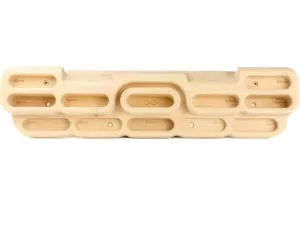
The FingerPeg 1.0 immediately feels different from traditional resin-heavy hangboards. The smooth beech hardwood creates a much cleaner, more refined hand feel right away. Instead of a harsh texture aggressively biting into the skin, the surface feels controlled and comfortable while still providing enough friction for secure hangs.
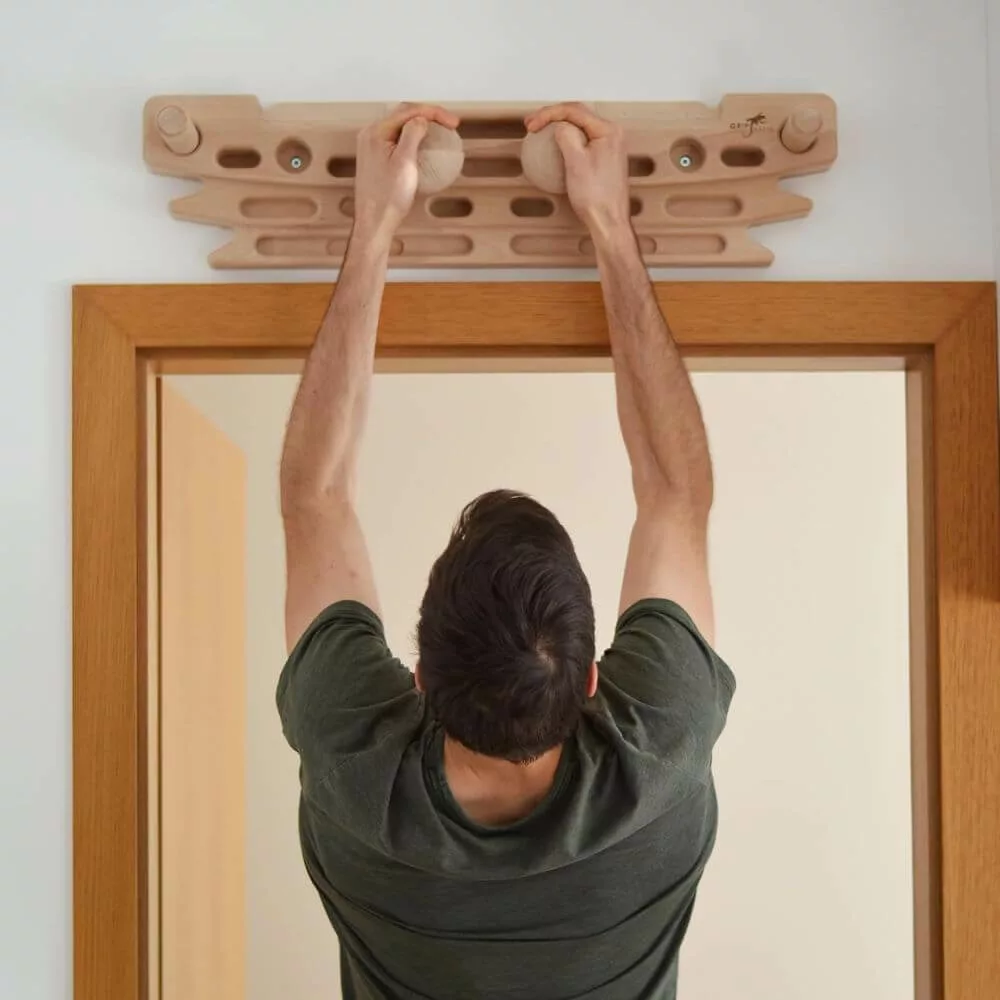
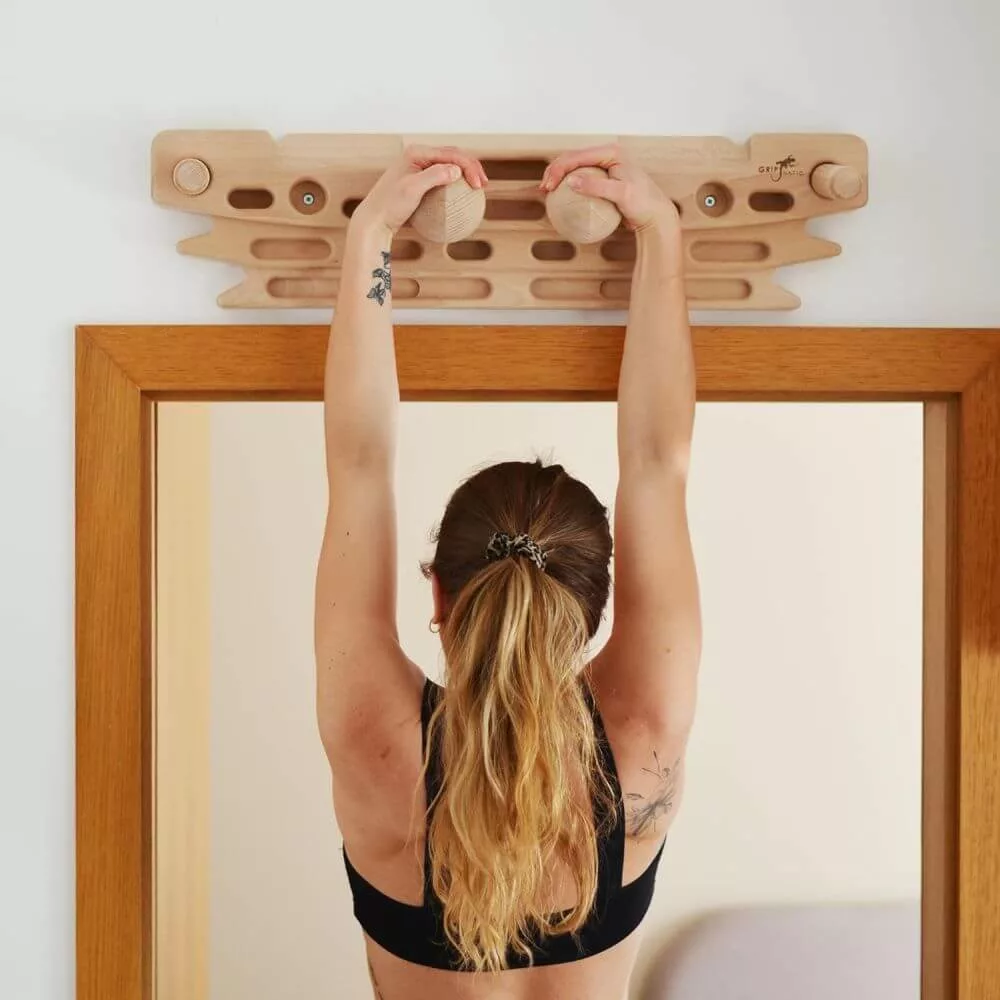
What stood out most to me during the first few sessions was how versatile the setup feels. This isn’t only a fingerboard for dead hangs. The spherical holds, pull-up bar integrations, slopers, pockets, and side inclinations create a much broader upper-body training experience.
I also noticed how approachable the board feels for progressive training. The deeper pockets and warm-up jugs make it easier to ease into sessions without immediately shocking the fingers and elbows. Then, as the workout progresses, the shallower edges and smaller holds gradually increase the difficulty.
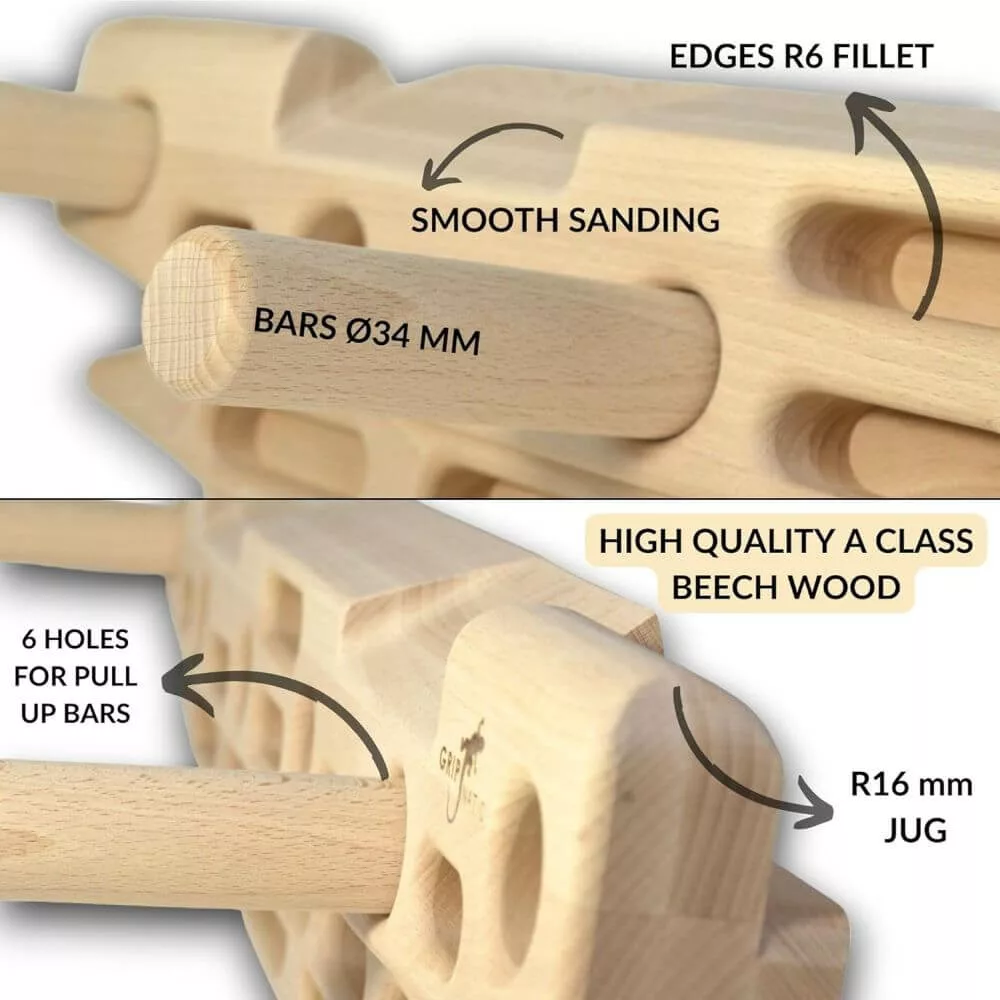
The rounded 6 mm edges deserve attention, too. During repeaters and longer hang sessions, the smoother transitions reduce hot spots on the fingers noticeably compared to sharper-edged boards.
Overall, the FingerPeg 1.0 gives off a very modern home-training feel. It combines climbing-specific finger strength work with broader grip and calisthenics functionality, which makes it feel more flexible than many traditional single-purpose hangboards.
⚖️ Pros & Cons: Gripnatic FingerPeg 1.0
Comfort, Installation, & Training Adaptability
The FingerPeg 1.0 balances climbing-specific finger training with broader grip versatility extremely well. Its wooden construction feels noticeably more comfortable during high-volume sessions, while the progression-focused pocket layout helps reduce the risk of jumping into overly aggressive finger loading too quickly.
The added spherical holds and pull-up integration also create more training variety than most standard hangboards. However, careful installation planning is important, especially for doorway mounting setups, and the overall pricing sits above simpler entry-level boards.
- Skin-Friendly Texture: Comfortable wooden surface reduces irritation
- Progressive Edge Layout: Multiple depths support gradual overload
- Versatile Grip Options: Slopers and spherical holds expand training
- Calisthenics Integration: Pull-up compatibility improves versatility
- Minimalist Design: Compact appearance fits modern home gyms
- Installation Planning: Proper alignment requires careful setup
- Premium Price: Costs more than simpler beginner boards
- Hardware Quality: Some users replace the included mounting screws
Still Looking for the Right Tool?
Explore Similar Support Grip Trainers
Gripnatic FingerPeg 1.0: Ranking 92 out of 100
Balanced Progression, Comfort, & Long-Term Grip Development
🎯 Who Should Use Gripnatic FingerPeg 1.0?
Climbing Level, Strength Goals, & Home Training Use
The FingerPeg 1.0 works especially well for climbers and grip athletes who want more than a basic fingerboard mounted above a doorway.
- Beginners: Deeper pockets create safer entry-level progression
- Intermediate Climbers: Progressive rails support structured overload
- Advanced Users: Smaller holds challenge grip endurance and control
- Home Gym Athletes: Compact design supports versatile training setups
Beginners can benefit from the deeper pockets and large warm-up holds, which create a safer entry point into finger strength development. The smoother wooden texture also feels less intimidating than highly abrasive resin boards.
Intermediate climbers will probably get the most value from this setup. The multiple pocket depths, slopers, and progressive rails create plenty of room for structured overload while still remaining manageable during higher-volume sessions.
Advanced users can take advantage of the smaller edges, spherical holds, and integrated pull-up options to create more demanding grip combinations and upper-body training circuits.
This board also suits climbers building long-term finger resilience, boulderers improving contact strength, calisthenics athletes adding grip-focused work, home gym users wanting compact versatility, and grip enthusiasts seeking joint-friendly training.
Because the board blends hangboarding and calisthenics functionality together, it fits particularly well in minimalist home gym setups where space efficiency matters.
My Rating Summary
- Build Quality: 9.5 / 10
- Ease of Use: 9.0 / 10
- Comfort: 9.4 / 10
- Resistance Quality: 9.2 / 10
- Progression Potential: 9.5 / 10
- Value for Money: 8.9 / 10
Technical Details
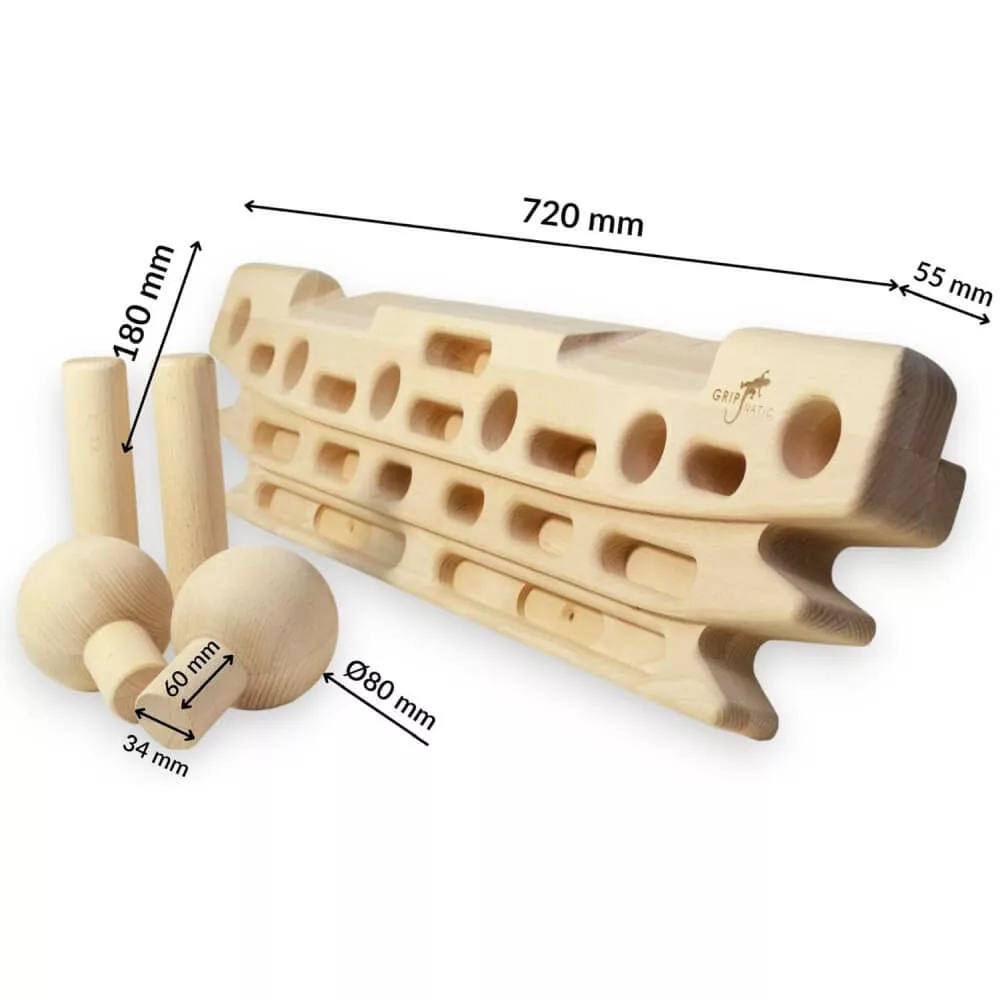
- Weight: 3.5 kg
- Dimensions: 28.34 x 7.08 x 2.16 inches
- Material: Premium Beech Hardwood
- Use case: Grip, wrist, finger, and forearm strength training
📈 Where Gripnatic FingerPeg 1.0 Fits In Grip Strength Progression
Progression Potential, Edge Scaling, & Training Longevity
One of the FingerPeg 1.0’s strongest qualities is how naturally it supports gradual progression.
Many aggressive hangboards force climbers into difficult edge sizes too quickly. Here, the varied pocket depths create smoother transitions between training intensities. Users can slowly reduce support over time rather than jumping abruptly into highly stressful finger loading.
That makes the board much more sustainable for consistent weekly use.
The deeper pockets and warm-up jugs help establish foundational tendon conditioning early on. Then the smaller pockets, slopers, and edge variations progressively increase demand on finger flexors, wrist stabilizers, and forearm recruitment.
The spherical holds also expand the progression curve beyond traditional climbing grips. Those attachments place additional emphasis on open-hand strength, grip endurance, stabilization, and coordination.
Long-term, the board remains useful because progression does not rely solely on smaller edges. Users can also manipulate hang duration, added weight, offset hangs, pull-up variations, one-arm progressions, calisthenics integration, and reduced assistance.
Most climbers are unlikely to outgrow the FingerPeg quickly unless they move toward highly specialized elite-level finger training. For general climbing performance, forearm development, and sustainable grip progression, the scalability feels excellent.
💪 Training Benefits & Strength Transfer Potential
Forearm Recruitment, Climbing Carryover, & Functional Strength
The FingerPeg 1.0 delivers a broader style of grip development than many traditional hangboards because it combines climbing-specific finger loading with more general upper-body grip training options.
The varying pocket depths train finger strength progressively while also improving tendon conditioning and grip endurance. During repeated sessions, I noticed the deeper pockets worked extremely well for warmups and recovery-focused hangs, while the shallower pockets demanded much more controlled finger engagement and body tension.
The slopers and side inclinations also create a different forearm stimulus compared to standard flat-edge boards. Slopers force more open-hand recruitment, wrist stabilization, and thumb engagement, which carry over well into real climbing situations where holds are rarely perfectly positive.
The spherical holds add another layer of training versatility. They create instability that challenges grip coordination, shoulder stability, and pulling control simultaneously. Even simple pull-up variations feel noticeably harder once those spherical attachments are introduced.
This board supports multiple performance adaptations at once: finger strength, forearm endurance, pulling stability, open-hand grip development, wrist control, shoulder engagement, and climbing-specific body tension.
Because the wood texture remains relatively skin-friendly, higher-frequency training also becomes easier to manage without destroying the fingertips after every session.
Good at Squeezing, But Can You Hang On?
Learn How Support Grip Builds Holding Strength
🧠 Performance & Feel During Training
Hand Positioning, Tension Response, & Training Feedback
The FingerPeg feels extremely smooth during training sessions, especially compared to harsher resin boards that can feel abrasive after only a few sets.
The rounded wooden edges create a more forgiving contact surface while still demanding strong finger recruitment. During longer repeater workouts, I noticed noticeably less fingertip irritation, which helped maintain training quality deeper into sessions.
The pocket spacing also feels well thought out. Switching between 2-finger, 3-finger, and 4-finger positions flows naturally without awkward hand positioning. The slopers add another interesting challenge because they require more careful tension control and open-hand engagement rather than brute crimp strength.
I especially liked the gradual progression of the edge depths. Smaller transitions between hold sizes make overload feel more manageable and measurable over time. Instead of jumping from easy holds to extremely difficult micro edges, the progression curve feels smoother and more sustainable.
The spherical holds completely change the feel of the workout, too. Pull-ups and static hangs become much more unstable, which heavily recruits the forearms, shoulders, and grip stabilizers.
Overall, the board feels balanced. Challenging, but not unnecessarily punishing. It encourages consistent quality training rather than ego-driven max efforts every session.
🏗 Build Quality & Long-Term Durability
Wood Construction, Surface Quality, & Reliability
The FingerPeg 1.0 has a very premium overall construction feel. The beech hardwood gives the board a dense, solid structure that feels dependable during heavy hangs and dynamic movements.
The machining quality also appears excellent. The rounded edges are smooth and consistent, the transitions between holds feel refined, and the surface texture remains comfortable while still offering enough grip for controlled training.
Wooden boards generally age very well when maintained properly, and this one seems designed for long-term use. The untreated chalk-compatible surface should maintain consistent friction over time without becoming overly polished or slippery.
The integrated pull-up bar holes and spherical hold compatibility also expand the board’s usefulness beyond simple dead hangs, which increases long-term value considerably.
Durability under repeated use appears strong based on both customer experiences and the overall structural feel. Once mounted securely, the board feels stable and confidence-inspiring.
The only recurring criticism involves installation hardware. Some users reported replacing the included screws with higher-quality alternatives for better long-term reliability. Still, the board itself feels extremely durable and built for years of consistent training.
🏠 Everyday Usability & Practicality
Home Gym Functionality & Daily Training Convenience
The FingerPeg integrates very naturally into home training setups because it balances compactness with impressive exercise variety.
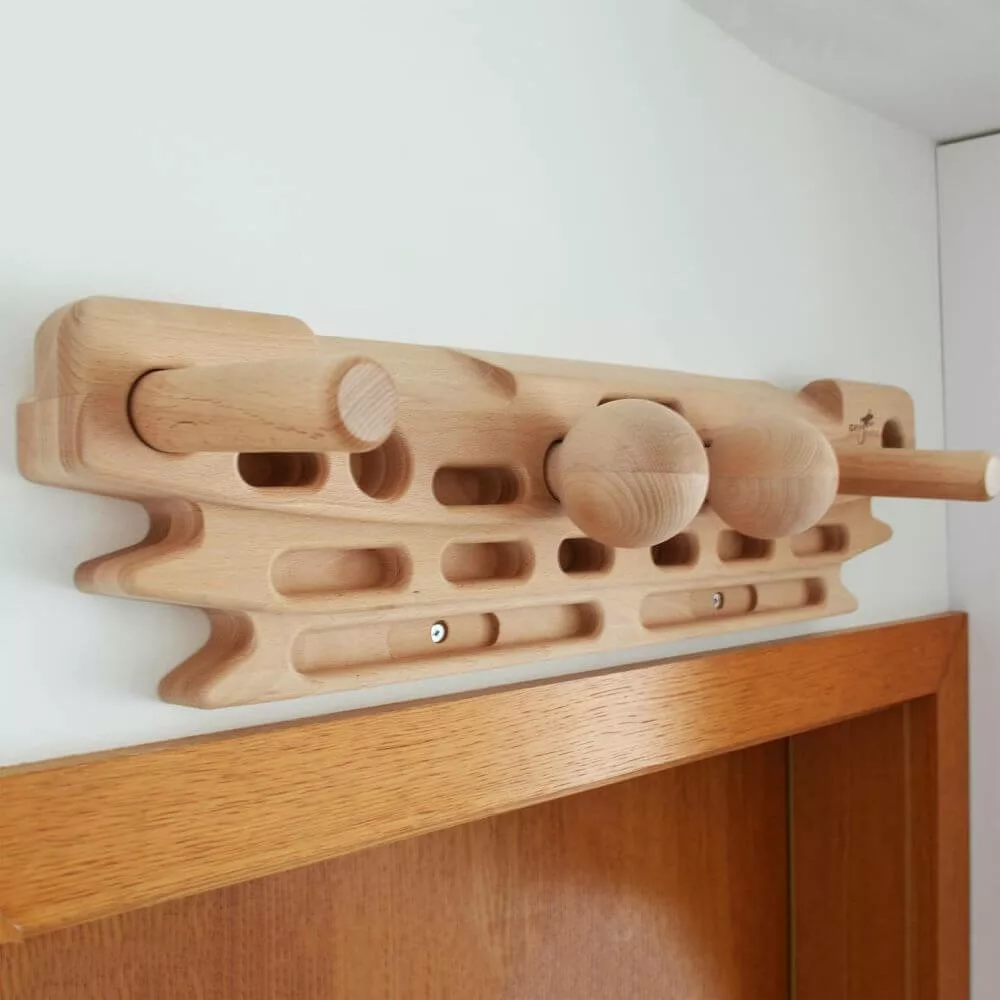
Mounted above a doorway or onto a beam, it becomes easy to incorporate short hangs, pull-up sets, or grip sessions throughout the day without needing a full climbing wall or dedicated gym room.
I also like that it works for both quick sessions and structured programming. You can use the larger holds for warm-ups, transition into repeaters or max hangs, then finish with pull-ups or spherical hold work without changing equipment.
The smoother wooden texture makes daily usability better, too. Because the surface is gentler on the skin, it feels easier to train consistently multiple times per week.
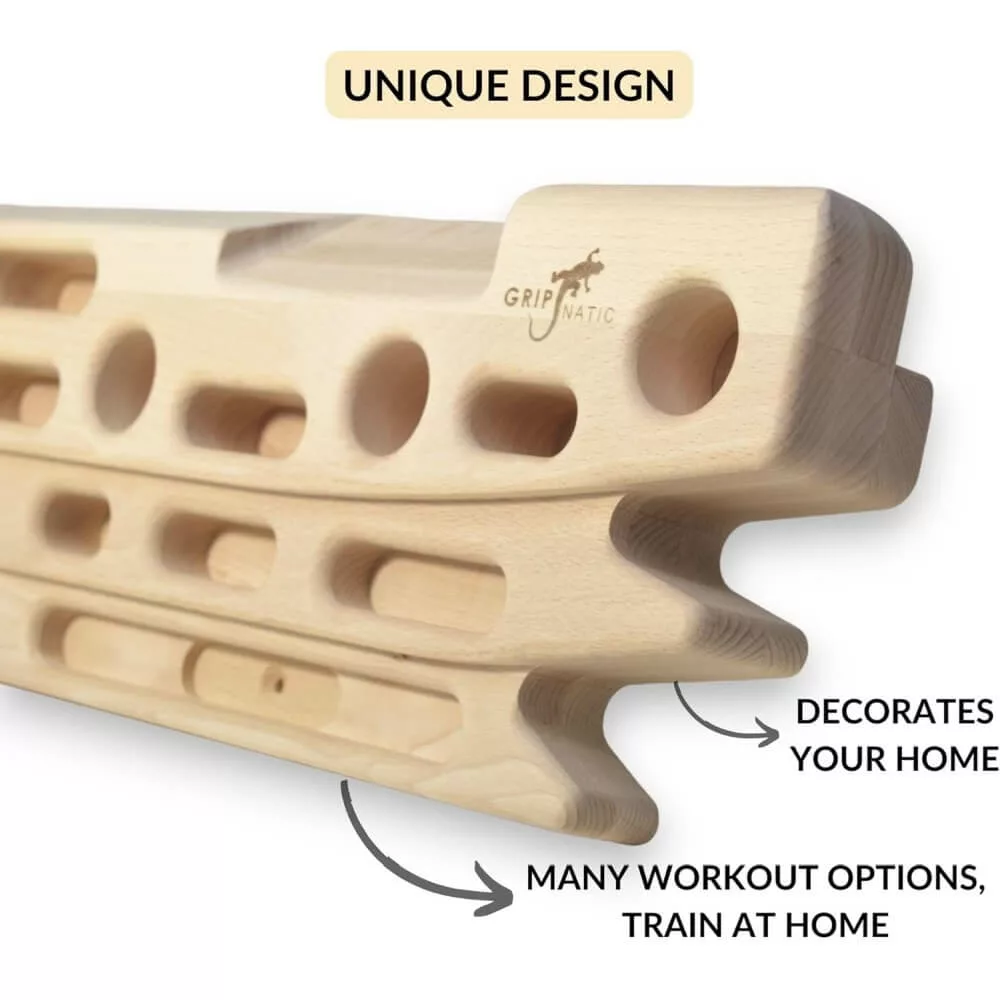
Visually, the board also looks cleaner and more refined than many bulky resin hangboards. The wood construction blends into home gym environments more naturally, rather than feeling overly industrial.
The biggest practical challenge is careful installation alignment. Users mounting above doorframes should plan hole placement properly before drilling. Once mounted securely, though, the board becomes an extremely convenient long-term training station.
✅ Final Verdict: Is Gripnatic FingerPeg 1.0 Worth It?
Long-Term Training Value & Multi-Skill Development
I think the FingerPeg 1.0 succeeds because it feels like more than just a standard hangboard. It combines climbing-specific finger training with broader grip and upper-body functionality in a way that feels genuinely useful rather than gimmicky.
The progressive pocket depths, comfortable wooden texture, and ergonomic shaping make it approachable enough for developing climbers while still offering plenty of challenge for experienced users.
What impressed me most was the versatility. The board supports classic finger-strength protocols very well, but the slopers, side inclinations, pull-up integrations, and spherical holds also create a much wider training experience. That makes sessions feel less repetitive over time.
I would especially recommend this board for climbers building home training setups who want one compact station capable of handling finger strength, grip endurance, forearm recruitment, and upper-body pulling work together.
It may not replace ultra-specialized elite hangboards for advanced climbing performance labs, but for the majority of climbers and grip-focused athletes, it offers an excellent balance between progression, comfort, versatility, and long-term usability.
For sustainable grip strength development and well-rounded climbing training, I think the FingerPeg 1.0 is a very strong option.
Thanks for Checking it Out!
Which One is Your Go-to Hangboard so Far?
Share Your Experience in the Comments!
Climbing With Finger Pain? Learn About Finger Pulley Injuries & How to Train Smarter
& Browse the Grip Training FAQ for Quick Answers