(Last Updated on November 4, 2026 by Henry)

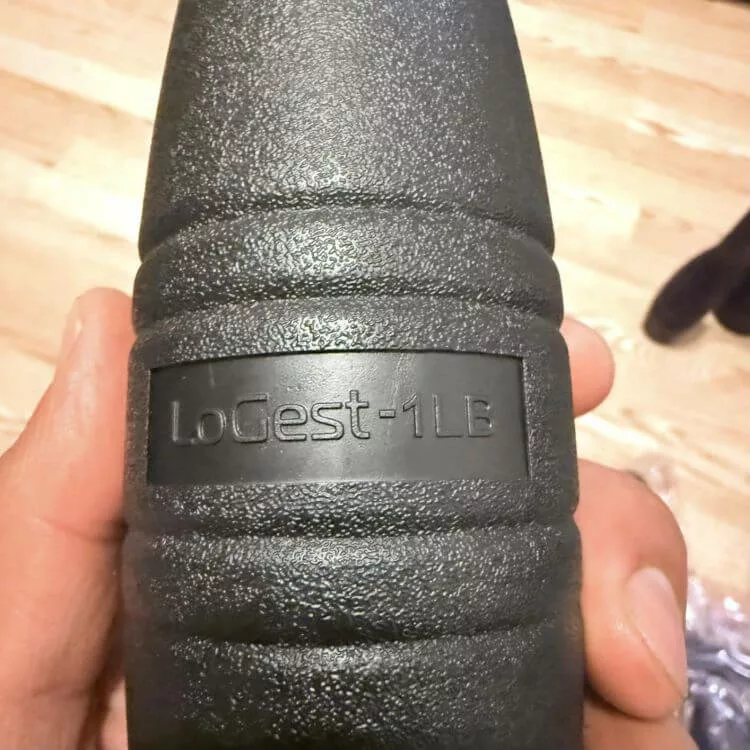
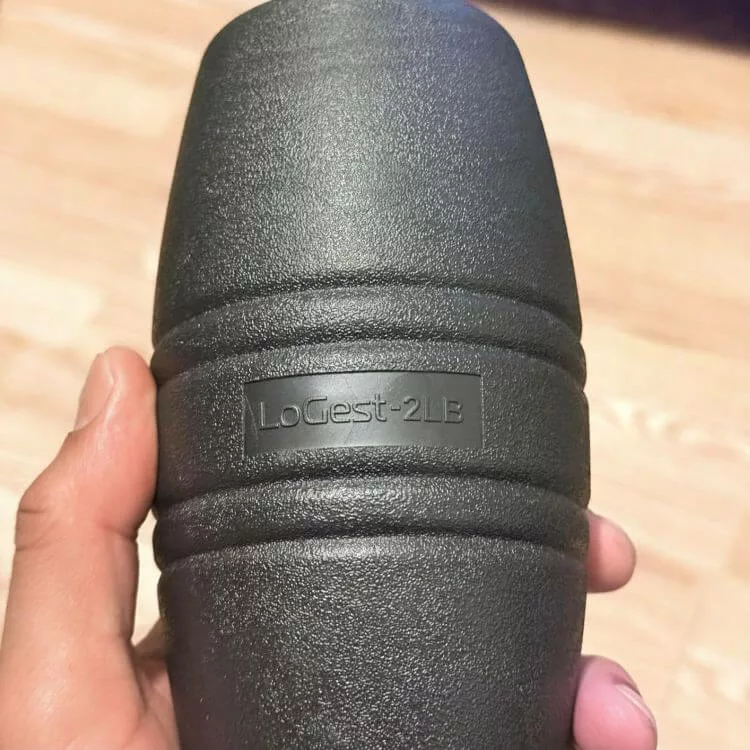
  • Name: Logest Mace Exercise Clubs
  • Category: Mace & Clubbells
  • Purpose: Rotational Strength & Mobility
  • Rating: 4.3 / 5
  • Availability: Amazon

Check Price on Amazon

  • Two Weight Options: Choose between pairs of 1 lb or 2 lb clubs.
  • Durable Polypropylene Construction: Lightweight, rust-resistant plastic bodies for regular training.
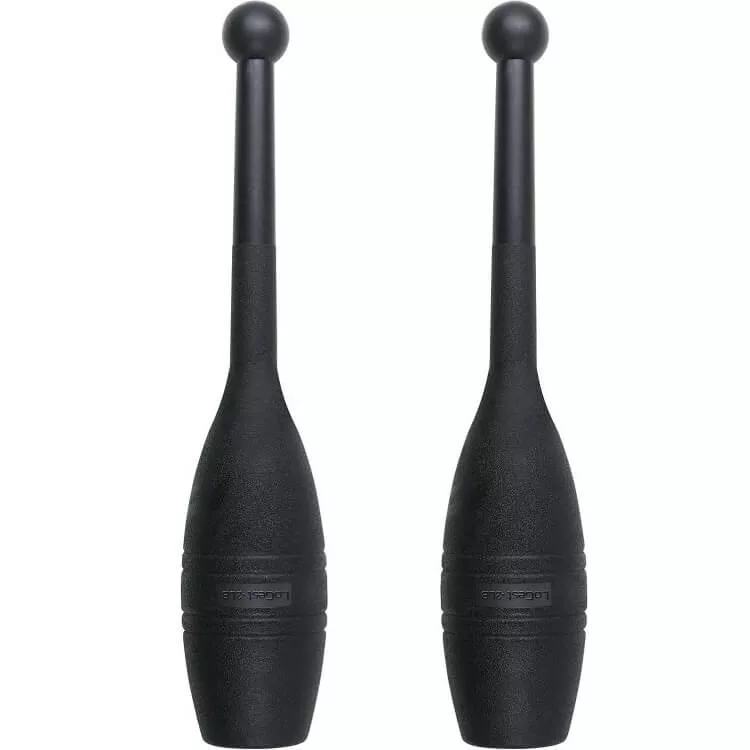
  • Traditional Club Design: Offset weight distribution, narrow handles, and end knobs for controlled swinging movements.
Got Strong Fingers But Wrists Flailing in the Wind?
Learn How to Build Strength Through Wrist Flexion & Extension

✋ Overview: What Problem Does Logest Mace Exercise Clubs Solve?

An Accessible Introduction to Indian Club Training

Indian clubs offer a different approach to upper-body training. Instead of simply lifting a weight against gravity, you guide an offset load through controlled circular and rotational movements. That changes how your wrists, forearms, shoulders, and trunk work together.

The Logest Exercise Clubs bring this traditional training style into an accessible, lightweight format. They’re made from polypropylene rather than wood or steel and come as a pair, with a choice of 1 lb or 2 lb per club.

What interests me most is their potential as an entry point into club training. Their relatively low weights make them approachable for learning basic swings, circles, presses, and transitions without immediately committing to a heavier steel implement.

However, don’t mistake the listed weight for the full difficulty of the movement. A 2 lb club can feel substantially more demanding than a 2 lb dumbbell because its mass is distributed away from the hand. As the club travels through an arc, controlling that leverage requires coordination and continuous muscular engagement.

The pair format also opens up more possibilities than a single mace. You can practice symmetrical movements with both hands, alternating patterns, and independent club work.

These aren’t premium wooden Indian clubs or heavy steel maces. They’re practical plastic training tools aimed at people who want to explore rotational exercise, develop movement control, and add something different to their upper-body routine.

⚖️ Pros & Cons: Logest Mace Exercise Clubs

Lightweight Paired Clubs With Accessible Entry-Level Resistance

Pros:

  • Beginner-Friendly Weight Options: The 1 lb and 2 lb pairs offer manageable starting points for learning club movements.
  • Useful Rotational Training: The offset weight distribution challenges wrist, forearm, and shoulder control.
  • Two-Club Format: Training with a pair supports bilateral swings, coordination drills, and alternating movements.
  • Practical Polypropylene Construction: The plastic bodies avoid the rust and maintenance concerns associated with metal equipment.
  • Versatile Exercise Selection: Suitable for controlled swings, circles, presses, holds, squats, and other full-body movements.
Cons:

  • Limited Weight Selection: The listed 1 lb and 2 lb options may not provide enough resistance for experienced club practitioners.
  • Smooth Handle Surface: The handle finish may feel less secure for users who prefer a textured grip, particularly during sweaty sessions.
  • Potential Molding Imperfections: Manufacturing seams or rough edges may require inspection and minor attention before comfortable use.

Still Deciding?
See How It Stacks Up Against Similar Wrist Torque Trainers

Get it on Amazon See a Cheaper Alternative

LoGest Mace Exercise Clubs: Ranking 86 out of 100

🎯 Who Should Use Logest Mace Exercise Clubs?

For Beginners, Mobility-Focused Trainees & Rotational Strength Enthusiasts

  • Beginners Exploring Indian Club Training: The lighter 1 lb pair offers a sensible way to learn basic swinging patterns and coordination before progressing to heavier equipment.
  • Athletes Developing Shoulder and Wrist Control: Controlled rotational movements can complement training that demands upper-body coordination, stability and movement precision.
  • Home Fitness Enthusiasts: The compact pair provides an alternative to conventional dumbbells for varied upper-body and full-body conditioning.
  • Experienced Mace and Club Practitioners: The clubs can provide a lighter option for warm-ups, technical practice and two-club movements alongside heavier equipment.

🧩My Rating Summary

  • Build Quality: 4.2 / 5 — Solid polypropylene construction offers a practical alternative to more expensive wooden or metal clubs, although molding quality may vary.
  • Ease of Use: 4.2 / 5 — The lightweight options are approachable, but learning to control the swinging movement still requires practice.
  • Comfort: 4.0 / 5 — The narrow handle and end knob support manipulation, although the smooth finish and possible molding seams deserve attention.
  • Resistance Quality: 4.4 / 5 — The offset mass creates useful rotational resistance despite the relatively low listed weights.
  • Progression Potential: 4.0 / 5 — The two available weights provide a starting progression, but serious practitioners will eventually need heavier clubs.
  • Value for Money: 4.5 / 5 — A pair of functional training clubs makes this an accessible way to explore a specialized training method.

⚙️Technical Details

  • Brand: Logest
  • Material: Polypropylene (PP)
  • Color: Black
  • Number of Pieces: 2
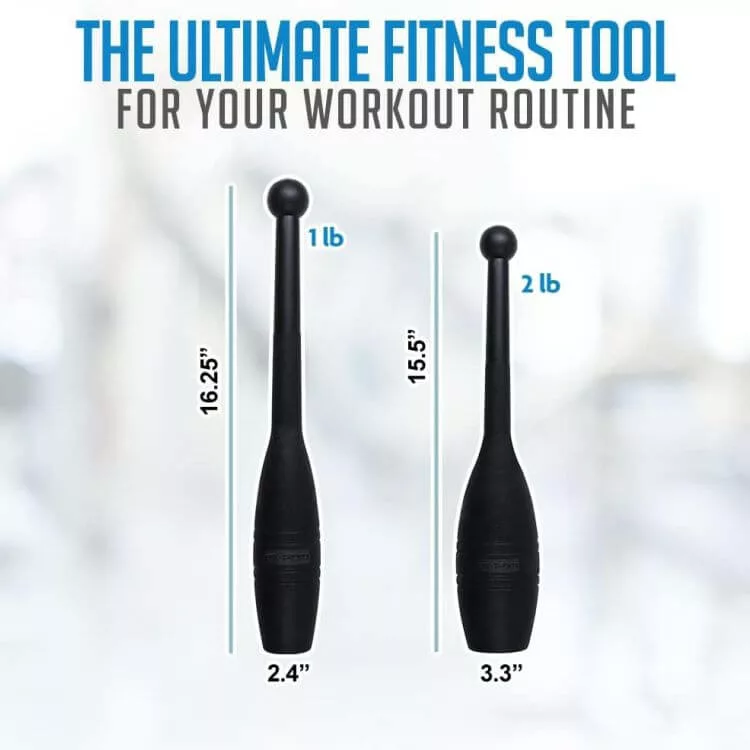
  • Weight Options: 1 lb or 2 lb per club
  • 1 lb Club Dimensions: 16.75 × 2.4 inches
  • 2 lb Club Dimensions: 15.5 × 3.3 inches
  • Handle Diameter: 1 inch
  • Handle Material: Polypropylene
  • Grip Size: Medium
  • Special Feature: Rust-resistant
📈 Where Logest Mace Exercise Clubs Fit In Grip Strength Progression

📈 Where Logest Mace Exercise Clubs Fit In Grip Strength Progression

Two Related Tools With Different Leverage and Training Applications

For someone just starting, the Logest pair can be a useful introduction before moving toward heavier clubs or steel maces.

How Do the Clubs Compare With Steel Maces?

Although the Logest listing uses both mace and club terminology, these implements are better understood as Indian-style exercise clubs.

A traditional mace generally has a longer handle and concentrates most of its mass in a weighted head at the far end. A club typically distributes its mass along a longer, barrel-shaped section.

That difference changes the leverage and handling characteristics.

Indian Clubs

The LoGest pair is designed for independent, one-handed movement. You can work with both clubs simultaneously, alternate between sides or practice individual patterns with one club.

Their relatively compact dimensions also make them suitable for controlled circles and transitions.

Steel Maces

A steel mace generally provides a longer lever and a more concentrated weight at its head. This creates a different resistance profile, particularly during extended swings and two-handed movements.

The longer handle can also make hand-to-hand transitions more practical.

Neither tool replaces the other. They complement each other, but the Logest clubs are better suited to lighter club-specific practice than to heavy mace training.

💪 Training Benefits & Strength Transfer Potential

💪 Training Benefits & Strength Transfer Potential

Offset Resistance That Challenges the Entire Movement

The defining feature of club training is the way weight is distributed along the implement. Unlike a dumbbell, where the load sits relatively close to the hand, an exercise club carries more mass farther along its body.

That creates leverage whenever you swing, circle, or change direction. Your muscles must not only move the club but also control its rotational momentum throughout the movement.

With the Logest clubs, this makes even the lighter weights useful for practicing controlled movement patterns.

  • Wrists and Forearms: Repeated rotational movements challenge the muscles responsible for controlling the hand and wrist through different angles.
  • Shoulders: Circular swings and controlled transitions engage the shoulder musculature through a broader range of movement than many conventional weight exercises.
  • Upper Back: Maintaining control of the clubs requires coordinated upper-body positioning and stabilization.
  • Core: Your trunk helps manage rotation and maintain balance as the clubs move around your body.

The important distinction is that this isn’t simply a matter of swinging the clubs as quickly or forcefully as possible.

Good club training depends on controlled paths, consistent technique, and the ability to manage the changing leverage.

I’d begin with simple movements using the 1 lb clubs, focusing on smooth circles and controlled transitions. Only increase the challenge once you can maintain your movement quality without excessive momentum or compensating with the rest of your body.

What Exercises Can You Perform With the Logest Clubs?

From Basic Circles to Full-Body Rotational Conditioning. One of the strongest arguments for Indian clubs is the variety of movements they support.

The Logest listing mentions swings, presses, snatches, squats, cleans, pulls, holds, and wrist or hand rotational exercises. That gives you plenty of room to build a varied routine, although I’d prioritize learning the fundamentals before attempting more demanding combinations.

  • Basic Club Circles: Practice smooth circular movements to develop coordination and control.
  • Front and Back Swings: Learn to guide the club through a controlled arc without relying on excessive momentum.
  • Alternating Club Movements: Use one club at a time to develop coordination between both sides of the body.
  • Two-Club Swings: Introduce symmetrical movement patterns once you can control each club independently.
  • Controlled Presses and Holds: Add strength-oriented work while maintaining stable positioning.

You can also incorporate lower-body movements such as squats while holding the clubs, creating more demanding full-body combinations.

One point deserves emphasis: the fact that a club is lightweight doesn’t mean every exercise is automatically suitable for beginners. More complex swings and transitions can place substantial demands on coordination and joint control.

Start with simple patterns, use a clear range of motion, and progress gradually.

Want to Understand Wrist Torque Better?
Explore the Wrist Movements Behind More Capable Wrists

🧠 Performance & Feel During Training

🧠 Performance & Feel During Training

A Narrow Handle and Safety Knob for Controlled Club Manipulation

The handle design is particularly important with Indian clubs because your hands need to manipulate the implement throughout its movement.

The Logest clubs use a relatively narrow, 1-inch polypropylene handle with a knob at the end. This provides a defined grip area while allowing the club to move through different positions during swings and transitions.

The end knob is a useful design feature. It helps provide a physical stopping point for the hand and supports control when the club changes orientation.

However, the handle is relatively smooth rather than heavily textured. That isn’t necessarily a problem during controlled practice, but it makes grip security something to pay attention to, especially as your hands become sweaty.

I would also inspect the handles and molding seams when the clubs arrive. A smooth, comfortable surface matters when you’re repeatedly rotating the implement through your hands.

For beginners, the most important thing is to avoid gripping excessively tightly. The objective is to maintain control while allowing the club to move naturally through its intended path.

🏗 Build Quality & Long-Term Durability

🏗 Build Quality & Long-Term Durability

Practical Plastic Construction Without the Maintenance of Metal

The Logest clubs use polypropylene, a durable plastic commonly used in products that need to balance strength and relatively low weight.

For this particular application, the material makes sense. Beginners learning club movements will inevitably make occasional contact between their implements, their surroundings, and the floor. A practical plastic construction is less intimidating than investing immediately in premium wooden clubs or heavier metal equipment.

The rust-resistant design also means there is no need to worry about corrosion during ordinary storage.

However, I wouldn’t automatically equate heavy-duty plastic with indestructibility. Construction quality can depend on molding consistency, and reports of rough seams on some versions make it worth inspecting the handles and club bodies before starting.

The clubs should be treated as training equipment, not thrown around or deliberately dropped. Their intended purpose is controlled exercise, and that is how I’d use them.

🏠 Everyday Usability & Practicality

🏠 Everyday Usability & Practicality

A Compact Pair for Home Workouts and Regular Practice

The Logest clubs are relatively easy to incorporate into a home training routine.

Unlike larger strength machines or long steel maces, a pair of lightweight clubs doesn’t require much storage space. You can keep them alongside your other training equipment and use them for short movement sessions or as part of a broader upper-body workout.

The two-piece format is another advantage. You can practice symmetrical movements with both hands or use one club independently when working on a specific pattern.

The two weight choices also provide some flexibility. The 1 lb pair is the more approachable starting point, while the 2 lb pair offers a greater challenge for users who already have some familiarity with club movements.

I’d still recommend treating the weight options as training levels rather than assuming that the heavier pair is automatically the better purchase. With leverage-based equipment, technique and control matter much more than simply choosing the largest available number.

✅ Final Verdict: Is Logest Mace Exercise Clubs Worth It?

An Accessible Starting Point for Indian Club and Rotational Training

The Logest Exercise Clubs are a practical option for anyone interested in exploring Indian club training without immediately investing in heavier or more specialized equipment.

Their biggest advantage is the combination of lightweight resistance, paired-club functionality, and a traditional club shape. They allow you to explore rotational movement, improve coordination and add a different kind of upper-body conditioning to your routine.

I particularly like the availability of the 1 lb pair. For someone learning club movements, starting light is a much better approach than choosing a weight based on what they can already lift with a dumbbell.

The 2 lb version offers a reasonable next step, although experienced practitioners will eventually need heavier equipment for meaningful long-term resistance progression.

There are some compromises. The polypropylene construction is practical rather than premium, and the smooth handles and possible molding seams are worth checking.

These aren’t high-end wooden clubs, nor are they substitutes for heavy steel maces. But that isn’t really the point.

If your goal is to learn basic Indian club movements, develop rotational control and introduce a new training stimulus for your wrists, forearms and shoulders, the Logest pair makes sense.

My recommendation: Start with the 1 lb pair if you’re new to club training. Choose the 2 lb version if you already understand the basic movements and can control the additional leverage without sacrificing technique.

They’re a useful entry into a training style that deserves more attention than it usually gets.

Thanks for Checking It Out!

Have You Trained With Logest Mace Exercise Clubs?
Share Your Experience in the Comments!

Wrist Pain? Learn How KT Supports Tendons in The Hand & Wrist
& Check Out the Grip Training FAQ for Quick Answers.

Need to Improve Your Grip? I'm Here to Help. As a fitness enthusiast, I explore grip strength, hand training, performance, injury prevention, & recovery to help you train smarter. Whether you're chasing a competitive edge, getting back from an injury, or simply looking for better ways to use & strengthen your hands, you'll find practical ideas & useful tools right here.

Leave a Reply

Your email address will not be published. Required fields are marked *