(Last Updated on October 20, 2026 by Henry)

Why Can Your Hand Remain Weak Even After an Injury Has Started to Heal?

An injured hand can look much better on the outside while still feeling weak, stiff, unreliable, or difficult to use.
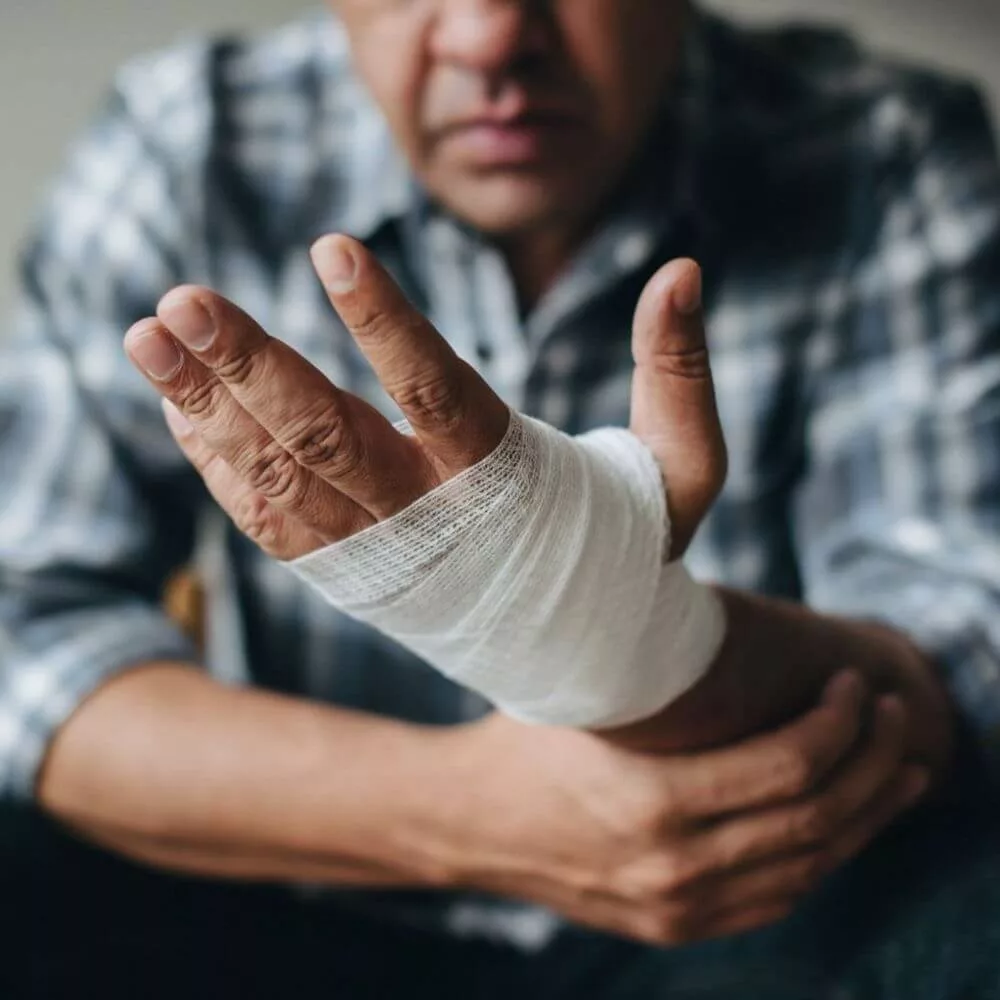
You may be able to move your fingers again but struggle to open a jar, hold a tool, carry a shopping bag, or grip something for more than a few seconds.

This can be frustrating, especially when pain and swelling have improved, and you expected your strength to return with them.

However, healing and functional recovery are not always the same thing.

Your hand may need time to regain movement, coordination, tolerance for everyday activity, and strength.

The reason for persistent weakness also depends on the original injury, the structures affected, the treatment you received, and your stage of recovery.

Recovery is more than waiting for pain to disappear. Regaining useful hand function may involve rebuilding movement, coordination, endurance, and strength at a pace appropriate for the injury.

Persistent weakness does not automatically mean that your injury is getting worse or that recovery has failed. But it should not automatically be dismissed as normal, either.

If your hand remains weak after an injury or surgery,
follow the advice of your treating clinician or hand therapist.
The appropriate exercises & timeline depend on the injury & any restrictions that apply.

1. Why Can Your Hand Still Be Weak After an Injury?

Your hand may have lost strength during reduced activity

When an injury forces you to rest your hand, wear a splint, or avoid certain movements, the muscles involved in gripping and finger control may become less conditioned. You might also have less practice coordinating your fingers and wrist during ordinary tasks.

This can happen even when the original injury is healing as expected. If you have spent weeks avoiding lifting, squeezing, or manipulating objects, returning to those activities may reveal a noticeable difference between your injured and uninjured hand.

However, weakness after an injury is not always just muscle loss. The type and severity of the injury matter.

Pain can make it harder to use your hand normally

Pain can cause you to protect an injured area by gripping less firmly, moving differently, or avoiding certain positions. Even after the original pain settles, those protective habits may remain for a while.

This does not mean the weakness is imaginary. Pain and concern about provoking symptoms can affect how confidently and effectively you use the hand.

If pain continues to limit normal activities, it is worth discussing the problem with a healthcare professional rather than assuming you simply need more strengthening.

Stiffness can limit the force you can produce

A stiff finger, thumb, or wrist may prevent you from getting into a comfortable, effective position for gripping. If your fingers cannot bend or straighten as expected, everyday objects may become harder to hold and manipulate.

In other words, a hand may feel weak partly because it cannot move through the range needed for the task. Strengthening alone may not address that limitation.

The injury may have affected more than muscle

Bones, joints, tendons, ligaments, and nerves all contribute to hand function. Depending on the injury, weakness may involve restricted movement, difficulty activating particular muscles, altered sensation, or other problems that need specific assessment.

For example, nerve involvement can affect both sensation and movement. A tendon injury may require particular protection and carefully timed rehabilitation. These situations cannot safely be treated as ordinary loss of grip strength.

The practical lesson: Persistent weakness has several possible explanations. Identifying the reason is more useful than automatically increasing resistance or squeezing harder.

2. Does Weakness Mean Your Hand Has Not Healed Properly?

Healing and recovery happen on different timelines

An injury can progress through several overlapping stages: the damaged tissue heals, symptoms change, movement returns, and the hand gradually becomes capable of handling more activity.

These stages do not always advance at the same speed. A reduction in swelling or pain does not necessarily mean that the hand is ready for heavy gripping, forceful twisting, or repetitive work.

Similarly, being cleared to resume some everyday activities does not necessarily mean that your previous strength and endurance have fully returned.

Different injuries create different recovery demands

A mild soft-tissue injury, a fracture, a tendon repair, and a nerve injury do not follow the same recovery process. The amount of protection required, the activities permitted, and the time needed to rebuild function can differ substantially.

This is why a generic recovery schedule found online may not fit your situation. Even two people with injuries that sound similar may need different plans because of differences in severity, treatment, complications, and individual circumstances.

What matters is whether your recovery follows the expected course

Weakness can be part of recovery, but the context matters.

  • Is function gradually improving? You may notice that ordinary tasks become easier even if your hand is not yet strong.
  • Are symptoms stable or improving? Increasing pain, swelling, stiffness, or weakness deserves attention.
  • Are you following the appropriate restrictions? Some injuries require you to avoid particular movements or resistance until a clinician confirms they are safe.
  • Have you reached the expected review point? If your progress differs from the timeline you were given, ask your treating professional what to do next.

A hand that remains weak does not automatically indicate a complication. But persistent or unexplained weakness deserves reassessment when it is not improving as expected.

3. Why Can Progress Slow Down or Seem to Stop?

You may be trying to rebuild several abilities at once

Hand function involves more than maximum squeezing force. You may need to recover finger movement, thumb control, coordination, tolerance for repeated tasks, and confidence using the hand.

One ability may improve before another. For example, you might be able to move your fingers more comfortably while still struggling with sustained gripping. That is not necessarily a true plateau; it may mean that different aspects of function are recovering at different rates.

Everyday demands may increase faster than your capacity

As symptoms improve, it is natural to resume normal activities. But returning to a full day of manual work, prolonged computer use, gym training, or repetitive gripping can place very different demands on your hand than a few short rehabilitation exercises.

If your hand repeatedly becomes more painful, swollen, or fatigued after a jump in activity, the overall workload may need review. This does not automatically mean you have caused new damage, but it is a reason to reconsider the progression with your clinician or therapist.

Your current approach may not match the problem

More resistance is not always the answer to persistent weakness. If restricted movement, altered sensation, pain, or difficulty activating a specific movement is the main limitation, repeatedly squeezing a harder gripper may not address it.

A suitable rehabilitation plan should reflect what is limiting your function, what the injury allows, and what you are trying to regain.

Progress can be difficult to notice day by day

Recovery rarely feels like a perfectly steady upward line. Daily performance can vary with fatigue, swelling, sleep, workload, and other factors. Small improvements may also be difficult to recognize when you judge your hand only by whether it has returned to its previous best.

Instead of asking only, “Am I back to normal yet?”, look at whether a relevant task is becoming easier over time.

If progress genuinely stalls, symptoms worsen, or you are unsure whether your current exercises remain appropriate, arrange a review rather than trying to break through the plateau by force.

4. How Can You Tell Whether Your Hand Is Actually Improving?

Track useful function, not just grip strength

A grip-strength measurement can provide useful information when it is appropriate for your injury and taken consistently. But a single number cannot describe everything your hand can do.

You may also want to notice changes in everyday tasks that matter to you, such as holding a cup, fastening buttons, handling a phone, using a keyboard, or performing a work-related task that your clinician has cleared you to attempt.

The aim is not to test your limits repeatedly. It is to recognize meaningful changes during activities that are already safe for your stage of recovery.

Use a simple recovery log

A short weekly record can make gradual changes easier to recognize. Follow any measurement instructions provided by your clinician, and avoid testing movements or loads that have not been cleared.

  • Everyday function: Which approved tasks feel easier, and which remain difficult?
  • Movement: Is the permitted range of motion changing?
  • Symptoms: Are pain, swelling, stiffness, or unusual sensations improving, staying the same, or worsening?
  • Activity tolerance: Can you complete your usual permitted activities without a concerning increase in symptoms?
  • Professional guidance: What restrictions or goals did your clinician set for the next stage?

You do not need a complicated spreadsheet. A few consistent observations are often more useful than frequent, improvised strength tests.

Compare like with like

If your therapist has recommended a particular assessment, use the same method and conditions when repeating it. Changes in grip position, equipment, effort, fatigue, or testing technique can affect the result.

Avoid comparing a carefully measured result from one day with an informal maximum-effort squeeze from another. And do not use your uninjured hand as proof that the injured hand should recover at the same rate.

Look for a trend rather than a perfect day

A single good day does not establish full recovery, just as one difficult day does not necessarily mean you have gone backward.

What matters is the overall pattern, alongside your symptoms and the recovery expectations for your specific injury. If the trend is unclear, a hand therapist or treating clinician can help interpret your progress and decide whether the plan needs to change.

5. What Should You Do If Your Hand Still Feels Weak?

Start by checking your current recovery instructions

If you have received a diagnosis, undergone surgery, or been given a rehabilitation plan, use those instructions as your starting point. Ask your treating professional whether your current level of weakness is expected and which activities are appropriate now.

Do not assume that an exercise is safe simply because it is commonly recommended for hand strengthening. Timing and suitability depend on the injury.

Build activity only within the permitted limits

When your clinician has cleared you to increase activity, gradual progression is generally more useful than sudden jumps in resistance or volume.

Depending on your specific plan, this may involve returning to everyday tasks, working on prescribed mobility exercises, practicing coordination, or introducing strengthening at an appropriate stage. The exact choice and dosage should come from the professional managing your recovery when restrictions or complications are involved.

Avoid using pain as a challenge to overcome. Stop and seek advice if an activity produces concerning symptoms or a clear deterioration in function.

Get the right help when progress is uncertain

A healthcare professional can assess whether weakness is related to movement restrictions, reduced conditioning, pain, nerve symptoms, or another issue. A hand therapist may also help you work toward practical goals and adjust the rehabilitation plan to your current abilities.

It is especially worth arranging a review if:

  • Weakness is not improving within the timeframe you were given.
  • You have lost function that you previously regained.
  • Pain, swelling, stiffness, or unusual sensations are persistent or worsening.
  • You cannot perform everyday tasks that you were told should be manageable at this stage.
  • You are unsure which movements or resistance levels are safe.

You do not have to wait until a problem becomes severe to ask for guidance.

Know when weakness needs urgent assessment

Seek urgent medical assessment if you develop sudden or rapidly worsening weakness, new or significant loss of sensation, severe or rapidly increasing pain or swelling, a hand or fingers that become pale, blue, or cold, a new deformity, or an inability to move your fingers or hold objects after an injury. These symptoms may require prompt evaluation rather than exercise adjustments.

If you have recently had surgery or are wearing a cast or splint, follow the specific emergency instructions you were given and contact your treating service promptly if you develop new numbness, colour or temperature changes, rapidly increasing swelling, or worsening pain.

6. How Can You Return to Normal Hand Use Without Rushing Recovery?

Define what “normal” means for you

Returning to everyday activities may be the first priority for one person, while another may need to regain the hand function required for a trade, a musical instrument, a sport, or strength training.

These goals place different demands on the hand. Being comfortable with light daily activities does not automatically mean that heavy gripping, repeated tool use, or maximal lifting is appropriate.

Identify the activities that matter most and discuss how to return to them safely within your recovery plan.

Increase demands in a controlled way

When progression is permitted, consider the whole task rather than resistance alone. The force required, number of repetitions, duration, frequency, and recovery time can all influence how demanding an activity is.

A short, light task and several hours of repetitive gripping are not equivalent, even if both use the same hand movements. Avoid increasing several demands sharply at once, and follow any limits your clinician has set.

Treat rehabilitation tools as options, not shortcuts

Therapy putty, soft hand exercisers, finger exercisers, and grip trainers serve different purposes. None is automatically appropriate for every injury or every stage of recovery.

If a professional has recommended a tool, use it as instructed. If you are considering buying equipment independently, first establish whether resistance-based exercise is suitable for your injury and what type of movement you need to practice.

A tool should support an appropriate plan, not replace assessment or encourage you to push beyond your current restrictions.

Give progress enough time, but do not ignore warning signs

Recovery can take longer than expected, particularly when an injury affects several structures or requires prolonged protection. That does not mean you should passively wait regardless of what happens.

The balanced approach is to follow your plan, track meaningful changes, progress only when appropriate, and ask for reassessment when recovery is stalled or symptoms change.

The goal is not simply to produce a stronger squeeze. It is to regain the hand function you need, as safely and reliably as your injury allows.

Key Takeaway

A hand can be healing and still be weak, but persistent weakness deserves attention when progress stalls or symptoms worsen.

Recovery depends on the injury, the structures affected, and the stage of rehabilitation.

Track useful changes in everyday function, follow your clinician’s guidance, and do not try to force progress by adding resistance before your hand is ready.

Thanks for Reading!

What Has Been the Most Frustrating Part of Hand Recovery?
Share Your Thoughts in the Comments!

Recommended Next Reads

Further Reading: Professional Hand Rehabilitation Resources

  • Guy’s and St Thomas’ NHS Foundation Trust: Hand Therapy — Learn how specialist hand therapy supports recovery after injuries and helps people return to everyday activities.
  • American Society for Surgery of the Hand: HandCare Patient Resources — Explore expert-written information on hand injuries, treatment, and recovery.
  • Guy’s and St Thomas’ NHS Foundation Trust: Hand Therapy Activity List — See examples of how everyday activities can be grouped by demand during recovery.
Need to Improve Your Grip? I'm Here to Help. As a fitness enthusiast, I explore grip strength, hand training, performance, injury prevention, & recovery to help you train smarter. Whether you're chasing a competitive edge, getting back from an injury, or simply looking for better ways to use & strengthen your hands, you'll find practical ideas & useful tools right here.

Leave a Reply

Your email address will not be published. Required fields are marked *