(Last Updated on October 19, 2026 by Henry)
What does hand rehabilitation actually help you recover?
Hand rehabilitation is the process of restoring as much useful hand and wrist function as possible after an injury, surgery, illness, or condition that affects movement and everyday use.
It can involve guided movement, mobility work, strength development, coordination exercises, activity modification, and practical strategies for returning to normal tasks.
The goal is not simply to make your hand stronger.
It is to help it move, feel, coordinate, and tolerate activity as well as your particular situation allows.
A hand can look healed while still feeling stiff, weak, sensitive, or unreliable.
You might be able to move your fingers but struggle to grip a cup, turn a key, type comfortably, or hold a tool for more than a few minutes.
Rehabilitation addresses these gaps between healing and useful function.
Hand rehabilitation is about restoring function, not just strength.
The aim is to rebuild the movement, control, and capacity needed for everyday life, work, and activities that matter to you.
Hand rehabilitation can be relevant after fractures, tendon or ligament injuries, nerve problems, surgery, repetitive-use conditions, and periods when pain or immobilization has limited normal hand use. The appropriate approach depends on what has been affected and what stage of recovery you are in.
That distinction matters: rehabilitation is not one universal routine, and more exercise is not automatically better. Some injuries need carefully protected movement, while others may benefit from gradually increasing activity. The right plan depends on the diagnosis, healing process, and guidance from a qualified healthcare professional.
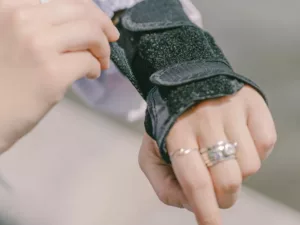
If you have a recent injury, have undergone surgery, or have been given a splint or
movement restrictions, follow your clinician’s instructions before starting exercises.
Exercises that are appropriate for one injury can be unsuitable for another.
Key Takeaway
Hand rehabilitation is about getting useful function back.
Healing and rehabilitation are connected, but they are not identical.
The right approach depends on what has been affected, what stage of recovery you are in, and what your hand needs to do again.
Start with the right goal, not just a stronger squeeze.
Thanks for Reading!
Which Part of Recovery Do You Find Most Challenging?
Share Your Thoughts in the Comments!
Recommended Next Reads
- How to Choose the Right Hand Rehabilitation Tool
- What Actually Gets Stronger During Hand Rehabilitation?
- Why Is Your Hand Still Weak After an Injury? Understanding Recovery & Progress
- Why Does Joint Protection Matter for Your Hands & Wrists?
Further Reading: Professional Hand Therapy Resources
- American Society of Hand Therapists: Patient Education Resources
Explore educational materials from a professional organization dedicated to hand & upper-extremity therapy. - Cambridge University Hospitals NHS Foundation Trust: Hand Therapy: Active Finger Exercises
Read a clinical patient-information resource illustrating how specific hand exercises may be used in rehabilitation.