
(Last Updated on October 26, 2026 by Henry)
- Name: THE HAND BAND
- Category: Handbands
- Purpose: Train finger extensors
- Rating: 4.1 / 5 stars
- Availability: Amazon (Prime Delivery)
- Five resistance levels: Colour-coded bands from extra-light to extra-heavy let you progress finger-opening strength.
- Two bands per resistance level: Ten bands in total provide a spare for each level or allow you to keep sets in separate locations.
- Wide, portable design: The wrap-style bands fit around the fingers and thumb, with a compact carry pouch included for storage.

All Grip, No Release?
Learn Why Finger Extension Matters
✋ Overview: What Problem Does THE HAND BANDSolve?
The Missing Half of Grip Training? Five Levels of Finger Extension
Grip training tends to focus on one action: closing the hand. Grippers, pinch blocks, and heavy holds all challenge your ability to squeeze or maintain a grip. But opening your fingers against resistance deserves attention, too.
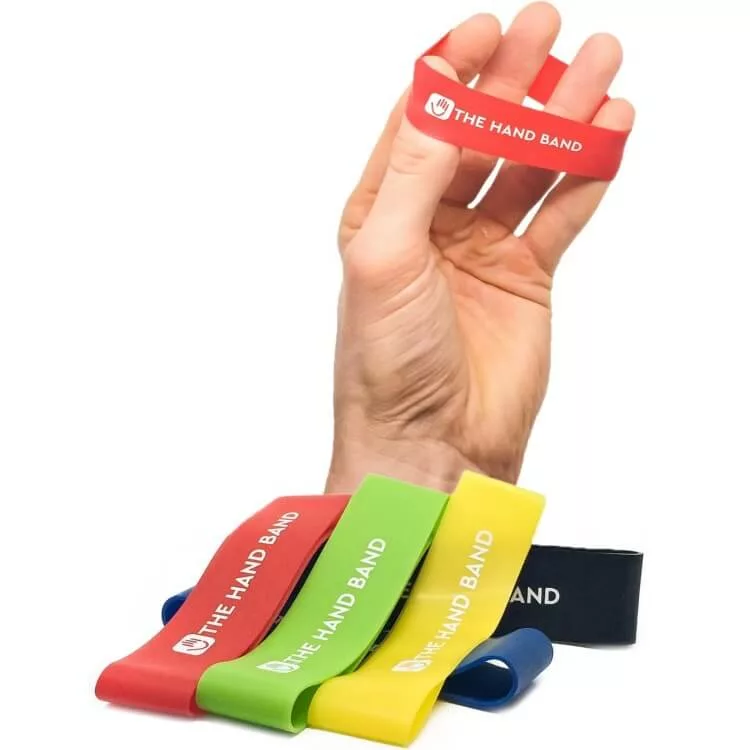
That is where THE HAND BAND stands out to me. Rather than trying to build crushing strength, this set targets the finger extensors, the muscles that help straighten the fingers, using colour-coded elastic bands that resist your hand as you open it.
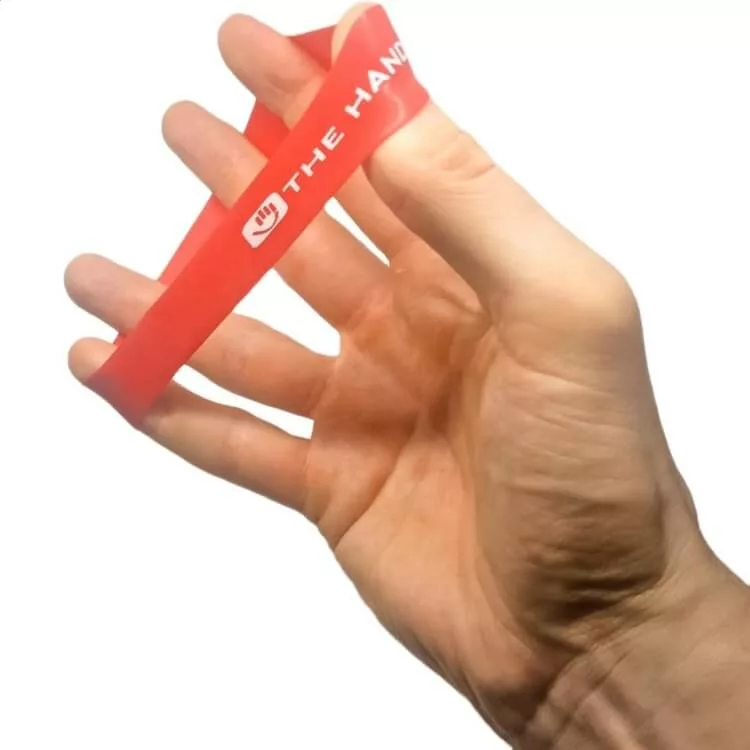
The idea is straightforward: place a band around your fingers and thumb, then spread your fingers against its tension. You can also hold the fingers open while rotating your hand to introduce a different challenge. These movements offer a simple way to add extensor work after a grip session or incorporate it into a broader hand-training routine.
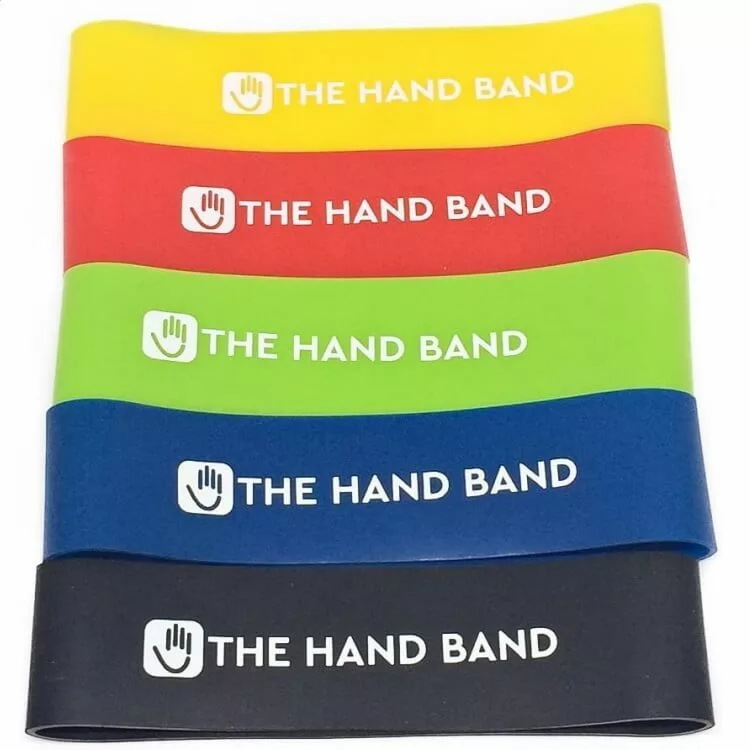
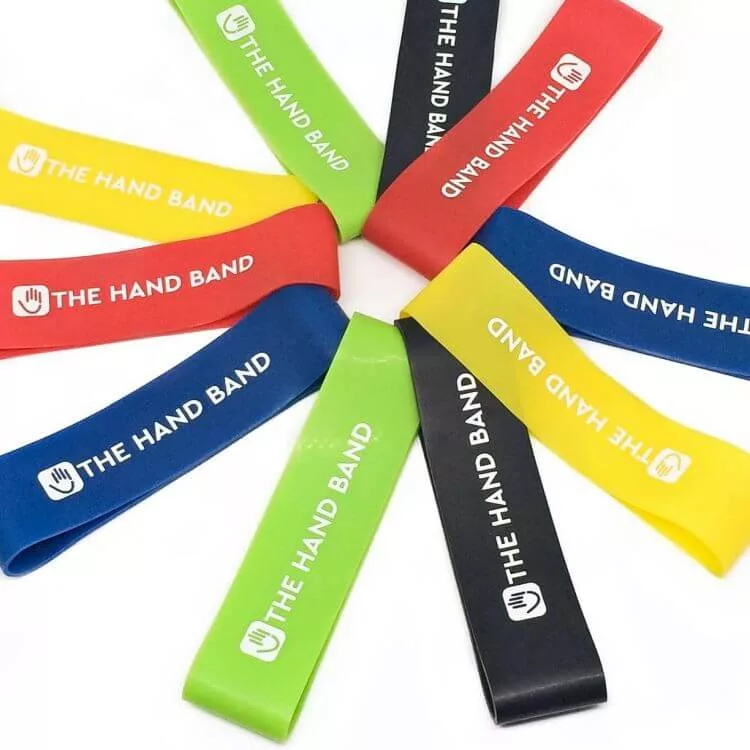
The set includes five resistance levels, from extra-light yellow to extra-heavy black, with two bands in each colour. That gives beginners a gentler starting point and stronger users options for increasing the challenge. The bands are also compact enough to keep at a desk, in a gym bag, or beside your usual training equipment.
Customer feedback is generally positive about their usefulness for hand exercises and rehabilitation routines, although durability reports are mixed. Some users report long service, while others mention broken bands or inconsistent thickness between bands of the same colour.
For me, the appeal is the simplicity: THE HAND BAND fills a specific gap in a training setup without requiring a bulky machine or complicated exercise routine. Just remember that it complements conventional grip training rather than replacing it.
⚖️ Pros & Cons: THE HAND BAND
Usability, resistance quality, & training value
- Targets an overlooked movement: Trains finger opening against resistance rather than focusing exclusively on squeezing.
- Five resistance levels: The colour-coded range supports gradual progression from extra-light to extra-heavy tension.
- Ten bands in total: Two bands per level provide useful redundancy and make it convenient to keep sets in different locations.
- Quick to learn: The basic finger-spreading exercise requires little setup and can fit into a short training session.
- Compact and portable: The lightweight bands and included carry pouch make storage and transport easy.
- Durability is inconsistent: Some customers report long-lasting bands, while others describe premature breakage.
- Fit may not suit everyone: The manufacturer specifically warns that the set is unsuitable for people with very large hands.
- Resistance steps may feel uneven: Five levels provide a useful range, but the change between adjacent bands may be too large for some users.
Still Deciding?
See How It Stacks Up Against Similar Finger Extension Trainers
THE HAND BAND: Ranking 82 out of 100
Build quality, usability, resistance, & training value
🎯 Who Should Use THE HAND BAND?
Training level & athlete identities
- Grip-strength enthusiasts: A useful complement to grippers, pinch training, and heavy holds for a more balanced hand-training routine.
- Climbers and strength athletes: Finger-opening exercises can add movement variety to routines that place substantial emphasis on gripping and holding.
- Office workers and musicians: The bands offer a portable way to perform resisted finger-opening exercises during breaks, provided the movements are comfortable.
- Beginners and people following a rehabilitation plan: The lighter bands may offer an accessible starting point for controlled exercises. Anyone rehabilitating an injury should follow the guidance of their qualified healthcare professional.
🧩My Rating Summary
- Build Quality: 3.9 / 5 The simple rubber-band construction keeps the design lightweight, but mixed reports of breakage and occasional inconsistencies between same-colour bands prevent a higher rating.
- Ease of Use: 4.7 / 5 The basic setup is straightforward, and the main finger-opening movement requires little equipment or preparation.
- Comfort: 4.2 / 5 The wider band design is intended to sit more securely around the fingers than narrow ordinary rubber bands. However, fit depends on hand size and individual preference.
- Resistance Quality: 4.1 / 5 Five colour-coded tension levels provide a useful range for extensor work, although customer reports suggest that consistency and durability may vary.
- Progression Potential: 4.3 / 5 Moving through five resistance levels provides a clear progression path. Repetitions, controlled holds, and exercise variations offer additional ways to develop the routine.
- Value for Money: 4.4 / 5 The ten-band set offers a low-cost entry into dedicated extensor training, with two bands per level. Its long-term value depends partly on how well the bands hold up.
⚙️Technical Details
- Brand: Project Zeus
- Manufacturer: Project Zeus
- Material: Rubber
- Weight: 1.41 oz (approximately 40 g, as listed)
- Dimensions: Approximately 5 × 3.5 inches (12.7 × 8.9 cm, as listed)
- Resistance System: Not specified by the manufacturer
- Resistance Range: Five resistance levels: extra-light, light, medium, heavy, and extra-heavy; colour-coded yellow, red, green, blue, and black
- Training Modes: Not specified by the manufacturer
- Primary Training Focus: Finger extension, extensor conditioning, and complementary hand training
- Included Components: 10 bands: two per resistance level; wide wrap-style finger resistance bands; ten bands and a carry pouch
- Best For: Home training, desk-side exercise, gym bags, and compact hand-training routines
📈 Where THE HAND BAND Fits In Grip Strength Progression
Progression scalability & long-term use
THE HAND BAND offers a simple progression system, although its increments are less precise than those of an adjustable resistance device.
Start with control, not maximum resistance
Choose a band that lets you open your fingers smoothly without forcing the movement or compensating with your wrist. The goal is controlled finger extension, not simply stretching the band as far as possible.
A useful starting routine could look like this:
- Begin with the yellow or red band: Choose the lighter option that allows comfortable, controlled repetitions.
- Practise consistent repetitions: Start with one or two sets of around 10–15 repetitions, adjusting the volume to your ability and response.
- Increase gradually: When the movement becomes comfortable and controlled, try the next resistance level rather than immediately adding excessive repetitions.
- Introduce variations carefully: Holding the fingers open or combining the movement with controlled wrist or hand rotation can change the challenge, but maintain control throughout.
- Monitor the bands: Inspect them for tears, thinning, sticky patches, or other signs of wear before use.
Five levels provide a clear progression ladder, but the jumps between them may not feel equally manageable. If the next colour is too difficult, continue practising with your current band and improve control before progressing.
The duplicate bands are useful here, too. You can keep one set at home and another at work, or retain an unused band as a replacement. However, two bands of the same colour should not automatically be assumed to have perfectly matched tension.
💪 Training Benefits & Strength Transfer Potential
Real-world strength carryover
The main purpose of THE HAND BAND is to train finger opening against resistance. That makes it a useful counterpart to exercises built around closing the hand.
What extensor training adds
- A more balanced exercise selection: Grip routines often include plenty of finger flexion and sustained gripping. Extensor exercises introduce a different movement pattern.
- Dedicated finger-opening work: The bands let you resist the action of spreading or opening the fingers rather than relying solely on unresisted movement.
- A complementary training option: You can perform extensor exercises after gripper work or include them in a separate hand-conditioning session.
- Convenient movement breaks: Their small size makes short exercise sessions possible without setting up a full training station.
- A simple way to structure practice: The colour-coded levels make it easier to repeat a familiar routine and increase resistance when appropriate.
Some customers report using the bands as part of physiotherapy or hand-exercise routines. Those experiences are encouraging, but individual reviews do not establish that the product treats tennis elbow, carpal tunnel syndrome, arthritis, or other medical conditions.
Think of THE HAND BAND as an exercise tool. It can provide resistance for a particular movement, but it cannot diagnose the reason for pain or determine which exercises are appropriate during an injury.
Grip Getting All the Attention?
Learn Why Muscle Balance Is Key to Finger Extension Training
🧠 Performance & Feel During Training
Hand engagement & resistance feedback
The design keeps the exercise simple: position the band around your fingers and thumb, then open your hand against the elastic tension.
The resistance increases as the band stretches, so the effort depends on the band’s tension, how far you spread your fingers, and how you position it.
Two ways to use the bands
Finger-opening repetitions
1Place the band around the fingers and thumb, then slowly spread the fingers against its resistance. Return to the starting position under control and repeat. You can position the band nearer the fingertips for a more demanding movement, provided it stays secure and the exercise remains comfortable.
Opening holds with controlled rotation
2Open the fingers against the band and maintain the position while gently rotating the hand. This variation adds a coordination and endurance challenge. Start with light resistance and a small, controlled range of movement rather than forcing the hand into a large rotation.
What works well
The colour-coded system makes it easy to identify the intended resistance level, while the compact design encourages regular use. You don’t need plates, cables, electronics, or a dedicated training area.
The main limitation is that these bands don’t provide calibrated resistance values. The listing identifies the levels by relative tension rather than a measured force in pounds or kilograms. That is perfectly workable for general exercise, but it makes precise load comparisons difficult.
Fit matters as well. The bands need to stay securely positioned without digging uncomfortably into the fingers. People with larger hands may find the design less suitable, as the manufacturer explicitly notes.
🏗 Build Quality & Long-Term Durability
Material quality & longevity
THE HAND BAND uses a straightforward rubber construction, avoiding the joints, springs, and mechanical parts found in more complex training tools. That simplicity is a practical advantage: the bands are light, easy to store, and quick to replace individually if needed.
Customer experiences with durability are mixed. Several reviewers describe good quality and continued use, while others report that a band broke early or that two bands of the same colour appeared to differ in thickness. One customer noted that the lightest band broke after substantial use, while the others remained intact.
These reports don’t establish a universal lifespan, but they suggest that the bands should be treated as consumable training accessories rather than guaranteed lifetime equipment.
For better long-term use:
- Inspect before training: Check each band for cracks, tears, thinning, or other visible damage.
- Avoid unnecessary overstretching: Use only as much range as the exercise requires.
- Store them away from damaging conditions: Keep the bands in their pouch and away from sharp objects, excessive heat, and prolonged direct sunlight.
- Replace damaged bands: Don’t continue using a band that shows signs of deterioration or is beginning to tear.
The ten-piece set provides some redundancy, but a spare band is not a substitute for inspecting the equipment. Stop using any band that appears unsafe.
🏠 Everyday Usability & Practicality
Portability, storage, & daily training use
One of the most appealing aspects of THE HAND BAND is how little effort it takes to fit into an existing routine. The entire set weighs very little, takes up minimal space, and doesn’t require a fixed training station.
You could keep a set beside your desk for a short movement break, pack it with your gym equipment, or use it at home after a session focused on crushing and holding strength.
The five colours also make the bands easy to distinguish without measuring resistance or adjusting a mechanism. The included pouch helps keep the set together, and having two bands per level means you can leave a duplicate in another location if that suits your routine.
There are a few practical limitations. The resistance increments may not match everyone’s ability, and people with very large hands may struggle with the fit. Rubber bands also need periodic inspection and eventual replacement, depending on use.
Overall, the everyday advantage is convenience rather than versatility in the conventional gym-equipment sense. THE HAND BAND performs a specific job with very little setup, which makes it easier to use consistently.
✅ Final Verdict: Is THE HAND BAND Worth It?
Long-Term Training Value
I see THE HAND BAND as a useful addition for people who want their grip training to include more than squeezing, pinching, and holding. Its biggest strength is its focused purpose: it gives you a simple way to train finger extension without buying a large or complicated piece of equipment.
The five resistance levels provide a sensible starting point for beginners and a progression route for more experienced users. The duplicate bands, lightweight construction, and carry pouch also make the set practical for use at home, at work, or alongside a regular workout.
I’m less enthusiastic about the mixed durability feedback. Rubber bands will naturally wear with use, but reports of early breakage and inconsistent thickness are worth considering. The lack of measured resistance values also means progression is based on relative difficulty rather than precise loading.
My recommendation: If your routine already includes grippers, pinch training, or other exercises built around closing the hand, THE HAND BAND is an inexpensive way to add dedicated extensor work. It’s particularly appealing if you want something compact and easy to use regularly.
If you need highly precise resistance increments, exceptionally robust equipment for heavy daily use, or a product specifically prescribed for an injury, a different option may be more appropriate.
THE HAND BAND doesn’t replace conventional grip training. It complements it, and that is exactly why it deserves a place in the Extend It category.
Thanks for Checking It Out!
Have You Trained With THE HAND BAND?
Share Your Experience in the Comments!
Hands & Elbows Taking a Beating? Learn About Repetitive Strain & How to Train Smarter
& Browse the Grip Training FAQ for Quick Answers