
(Last Updated on October 17, 2026 by Henry)

Does Supporting a Joint Make It Stronger?

Wrist wraps, braces, compression sleeves, and support gloves can make certain activities feel more comfortable or controlled.
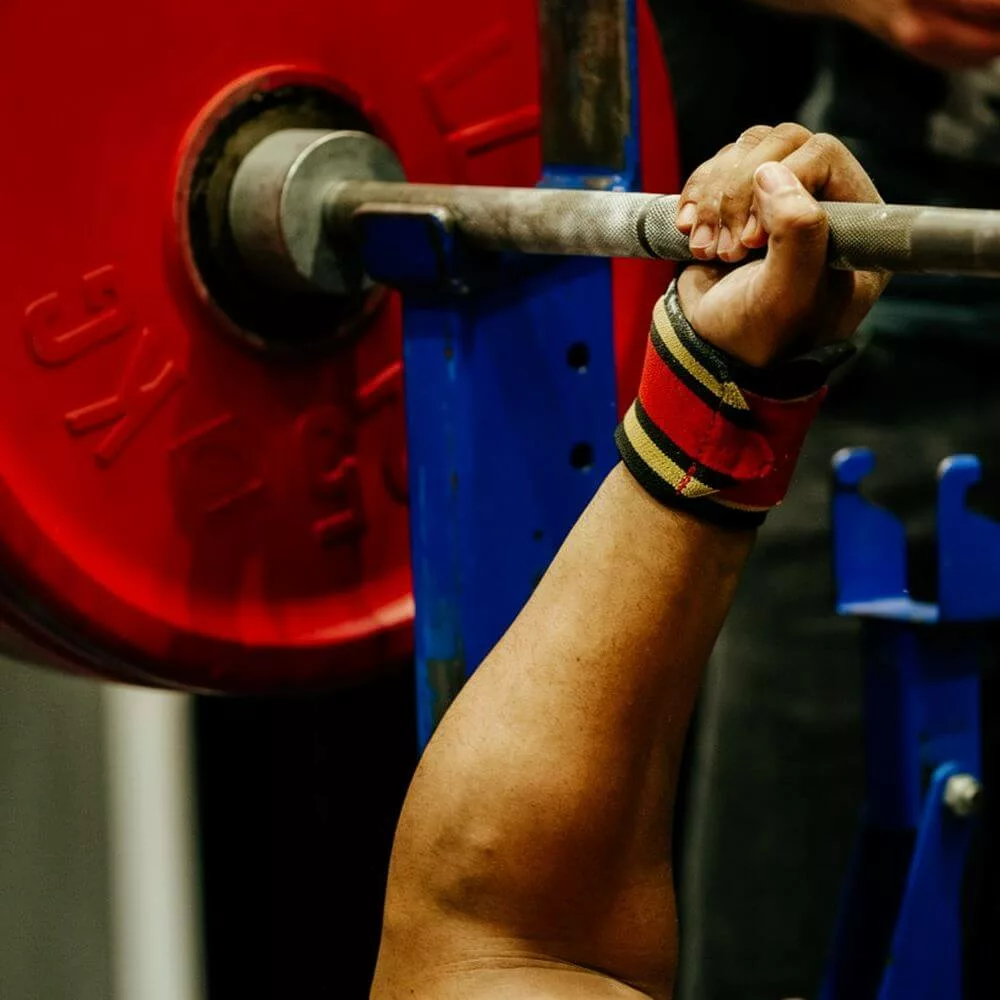
Strength training, meanwhile, can improve your muscles’ ability to produce force and handle physical demands over time.

Because both approaches can influence how your hands and wrists feel and function, it’s easy to confuse what they actually accomplish.

But supporting a joint and strengthening the structures around it are not the same thing.

An external support can help manage a particular demand, limit selected movements, or provide compression, depending on its design.

Training challenges your body to adapt to an appropriate workload. One changes the conditions under which you perform an activity; the other can develop your physical capacity over time.

Neither approach is automatically better in every situation. A person recovering from an injury may need a specific brace or splint, while a healthy lifter may use wrist wraps during selected exercises. Someone else may benefit most from gradually developing strength, control, and tolerance for everyday tasks.

Understanding the distinction helps you make better decisions about training, recovery, and the support products you use.

External support can help you manage demand. Strength training can help you build the capacity to handle it. Knowing which outcome you need is the key.

The difference matters particularly when you’re trying to protect your hands and wrists without unnecessarily limiting your activity. A wrap that helps you feel secure during a heavy set doesn’t automatically improve your wrist strength. Equally, stronger muscles don’t make you immune to injury or eliminate every reason to use a brace.

How & why do we use wrist wraps? Wrist wraps help to keep your wrists straight
for pressing movements. Did you know they’re not made to be comfortable,
but to literally put your wrist into a cast so it won’t bend.

1. What Does External Joint Support Actually Improve?

What Does External Joint Support Actually Improve?

External support works by changing the conditions around a joint or body part. Depending on its construction, it may provide compression, warmth, a more secure feeling, or a physical limit on certain movements.

These effects can be useful, but they are not all the same. A flexible sleeve does not control movement in the same way as a rigid splint, and a training wrist wrap does not necessarily provide the same support as a brace prescribed for an injury.

Support Can Change How an Activity Feels

Consider a lifter who uses wrist wraps during a heavy pressing exercise. The wraps may help the wrist feel more secure, particularly when the lifter wants to limit excessive wrist movement during the lift.

The lifter may feel more confident or comfortable performing the movement. However, that experience alone does not demonstrate that the wrist muscles have become stronger or that the joint has developed greater long-term capacity.

  • Compression sleeves: These may provide warmth, compression, and a comfortable feeling around the joint, depending on their design.
  • Wrist wraps: These can provide adjustable external support during selected activities, often by limiting some wrist movement.
  • Braces and splints: These can restrict particular movements or hold a joint in a specified position when that is appropriate for the condition.
  • Support gloves: Depending on their construction, these may provide padding, warmth, compression, or other forms of assistance, but they do not all stabilize the wrist.

The product’s actual design determines what it can do. The word support on a label is not a guarantee of any particular effect.

Support Does Not Automatically Mean Greater Strength

Imagine that you can perform a particular exercise more comfortably while wearing wrist wraps. You may have improved your ability to perform that exercise under those conditions, but you have not necessarily increased your unassisted wrist strength.

The wraps are part of the conditions under which the performance occurred.

This doesn’t make the improvement meaningless. Being able to perform a task comfortably or manage a specific demand can be valuable. The mistake is treating that result as proof of a different adaptation.

External support can change the task without necessarily changing the underlying capacity you’re trying to develop.

2. What Actually Gets Stronger When You Train?

What Actually Gets Stronger When You Train?

Strength training creates a different kind of change. Instead of relying primarily on an external aid, you challenge your body to produce force against resistance that it can appropriately handle.

With suitable programming, recovery, and progression, the muscles involved in gripping and controlling the wrist can develop greater force-producing capacity. You may also improve your ability to coordinate those muscles during a task.

However, joint strength is not a single, isolated quality. The wrist and hand depend on several interacting structures, and improving one component does not guarantee that every other component has improved to the same degree.

Muscle Strength Is Only One Part of Joint Function

Your wrist is moved and controlled by muscles whose tendons cross the joint, while bones, ligaments, joint surfaces, and other soft tissues contribute to its structure and function.

When you grip an object, the muscles that close your fingers generate force. Other muscles help control wrist position, allowing you to maintain a useful hand position while handling the object.

This is one reason grip strength and wrist control are related but not identical. A person might have a strong crush grip yet struggle to maintain a comfortable wrist position during a particular task.

  • Grip strength: The ability to produce force through the fingers and hand, as in crushing a gripper.
  • Wrist strength: The ability of the wrist muscles to produce force against resistance in movements such as flexion, extension, and deviation.
  • Wrist control: The ability to coordinate muscle activity to manage wrist position during movement and loading.
  • Endurance: The ability to sustain or repeat a physical effort over time.
  • Task-specific capacity: The ability to perform a particular activity under its relevant demands.

These qualities overlap, but they should not be treated as interchangeable measurements.

Stronger Muscles Do Not Guarantee Injury-Proof Joints

Building strength can improve your ability to perform demanding activities, but it doesn’t make your hands and wrists invulnerable. Injuries can still occur when forces exceed what tissues can tolerate, when demands increase too quickly, or because of circumstances that strength alone cannot control.

Nor does every wrist problem respond to strengthening in the same way. The appropriate exercise depends on the person’s condition, symptoms, and current capacity.

The realistic goal is to develop useful physical capacity while respecting the limits and needs of the structures involved.

Strength is an adaptation you build, not a guarantee that nothing can go wrong.

3. Does Wearing a Brace Make Your Joint Weaker?

Does Wearing a Brace Make Your Joint Weaker?

This question often appears whenever people discuss braces, wrist wraps, or other external supports. The concern is understandable: if a support helps you manage a demand, could relying on it prevent you from developing the ability to handle that demand yourself?

The answer depends on the type of support, why you’re using it, how much it restricts movement, and how long you use it.

Wearing a support does not automatically make a joint weaker. Appropriate support can be an important part of managing an injury or maintaining function. At the same time, unnecessary or prolonged restriction may interfere with normal movement and activity, depending on the circumstances.

Support and Training Are Different Tools

Consider two scenarios.

In the first, a healthy lifter uses wrist wraps for selected heavy pressing sets but performs other suitable exercises without them. The wraps are an optional aid for a particular demand. Their use doesn’t automatically mean the lifter is neglecting wrist strength.

In the second, a person with a wrist injury has been advised to use a specific splint for a particular period. The splint may help protect the affected area or maintain a recommended position while the person follows a recovery plan.

These situations should not be treated alike. The lifter’s choice about training equipment is different from a clinician-directed plan for an injured wrist.

When Could Reliance Become a Problem?

Problems can arise when a support is used to avoid addressing a relevant limitation indefinitely, or when it encourages someone to continue an activity that is aggravating an injury.

For example, if your wrist repeatedly hurts during a particular exercise, tightening a wrap may change how the movement feels without resolving the reason for the pain. You may need to reconsider your technique, load, range of motion, recovery, or whether professional assessment is appropriate.

Likewise, a brace prescribed for an injury should not be abandoned simply because you want to build strength. Removing necessary support too early may be inappropriate for the condition.

The important question is not whether supports are inherently good or bad. It’s whether the support serves a clear purpose within a sensible overall plan.

Avoid Both Extremes

  • Don’t assume every support creates weakness: A correctly selected support may help you manage a specific activity or condition.
  • Don’t assume a support builds strength: A more secure feeling while wearing a brace or wrap does not prove that your unassisted capacity has improved.
  • Don’t force unassisted activity when support is needed: Injury management and recovery sometimes require restrictions that should be guided by a qualified professional.

The goal is appropriate support, not maximum dependence on equipment, and not refusing useful support on principle.

4. Can Strength Training Replace Joint Support?

Can Strength Training Replace Joint Support?

Sometimes, developing strength and control can reduce the need for an optional support during a particular activity. But strength training cannot replace every function that a brace, splint, or other support is intended to provide.

The distinction becomes especially important when an injury, diagnosed condition, or specific movement restriction is involved.

When Training May Be the Main Focus

For someone without an injury who wants to improve their ability to grip, lift, or perform repetitive tasks, appropriately planned training can develop relevant physical capacities.

Depending on the goal, that might include grip exercises, wrist flexion and extension, controlled wrist movements, and gradual exposure to the demands of the activity.

The training needs to match the intended outcome. A crush-grip exercise with a gripper is useful for practicing that type of force production, but it doesn’t automatically train every movement or control requirement of the wrist.

Progress should be gradual enough for the person to tolerate. More resistance is not always better, particularly when the hand or wrist is already irritated.

When Support May Still Be Necessary

External support may be useful when a particular movement needs to be limited, when a joint requires a prescribed position, or when an injury or condition makes certain activities difficult.

In those circumstances, strength training alone may not provide the same function as the support.

For example, a splint used to maintain a specified wrist position serves a different purpose from a wrist-strengthening exercise. One controls movement externally; the other challenges the body to produce and control force.

Neither can automatically replace the other.

Recovery Often Requires More Than One Approach

When rehabilitation is appropriate, the plan may include temporary support, changes to activity, movement exercises, progressive strengthening, or other interventions selected for the condition.

The order and timing matter. Some injuries require protection before certain activities can be resumed, while other conditions may benefit from movement and exercise rather than unnecessary restriction.

A clinician can help determine which approach is appropriate and how to progress safely.

Don’t treat support and strengthening as competing philosophies. Use each for the job it is intended to do.

5. How Can You Tell Whether You're Improving Support or Strength?

How Can You Tell Whether You’re Improving Support or Strength?

If you want to know whether your hands and wrists are becoming more capable, you need to look at the outcome you’re measuring.

A support may help you perform a task under specific conditions. Strength training may improve your ability to produce force without that assistance. Other forms of training may improve endurance, coordination, or control.

If you judge all of these outcomes by one number or one successful workout, you can easily miss what has actually changed.

Match the Measurement to the Goal

  • If your goal is grip strength: Track performance in a consistent grip-strength test or exercise. Use the same equipment and setup when comparing results.
  • If your goal is wrist strength: Track a suitable wrist exercise or assessment with consistent positioning and resistance.
  • If your goal is endurance: Observe how well you sustain or repeat a defined task, rather than judging progress solely by the heaviest load you can manage once.
  • If your goal is better control: Pay attention to whether you can maintain the required position and perform the movement consistently under appropriate conditions.
  • If your goal is managing symptoms: Track comfort and function during relevant activities, while following any treatment plan. Less discomfort alone does not necessarily prove that strength has increased or an injury has healed.

Keep the Conditions Consistent

Imagine that you perform a heavy exercise with wrist wraps this month and compare it with an unwrapped attempt next month. The results won’t provide a clean comparison because the conditions differ.

If you want to measure strength, use a consistent test setup. If you want to evaluate whether a support helps during a particular activity, compare performance and comfort under comparable conditions, while avoiding tests that aggravate symptoms.

You can track both outcomes, but label them correctly.

Look Beyond Immediate Performance

A single successful workout tells you little about long-term adaptation. Consistent progress, appropriate recovery, and the ability to tolerate relevant activities over time provide a more useful picture.

For people recovering from an injury, progress may also involve improved everyday function, movement, and symptom management. The appropriate measures depend on the condition and may require professional guidance.

The principle is straightforward: measure the capacity you want to improve, rather than assuming every improvement in performance represents greater strength.

6. How Should You Balance Joint Support and Strength Training?

How Should You Balance Joint Support and Strength Training?

The right balance depends on your current condition, your activity, and what you want to accomplish. There isn’t one universal rule that says everyone should train without support or that every demanding activity requires a brace.

Instead, start with the actual need and choose an approach that matches it.

If You’re Training Without an Injury

Build the physical capacity your activity requires through appropriate training, sensible technique, and gradual progression.

A support may still be useful for selected exercises, but it shouldn’t automatically become a substitute for developing the abilities relevant to your goal. Equally, there is no universal requirement to avoid all supports if a particular product helps you manage a specific training demand.

If You Experience Recurring Discomfort

Don’t assume that the choice is simply between wearing a brace and strengthening the joint.

Review the activity that triggers the symptoms, the demands you’re placing on the area, and whether your technique or workload needs adjustment. If the problem persists, worsens, or interferes with normal function, seek appropriate assessment rather than repeatedly trying different supports.

If You’re Recovering From an Injury

Follow the recommended recovery plan. A support may be needed for a specific period or activity, and strengthening may need to be introduced or progressed according to the injury and your response.

Don’t remove a prescribed brace just to prove that your joint is strong enough. Don’t add challenging exercises simply because a support makes the movement feel more comfortable.

Use This Simple Decision Framework

  • 1. Identify the need: Are you trying to improve strength, manage a training demand, reduce discomfort, or protect an injured area?
  • 2. Choose the appropriate tool: Training develops physical capacity; external support serves a different purpose that depends on its design.
  • 3. Track the correct outcome: Measure strength, endurance, control, or activity tolerance according to your goal.
  • 4. Reassess when circumstances change: If the support is no longer useful, symptoms persist, or your activity demands increase, review your approach rather than relying on habit.

The best approach is the one that matches your actual needs. Support can be valuable without building strength, and strength can be valuable without eliminating every reason to use support.

The aim is not to choose between support and strength. It’s to understand what each contributes and use them appropriately.

Key Takeaway

Support and strength are not interchangeable.

External support can help you manage a specific demand or restrict movement when needed.

Strength training develops the capacity to produce and control force.

Know which outcome you need, measure it appropriately, and use support and training as complementary tools when the situation calls for both.

Thanks for Reading!

Which Type of  Grip Support Have You Used Before?
Share Your Thoughts in the Comments!

Recommended Next Reads

  • Why Does Joint Protection Matter for Your Hands & Wrists?
  • How to Choose the Right Support for Your Hands & Wrists
  • Why Do Your Hands & Wrists Hurt During Training? Common Causes & Solutions
Need to Improve Your Grip? I'm Here to Help. As a fitness enthusiast, I explore grip strength, hand training, performance, injury prevention, & recovery to help you train smarter. Whether you're chasing a competitive edge, getting back from an injury, or simply looking for better ways to use & strengthen your hands, you'll find practical ideas & useful tools right here.

Leave a Reply

Your email address will not be published. Required fields are marked *