(Last Updated on October 3, 2026 by Henry)
- Name: GRIPZILLA Tornado (2026 Steel Build)
- Category: Multi-Axis Grip, Wrist & Forearm Strength Training
- Purpose: Grip, wrist rotation, forearm strength & multi-plane training
- Rating: 4.3 / 5 Stars
- Availability: Amazon (Prime Delivery)
- Multi-axis resistance: Trains flexion, extension, rotation & deviation
- Adjustable friction torque: From light rehab-oriented tension to heavy resistance
- 2026 steel construction: Aluminum and metal body with brass internal components

Got Strong Fingers But Wrists Flailing in the Wind?
Learn How to Build Strength Through Wrist Flexion & Extension
✋ Overview: What Problem Does GRIPZILLA Tornado (2026 Steel Build) Solve?
A versatile way to train the forearm beyond conventional gripping
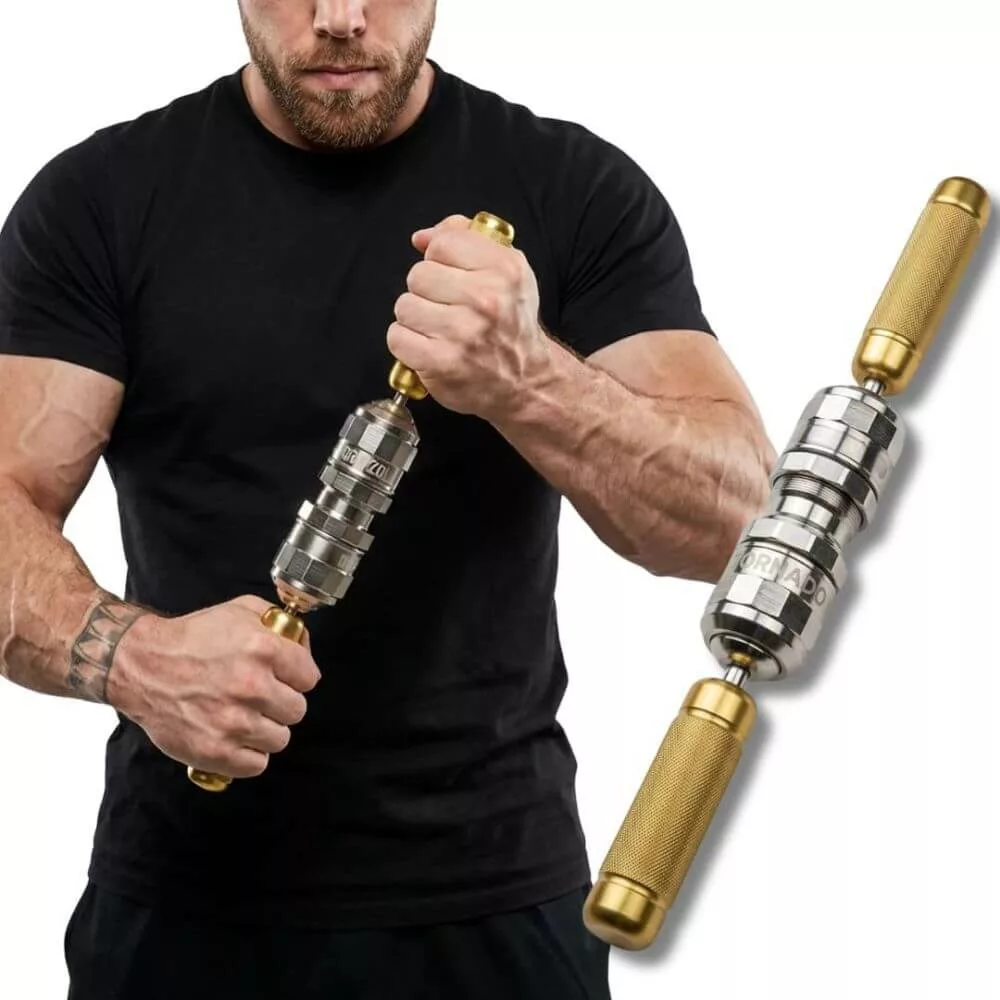
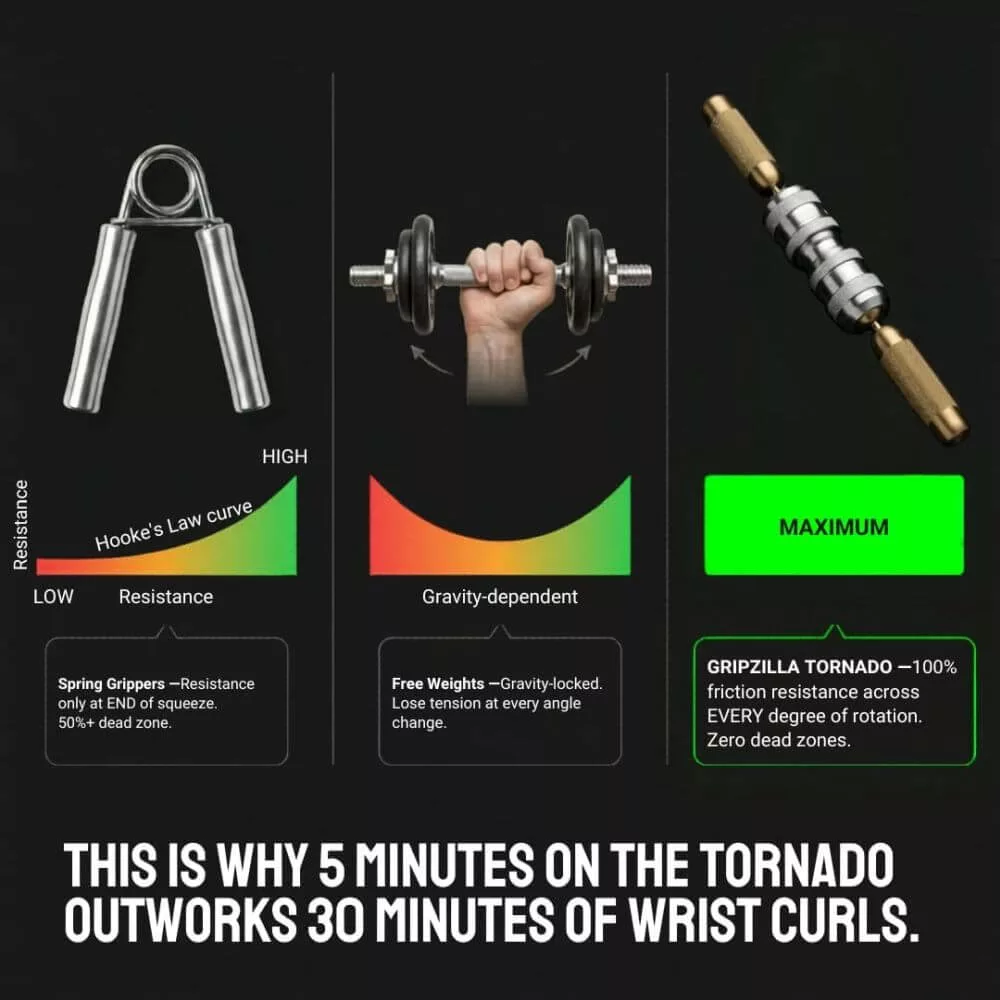
When I look at the GRIPZILLA Tornado, the first thing that stands out is how different the training approach is from a conventional hand gripper. Instead of repeatedly squeezing two handles together, the Tornado uses adjustable friction resistance and a dual-joint design to let the hands and forearms work through multiple directions.
That immediately makes it interesting for anyone who feels that ordinary grippers, wrist rollers, or basic resistance bands leave something out.
The 2026 version also brings a substantial metal construction to the design. At just over four pounds, this isn’t a lightweight plastic gadget that disappears into a drawer. It has some serious physical presence, and the adjustable resistance means the same tool can be used for relatively light movement practice or much more demanding strength work.
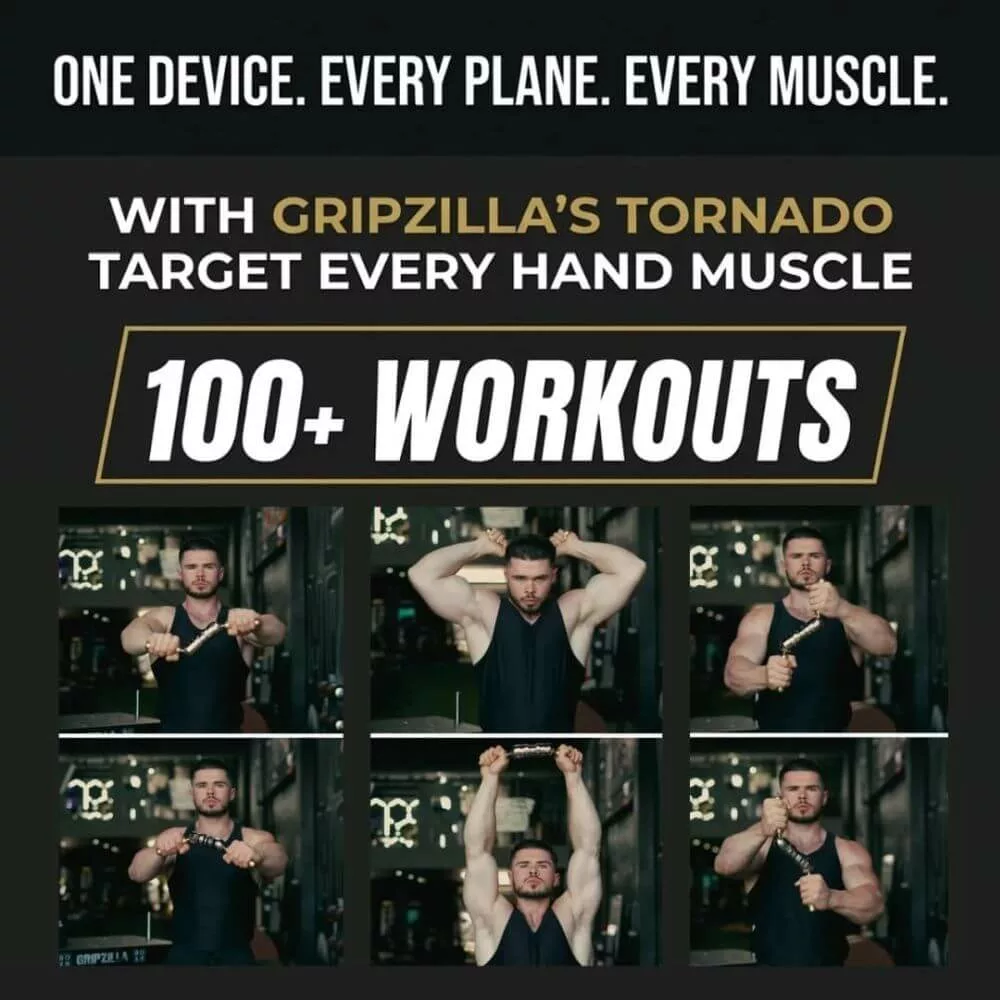
What I find particularly interesting is the sheer variety of movement possibilities. The demonstrations show vertical, horizontal, rotational, twisting, pronation, supination, radial and ulnar movements, along with single-hand and two-hand variations.
For me, that’s the real attraction: the Tornado isn’t trying to be another specialized gripper. It’s designed to make the forearm itself the training target.
⚖️ Pros & Cons: GRIPZILLA Tornado (2026 Steel Build)
A highly versatile training tool, but its complexity comes with trade-offs
The GRIPZILLA Tornado offers a much broader movement range than traditional grip trainers, and its adjustable friction system provides plenty of room to progress.
The heavy-duty construction is another strong point, although customer feedback shows that some internal components and the adjustment system have experienced reliability issues.
- Exceptional movement variety: Supports numerous grip, wrist, and forearm movement patterns.
- Adjustable resistance: Tension can be adapted from relatively light to very demanding levels.
- Multi-plane training: Allows training beyond the single closing motion of standard grippers.
- Portable training system: No plates, batteries, or complicated gym setup are required.
- Premium metal construction: The 2026 build uses aluminum and metal components with brass internals.
- High purchase price: At $219.99 before shipping and import charges, it is a substantial investment.
- Mixed durability feedback: Several customers report failures involving plastic gaskets or inserts.
- Learning curve: The adjustment and multi-directional movements take some practice to master.
Still Deciding?
See How It Stacks Up Against Similar Wrist Torque Trainers
GRIPZILLA Tornado (2026 Steel Build): Ranking 86 out of 100
A versatile way to train the forearm beyond conventional gripping
🎯 Who Should Use GRIPZILLA Tornado (2026 Steel Build)?
A specialized tool for athletes who need more than basic crush-grip work
The Tornado is most relevant to users who want to train the wrist and forearm through several planes rather than concentrating exclusively on crushing resistance.
- Advanced grip athletes: The adjustable resistance and broad movement selection provide plenty of room for demanding forearm training.
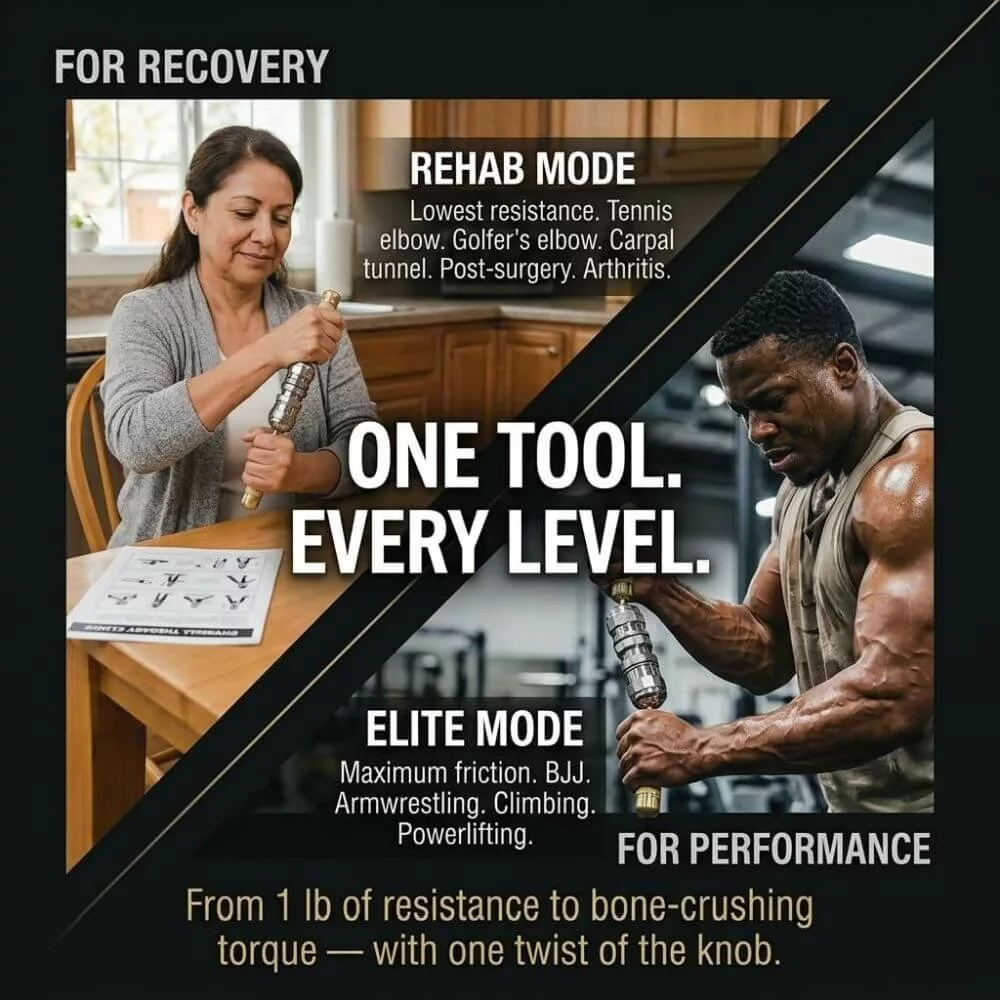
- Armwrestlers and combat athletes: Rotational and multi-directional resistance can complement the wrist and forearm demands of grappling and armwrestling.
- Climbers and strength athletes: The tool adds wrist, finger and forearm work that can complement pulling and grip-focused training.
- Athletes rebuilding training capacity: The lighter resistance settings can provide controlled low-load work, although anyone dealing with an active injury should follow appropriate professional guidance.
The Tornado can also appeal to golfers, tennis and pickleball players, musicians, manual workers, and desk-based users who want a compact way to train the hands and forearms through multiple directions.
It is less compelling for someone who simply wants an inexpensive gripper for basic crush-strength development. A conventional gripper is considerably simpler and much cheaper when squeezing strength is the only objective.
🧩My Rating Summary
- Build Quality: 4.5 / 5
The substantial metal construction gives the Tornado a premium, heavy-duty feel, although mixed reports about internal components prevent a perfect score. - Ease of Use: 3.8 / 5
The exercises themselves are versatile, but the adjustment mechanism and multi-directional operation require some familiarization. - Comfort: 4.2 / 5
The handles provide a secure training interface across numerous movements, with the overall design remaining comfortable during varied forearm work. - Resistance Quality: 4.6 / 5
Adjustable friction resistance provides smooth, continuous loading across multiple movement patterns and allows the challenge to be tailored to the exercise. - Progression Potential: 4.8 / 5
Resistance, movement direction, positioning, unilateral work, volume, and control all provide ways to increase the training challenge over time. - Value for Money: 3.8 / 5
The Tornado offers an unusually broad range of training possibilities, but its high purchase price and mixed durability feedback make value more dependent on how extensively it will be used.

⚙️Technical Details
- Brand: GRIPZILLA
- Manufacturer: GRIPZILLA
- Material: Aluminum and metal; 2026 build uses stainless steel body and brass internal components according to the product description
- Weight: 4.02 lb (approximately 1.82 kg)
- Dimensions: Not specified by the manufacturer
- Resistance System: Adjustable friction torque
- Resistance Range: Designed to provide very light through very high resistance depending on adjustment
- Training Modes: Multi-axis grip, wrist rotation, pronation, supination, flexion, extension, radial and ulnar deviation, and twisting movements
- Primary Training Focus: Grip, wrist strength, forearm strength, rotational control, conditioning and movement variety
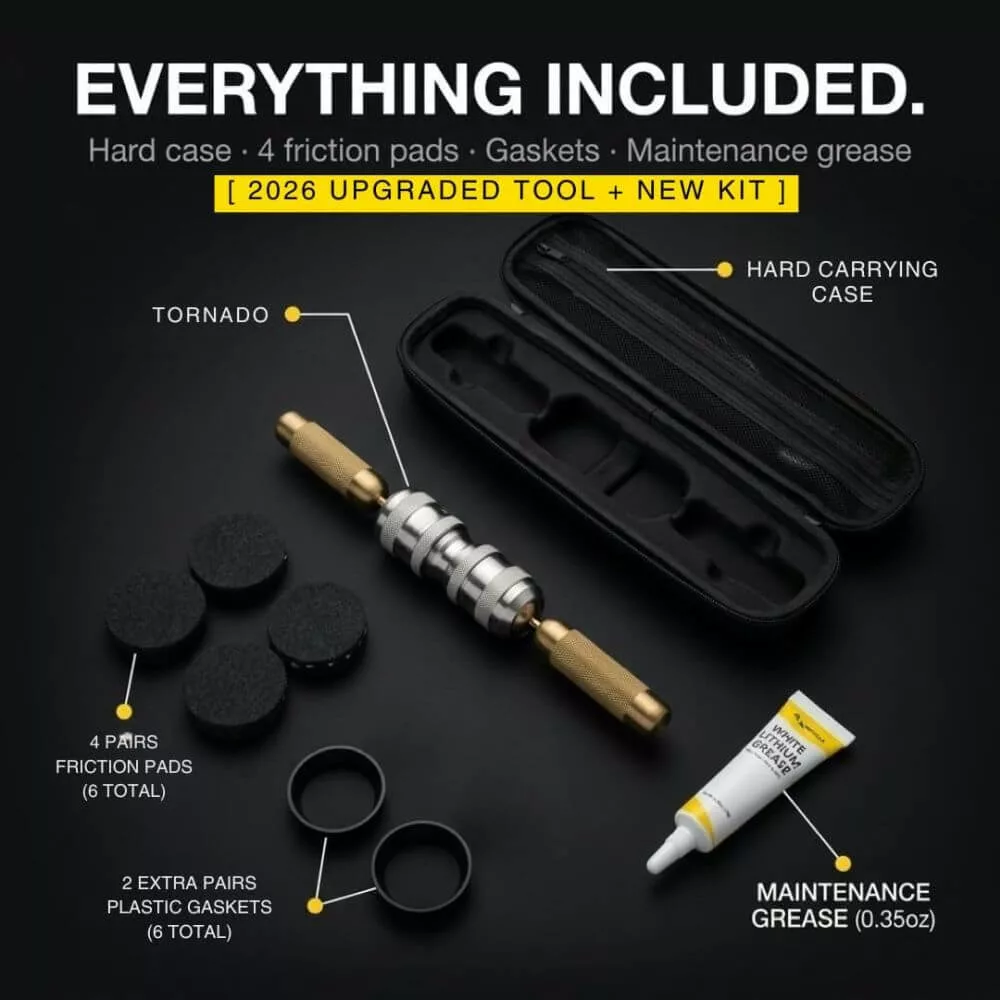
- Included Components: One GRIPZILLA Tornado unit
- Best For: Grip athletes, arm wrestlers, climbers, grapplers, strength athletes, and users seeking multi-directional forearm training
📈 Where GRIPZILLA Tornado (2026 Steel Build) Fits In Grip Strength Progression
A progression tool built around resistance control and movement complexity
The Tornado approaches progression differently from a traditional set of grippers. Instead of moving from one fixed spring resistance to another, the user adjusts friction torque and can gradually increase the challenge as strength and control improve.
That makes it suitable across a wide range of training levels, at least in principle. Lighter settings can be used for warm-ups, movement practice, or lower-load conditioning, while greater resistance creates a much more demanding forearm-strength stimulus.
Its biggest progression advantage is not simply how heavy it can become. It is the ability to keep changing the direction, position, range of motion, hand involvement, and resistance of the exercise. That creates a much larger movement library than a conventional squeeze gripper.
There is also a skill component. Learning to control the handles through different planes gives the user another form of progression beyond simply adding resistance.
The limitation is that the Tornado does not provide the same straightforward progression measurement as a numbered gripper set. A 100-lb gripper gives an obvious benchmark; friction-based resistance is less intuitive to quantify.
For advanced users, however, that flexibility can be valuable. Rather than outgrowing the tool simply because its fixed resistance has become too easy, progression can come from resistance, movement complexity, unilateral work, positioning, volume, and control.
💪 Training Benefits & Strength Transfer Potential
Multi-directional forearm work for strength, control and endurance
The primary training advantage of the Tornado is its ability to expose the wrist and forearm to movements that conventional crush grippers do not reproduce particularly well.
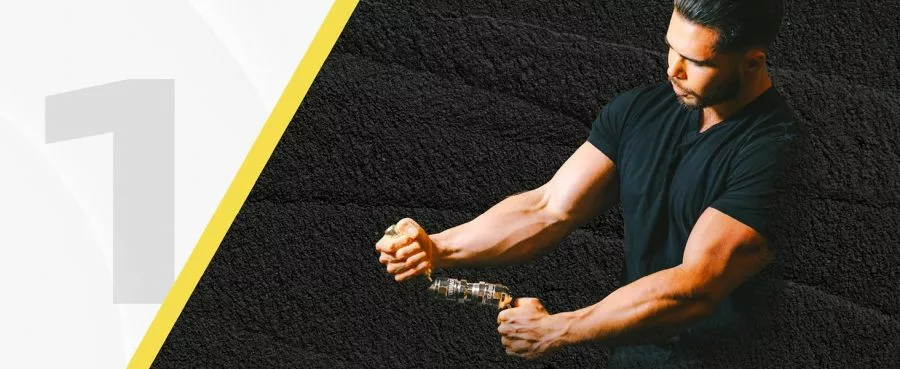
The demonstrated exercises include flexion and extension patterns, pronation and supination, radial and ulnar deviation, rotational movements, twisting motions, and various combinations of arm and wrist positioning.
This can provide several useful training qualities:- Crush and grip support: Holding and manipulating the device still requires active hand engagement.
- Wrist strength: Multi-directional loading challenges the muscles responsible for controlling the wrist.
- Forearm rotation: Pronation and supination patterns are particularly relevant to sports and strength activities requiring rotational control.
- Endurance: Adjustable friction makes higher-repetition work practical without requiring additional equipment.
- Movement control: Changing the direction of resistance adds a coordination component that fixed-path tools do not provide.
- Sport-specific preparation: Climbers, armwrestlers, grapplers, racquet-sport athletes and lifters can select movements that resemble some of the demands of their activities.
The manufacturer describes the Tornado as training all 24 forearm muscles across six planes, but that should be regarded as a manufacturer claim rather than an independently verified measurement.
Likewise, claims concerning tennis elbow, golfer’s elbow, carpal tunnel syndrome, or rehabilitation outcomes should not be interpreted as medical treatment claims. The device can provide adjustable forearm exercise, but active injuries require appropriate professional assessment.
Want to Understand Wrist Torque Better?
Explore the Wrist Movements Behind More Capable Wrists
🧠 Performance & Feel During Training
Friction resistance creates a very different training sensation
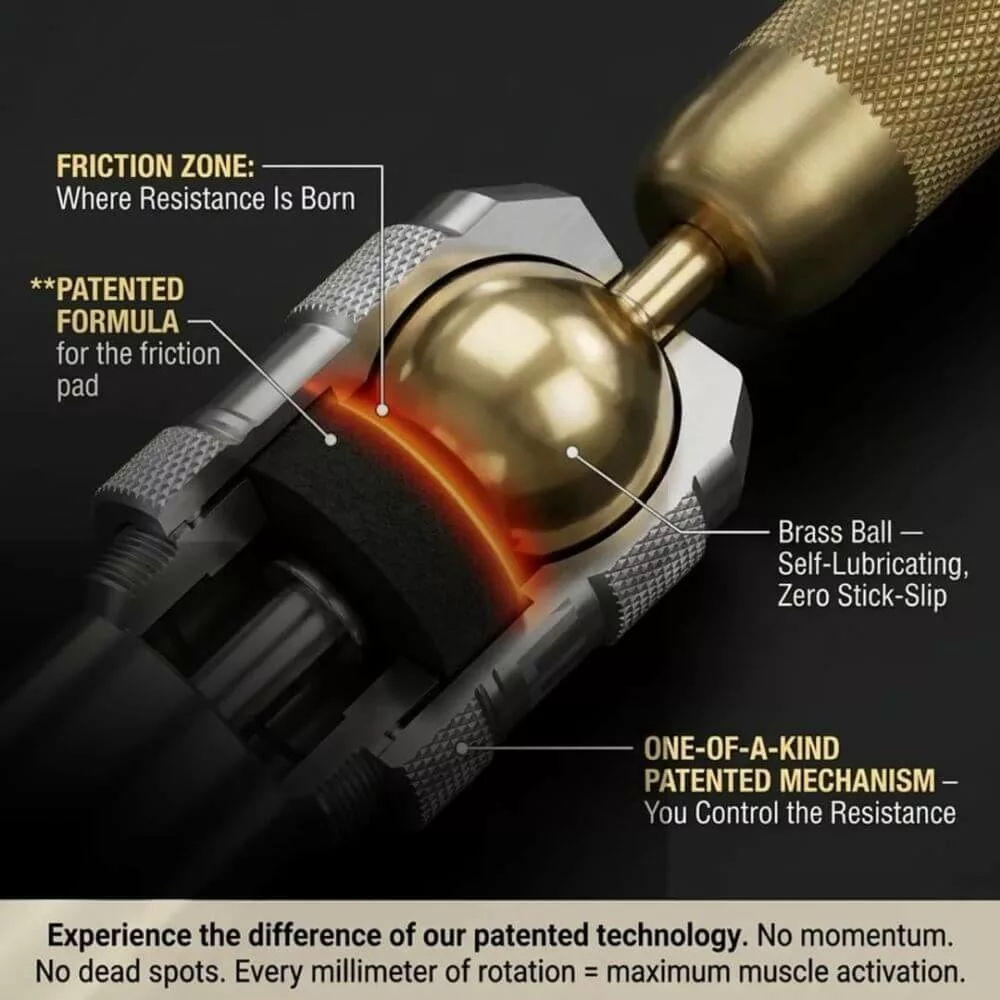
The Tornado’s resistance system produces a fundamentally different feel from spring grippers and elastic resistance tools. Instead of resistance appearing primarily during the closing portion of a movement, the friction mechanism is designed to provide resistance throughout the movement.
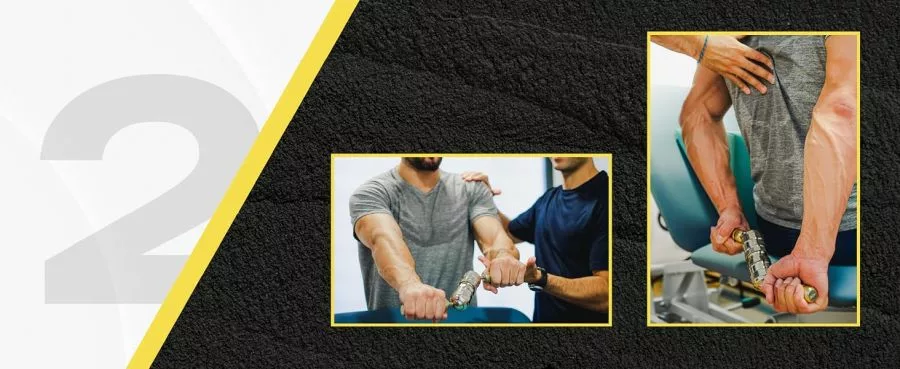
That makes the tool particularly interesting for rotational and continuous movements. The available demonstrations show the handles being moved vertically, horizontally, rotationally, and through twisting patterns, with the resistance adjusted using the threaded control mechanism.
The adjustable nature of the system is one of its strongest practical features. Users can loosen the resistance for easier movement or progressively tighten it as the exercise becomes more manageable.
Customer feedback also suggests that the adjustment process becomes easier with familiarity. Long-term users describe using higher settings for hard training and lighter settings for getting blood into the hands and arms, while some describe the device as easy to adjust after learning how it works.
The main caveat is that the Tornado has more mechanical complexity than a basic gripper. Some users report that the movement can initially feel awkward or jerky, and several reviews mention problems involving gaskets or inserts.
That means the training experience can be excellent when the mechanism is functioning properly, but the product requires more familiarity than a simple spring gripper.
🏗 Build Quality & Long-Term Durability
A substantial metal build with some important reliability concerns
The 2026 Tornado is positioned as a major construction upgrade, with the description specifying a stainless steel body and brass internal components. The listing also identifies aluminum and metal as the primary materials.
The overall construction is clearly intended to withstand serious training loads. At 4.02 lb, the device has considerable weight for a compact forearm trainer, and customer feedback frequently describes it as solid, heavy-duty, and premium-feeling.
However, durability is the area where the customer feedback becomes noticeably mixed.
Several users report excellent long-term use, including one customer who had been using the Tornado daily for more than a month and another who reported more than six months of use. Other customers experienced stripped threads, broken gaskets, or problems with plastic inserts.
One particularly negative review reported a gasket failure almost immediately, while another user initially believed the device was defective before discovering that the gasket needed to be removed during setup.
These reports do not establish a universal failure rate, but they are significant enough to consider before purchasing an expensive mechanical training tool.
The 2026 steel construction is encouraging, but the internal adjustment components remain an important part of the overall durability picture.
🏠 Everyday Usability & Practicality
Compact enough for frequent training without a gym setup
The Tornado has a strong practicality advantage for anyone who wants a wide variety of forearm exercises without building a collection of specialized equipment.
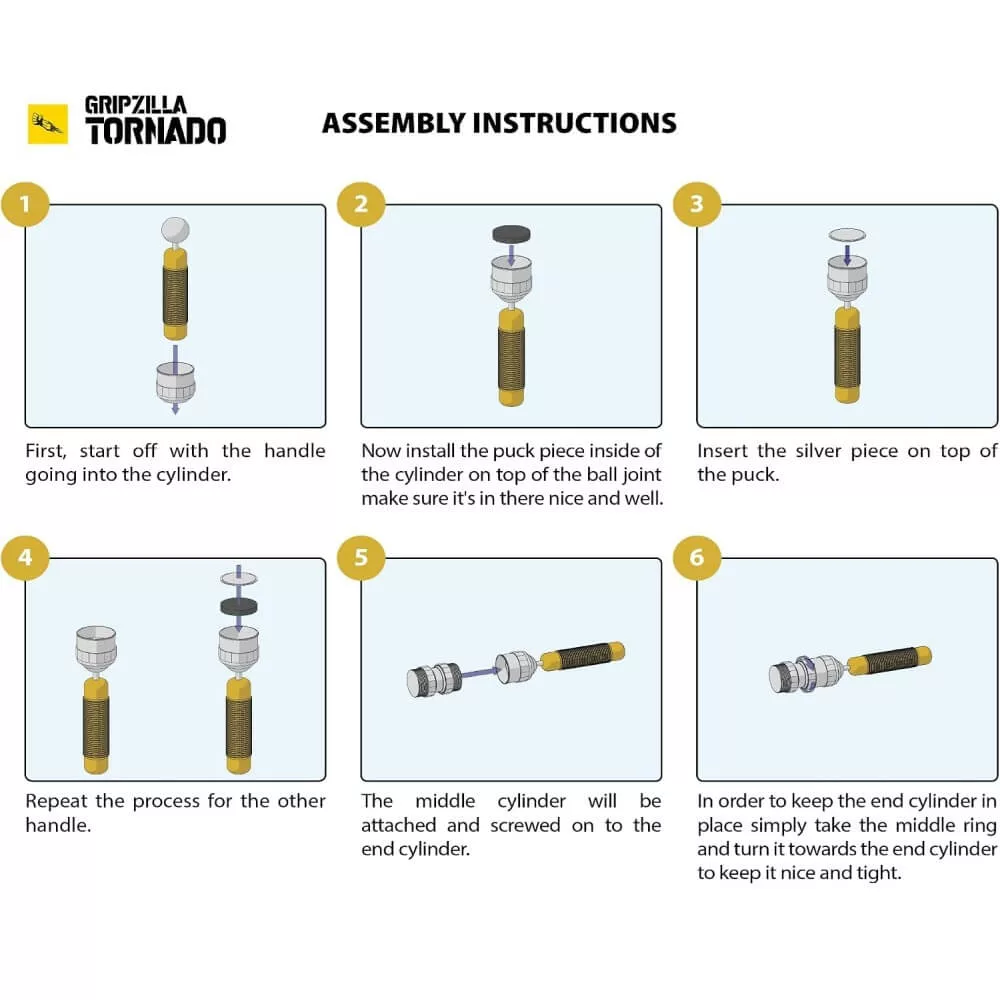
There are no weight plates, batteries, cables, or complicated mounting systems. Once assembled, the tool can be used wherever there is enough room to move the handles safely.
Its 4.02-lb weight is a mixed factor. The substantial mass contributes to the solid feel and makes the tool feel more like serious training equipment, but it also makes it considerably heavier than a basic hand gripper.
The compact design also makes it practical for home training and travel compared with a rack of separate wrist and grip devices.
The learning curve is the main usability consideration. Because the Tornado can be positioned and moved in so many ways, beginners may need time to understand the adjustment mechanism and learn which exercises provide the intended movement.
Once that process is understood, the variety becomes a major advantage. A single device can provide grip, wrist, rotation, deviation, twisting, and multi-plane forearm exercises that would otherwise require several different tools.
✅ Final Verdict: Is GRIPZILLA Tornado (2026 Steel Build) Worth It?
A serious multi-directional forearm tool for users who have outgrown basic grip trainers
After looking at everything the GRIPZILLA Tornado is designed to do, I see it as a very different proposition from an ordinary hand gripper. I wouldn’t choose it simply because I wanted to close a heavier spring. I’d choose it because I wanted a much broader way to challenge my wrists, hands, and forearms.
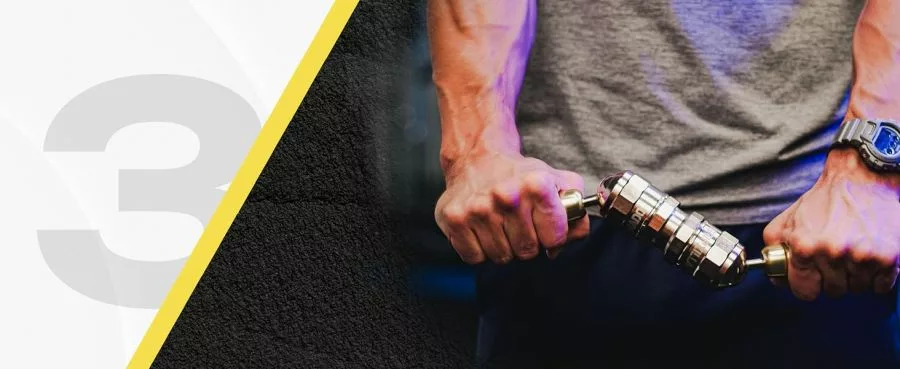
What I find most compelling is the freedom of movement. I can see the appeal of having one compact tool that lets me work through rotation, deviation, flexion, extension, twisting, and different hand positions instead of collecting a separate piece of equipment for every movement.
I also like the progression concept. Rather than giving me a fixed resistance and leaving me to buy another tool when I get stronger, the adjustable friction system lets the difficulty change with the exercise. That’s particularly useful for someone whose training needs vary from lighter conditioning to serious strength work.
Price is the biggest obstacle; before the substantial shipping and import charges, this isn’t an impulse purchase. The mixed durability reports also mean I’d want to be comfortable with the mechanical design and warranty situation before spending that much.
For me, the Tornado makes the most sense for an experienced grip or forearm trainee who wants movement variety and adjustable resistance, rather than someone who simply needs an affordable crush gripper.
It is an ambitious piece of equipment, and when its multi-axis design matches the user’s training needs, that ambition is exactly what makes it interesting.
Thanks for Checking It Out!
Have You Trained With GRIPZILLA Tornado Before?
Share Your Experience in the Comments!
Wrist Pain? Learn How KT Supports Tendons in The Hand & Wrist
& Check Out the Grip Training FAQ for Quick Answers.