(Last Updated on October 31, 2026 by Henry)
- Name: FitBeast Finger Strengthener 4x Set
- Category: Finger Exercisers
- Purpose: Train individual fingers & rehab
- Rating: 4.3 / 5 stars
- Availability: Amazon (Prime Delivery)
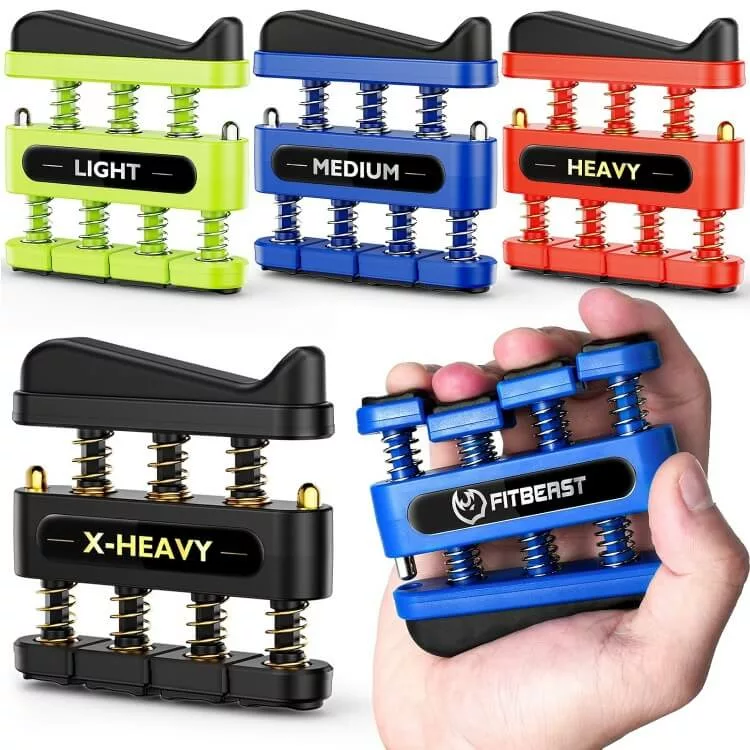
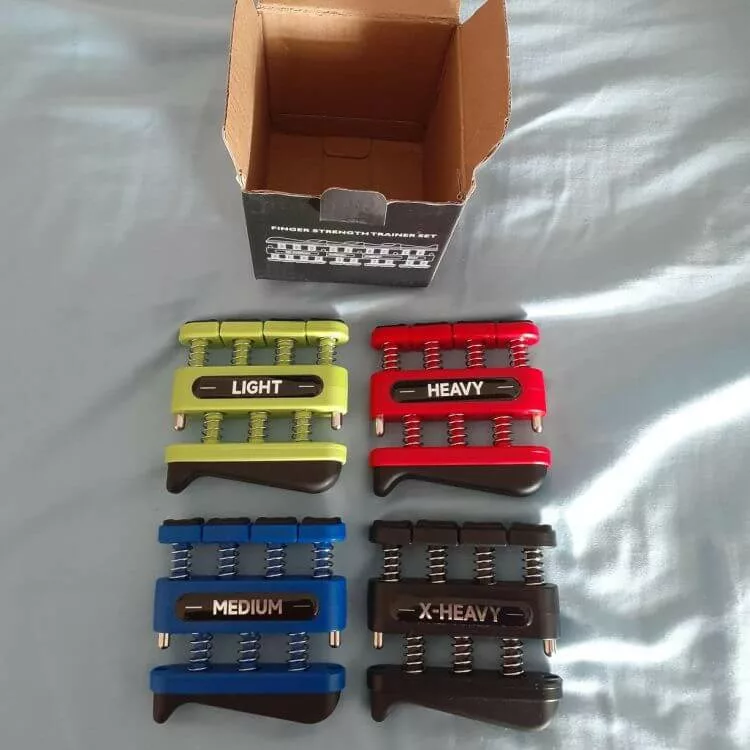
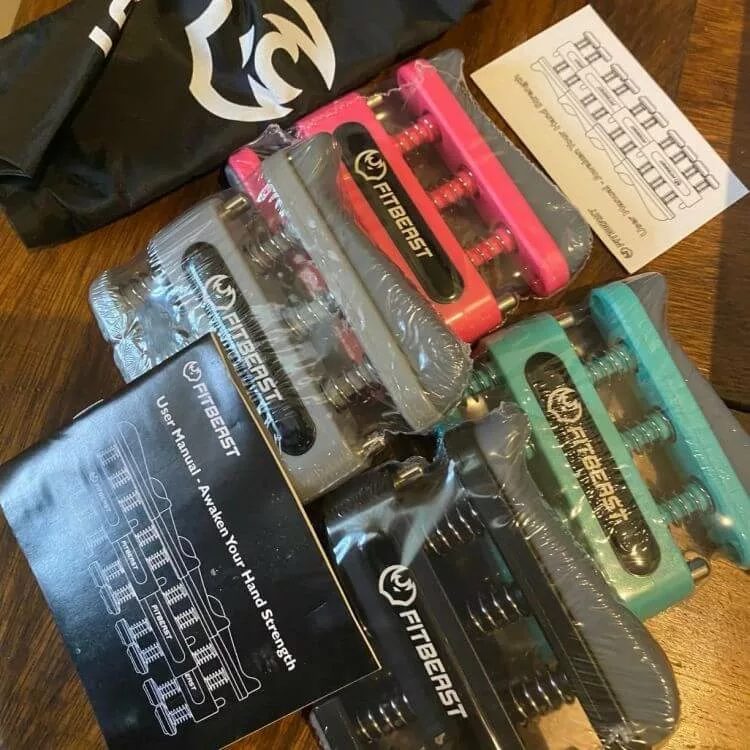
- Four resistance levels: The set includes Light, Medium, Heavy, and Extra Heavy options.
- Independent finger movement: Allows you to exercise individual fingers or several fingers.
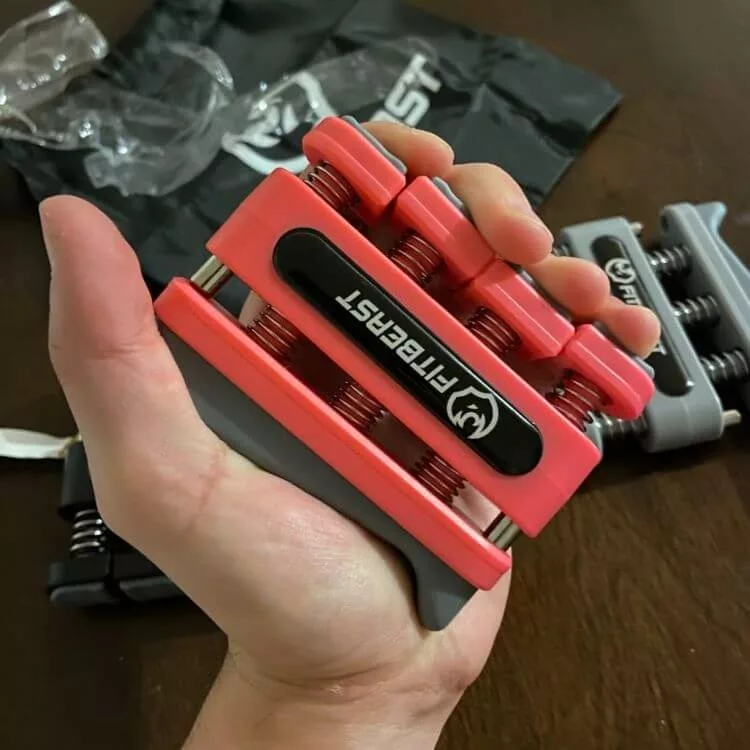
- Compact, ergonomic design: Silicone contact surfaces, color-coded units, an instruction manual, and a storage bag support convenient home or desk-based use.
Trying to Rebuild Hand Strength?
Learn What Hand Rehabilitation is & Why it Matters
✋ Overview: What Recovery Problem Does FitBeast Finger Strengthener 4-Piece Set Solve?
Targeted finger exercise beyond ordinary grip training
When I look at the FitBeast Finger Strengthener, what stands out to me is its focus on an often-overlooked part of hand training: controlling and strengthening individual fingers.
Traditional hand grippers primarily challenge the fingers and hand as they squeeze against resistance. This set takes a more targeted approach, using separate spring-loaded mechanisms that allow each finger to press independently. That distinction makes the design interesting for people who want to work on finger control, dexterity, and strength rather than relying exclusively on whole-hand squeezing.
The four-piece set also offers a straightforward way to vary resistance. The advertised levels range from 3 lb to 11 lb, giving users several options instead of forcing everyone to start with the same spring tension. For someone building a consistent hand-exercise routine, that flexibility is a meaningful advantage.
I also like the practical simplicity of the design. There are no batteries, complicated settings, or bulky exercise stations to manage. Each unit is a small, self-contained exercise tool that can be kept near a desk or stored with other training equipment.
However, I’d distinguish between strengthening fingers and rehabilitating an injured hand. The FitBeast can provide resistance-based exercise, but it doesn’t independently establish the right loading, movement restrictions, or recovery timeline for someone after surgery or an injury. Those decisions may require guidance from a qualified healthcare professional.
For general finger conditioning and controlled strength work, I see a clear purpose for this type of tool. Its real value depends on choosing an appropriate resistance and using the individual-finger mechanism deliberately rather than simply pressing as hard as possible.
⚖️ Pros & Cons: FitBeast Finger Strengthener 4-Piece Set
A focused finger-training system with a few practical limitations
The FitBeast set combines individual-finger resistance, four difficulty levels, and a compact format. Its main limitations are the relatively modest advertised resistance range, the possibility that the shape won’t suit every hand, and the lack of precise resistance adjustment within each unit.
- Individual-finger training: Separate spring mechanisms let you focus on particular fingers rather than squeezing everything together.
- Four resistance levels: The set offers several starting points for gradually adjusting exercise difficulty.
- Supports dexterity practice: Independent finger movement provides a useful option for coordination-focused exercise alongside strength work.
- Compact and portable: The individual units are easy to keep at a desk, at home, or with other training equipment.
- Simple exercise setup: No batteries or complex adjustments are needed, making short sessions easy to incorporate into a routine.
- Limited resistance ceiling: The advertised maximum of 11 lb per unit may not challenge stronger fingers or advanced trainees sufficiently.
- Fixed resistance within each unit: Progression requires moving between the included levels rather than making small, precise adjustments.
- Hand fit may vary: The shape and spacing of the finger-contact points may not suit every hand size or preferred exercise position.
Still Deciding? Compare More Rehab Options Here
Not Sure Which Tool You Need? Learn How to Choose the Right Hand Rehabilitation Tool
FitBeast Finger Strengthener 4-Piece Set: Ranking 86 out of 100
General Finger Conditioning & Controlled Strength Work
🏥 Who Benefits Most From FitBeast Finger Strengthener 4-Piece Set Recovery Tool?
A practical option for targeted hand exercise
I’d consider this set most useful for people whose goals involve finger independence, controlled resistance, or general hand conditioning rather than maximum crushing strength.
- Musicians: Guitarists, pianists, and other instrumentalists may find individual-finger exercises useful as a supplement to instrument-specific practice. The device doesn’t replace the coordination and technique developed by playing.
- Climbers and grip athletes: The set can complement broader grip training by adding isolated finger pressing. It isn’t a substitute for climbing-specific finger loading or appropriately programmed high-intensity finger training.
- Desk-based users and hobbyists: People who want a simple hand-exercise option during breaks may appreciate the compact design and straightforward operation.
- People rebuilding hand function: The resistance levels may provide a convenient exercise option when finger strengthening is appropriate. Anyone recovering from surgery or an injury should follow their clinician’s guidance on resistance, range of motion, and timing.
🧩My Rating Summary
- Build Quality: 4.2 / 5
- Ease of Use: 4.6 / 5
- Comfort: 4.2 / 5
- Resistance Quality: 4.1 / 5
- Progression Potential: 4.3 / 5
- Value for Money: 4.5 / 5
These ratings reflect my assessment of the listed construction, resistance design, feature set, and intended use, not a claim of hands-on testing.
The strong points are simplicity and the inclusion of four resistance levels; the main constraints are fixed resistance and the limited maximum load.
⚙️Technical Details
- Brand: FitBeast
- Manufacturer: FitBeast
- Material: Acrylonitrile butadiene styrene (ABS), with silicone contact surfaces described in the product information
- Weight: 13.7 oz / approximately 388 g
- Dimensions: 4.33 × 3.54 in; the listing does not clearly establish whether these measurements describe an individual unit or the overall package
- Resistance System: Separate spring-loaded finger presses
- Resistance Range: Light 3 lb, Medium 7 lb, Heavy 9 lb, Extra Heavy 11 lb
- Training Modes: Four resistance levels: Light, Medium, Heavy, and Extra Heavy
- Primary Training Focus: Train individual fingers, finger control, and hand strength
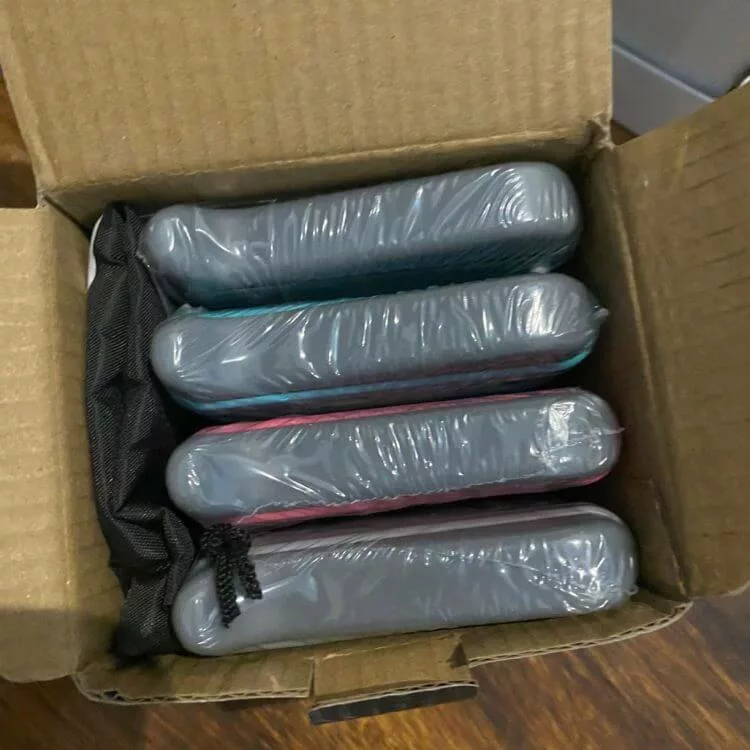
- Included Components: Four finger strengtheners; Instruction manual and storage bag, according to the product description
- Best For: Finger Strengthening & Hand Rehabilitation
The listed resistance figures are manufacturer-provided specifications.
The gripper information does not establish independent testing of the actual force delivered at each finger position, so I’d treat these figures as advertised levels rather than calibrated measurements.
✅ Final Verdict: Is FitBeast Finger Strengthener 4-Piece Set Recovery Tool Worth Using?
A useful accessory for finger-specific training, with realistic expectations
When I assess the FitBeast Finger Strengthener, I see a product with a clear purpose: it gives users a straightforward way to apply resistance to individual fingers rather than relying entirely on whole-hand squeezing.
That distinction is its strongest selling point. The four resistance levels offer a basic progression route, while the compact design makes it practical to keep nearby and use for short sessions. I also like that the exercise options can be adapted to different goals, from general finger conditioning to dexterity-focused practice.
I wouldn’t mistake it for a complete grip-training system. It doesn’t replace conventional grippers for crush strength, dedicated equipment for heavy finger loading, or a professionally planned rehabilitation program when one is needed. Its advertised maximum resistance may also become limiting for stronger users.
The fixed resistance levels are another consideration. They provide convenient steps between easier and harder exercises, but they don’t offer the precise adjustment that a variable-resistance device might provide. And because hand dimensions differ, the fit deserves attention rather than being assumed to work equally well for everyone.
For someone who wants an accessible way to exercise individual fingers, I see the FitBeast as a sensible option to consider. Its usefulness comes from targeted movement and consistency, not from promises of rapid recovery or dramatic strength gains.
The FitBeast Finger Strengthener is best suited to musicians, recreational grip trainees, and people seeking a simple finger-exercise accessory. It offers useful variety for targeted hand training, provided the resistance is appropriate and its limitations are understood.
Thanks for Checking it Out!
Have You Used FitBeast Finger Strengthener 4-Piece Set Before?
Share Your Experience in the Comments!
Not Feeling 100%? Understand Why Your Hand Is Still Weak After an Injury.
& Browse the Grip Training FAQ for Quick Answers