(Last Updated on November 2, 2026 by Henry)
- Name: D’Addario Varigrip Hand Exerciser
- Category: Finger Exerciser
- Purpose: Finger strength & conditioning
- Rating: 4.5 / 5 stars
- Availability: Amazon (Prime Delivery)
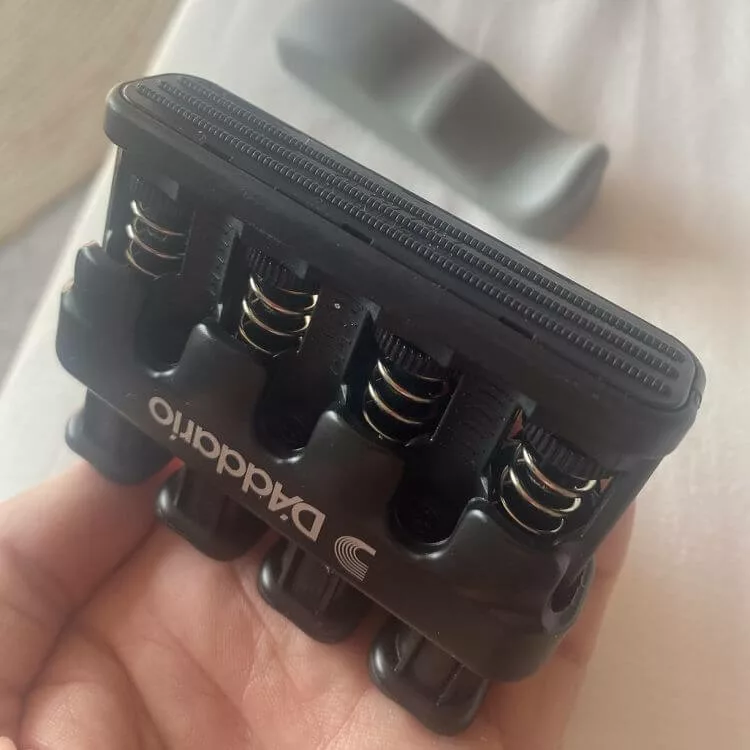
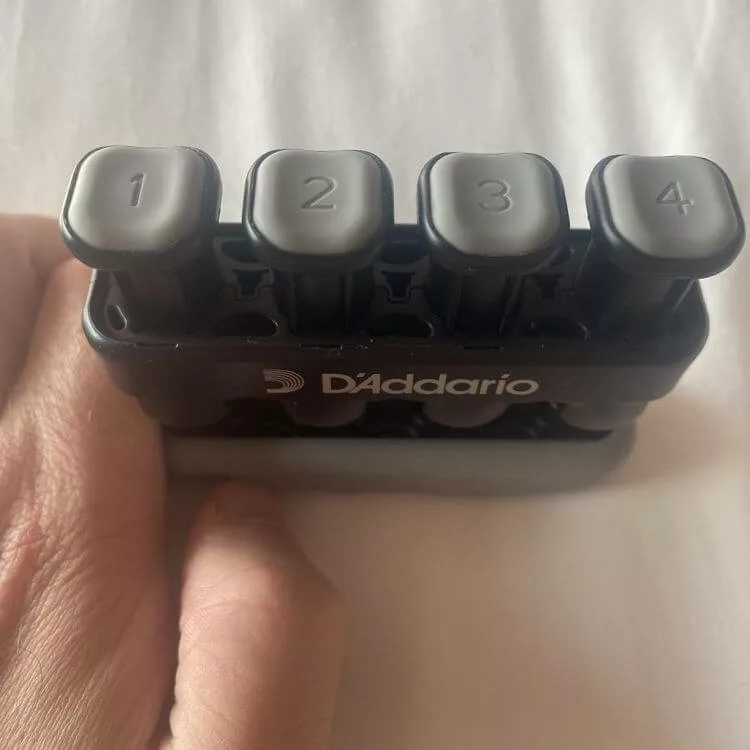
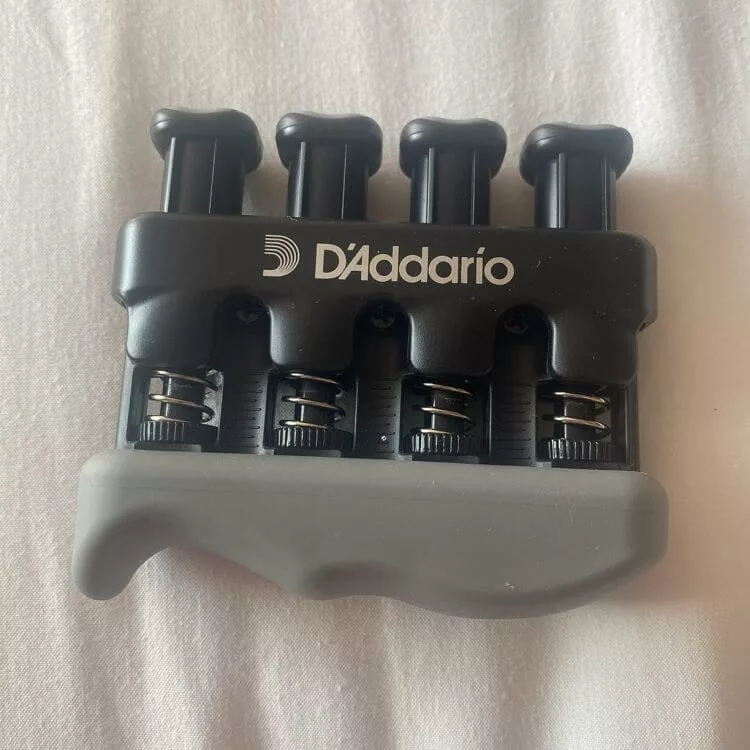
- Adjustable resistance: Each spring-loaded finger piston has adjustable tension.
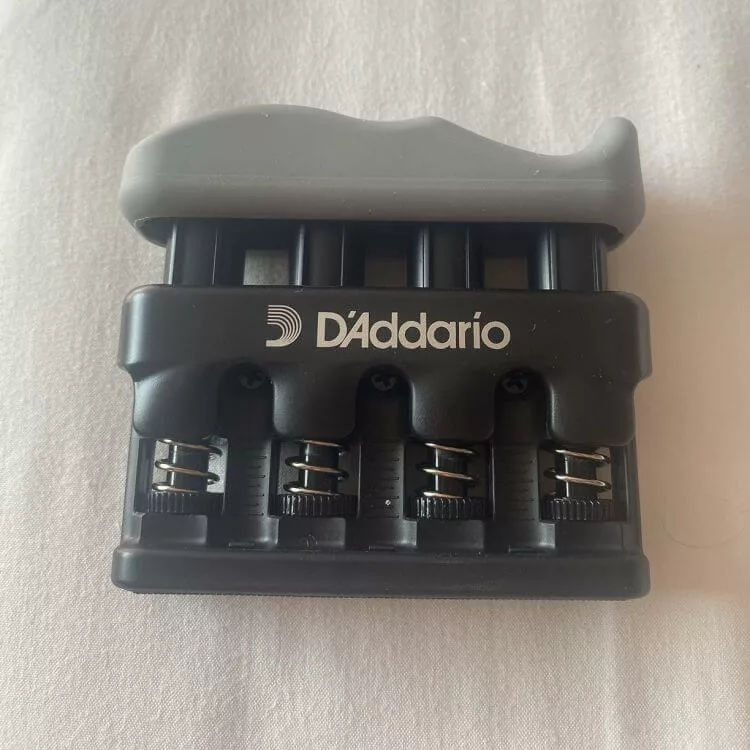
- Reversible simulated strings: Removing the molded palm grip reveals textured string-like surfaces intended to help maintain calluses
- Compact musician-focused design: Portable hand conditioning before practice, between sessions, or while travelling.
Trying to Rebuild Hand Strength?
Learn What Hand Rehabilitation is & Why it Matters
✋ Overview: What Recovery Problem Does D’Addario Varigrip Hand ExerciserSolve?
Keep your playing fingers ready, even away from your instrument
It’s a musician’s conditioning tool, not just another hand gripper. When I look at the D’Addario Varigrip, what stands out is that it was designed around a specific problem musicians face: keeping their fingers conditioned when they’re away from their instruments.
Playing an instrument develops highly specific combinations of strength, coordination, control, and endurance. A guitarist needs to fret individual strings cleanly, while a bassist may need sustained finger control over longer playing sessions. Other instrumentalists have their own demands. General grip training can help develop hand strength, but it doesn’t necessarily reproduce these more targeted movements.
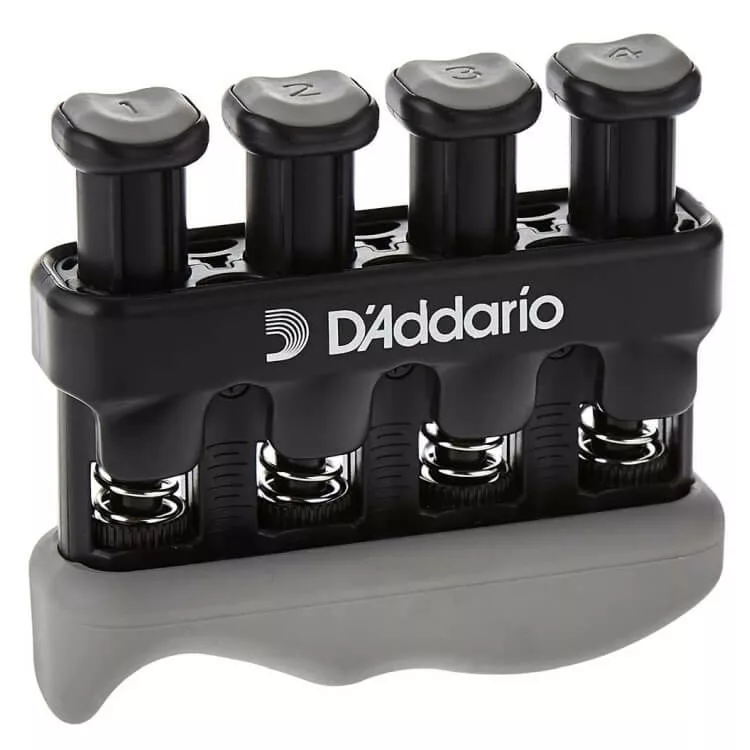
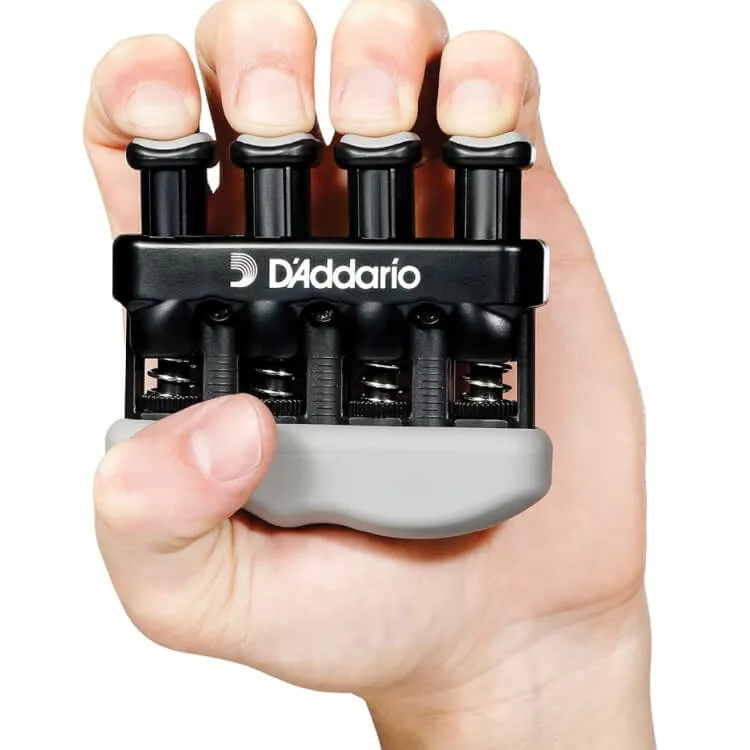
The Varigrip approaches the problem with four spring-loaded finger pistons, each with adjustable resistance. Rather than applying the same challenge to the whole hand, the design allows the tension to be tailored to individual fingers. That’s particularly useful in principle when one finger needs more attention than another.
Its reversible palm grip is the other feature that distinguishes it from more conventional finger exercisers. Removing the soft molded grip reveals simulated string surfaces intended to help maintain fingertip calluses. This gives the Varigrip two related functions: resistance-based finger conditioning and a way to practise fingertip pressure away from the instrument.
I see the combination as the product’s strongest argument. Instead of being a generic grip gadget marketed to everyone, it has a clear connection to the routines of string musicians.
There are limits, though. Pressing spring-loaded pistons doesn’t reproduce the full demands of playing an instrument, and the simulated strings can’t completely replace the contact, friction, and technique involved in real practice. The Varigrip is best understood as a supplementary conditioning tool, not a shortcut to better musicianship.
⚖️ Pros & Cons: D’Addario Varigrip Hand Exerciser
Keep your playing fingers ready, even away from your instrument
A purpose-built musician’s accessory with useful adjustability. The Varigrip combines independently adjustable finger resistance with a simulated-string feature in a compact design.
Its specialist focus is appealing, although the fixed piston positions and limited exercise variety mean it won’t suit every hand or every training goal.
- Independent finger resistance: Each piston can be adjusted to focus on individual fingers rather than applying one uniform setting to the whole hand.
- Simulated-string feature: The reversible palm grip reveals textured surfaces intended to help maintain fingertip calluses.
- Useful for off-instrument conditioning: Its portable design makes it convenient for short exercise sessions away from a guitar or other string instrument.
- Established musician-focused design: D’Addario’s music-accessory background fits the product’s specific emphasis on playing-related conditioning.
- Lightweight and compact: The small format is easy to carry with other musician accessories or keep near a practice area.
- Limited movement variety: Spring-loaded presses cannot reproduce the full range of finger positioning, coordination, and technique required by an instrument.
- Fit may vary: The fixed layout of the pistons and grip may not feel equally natural for every hand size or finger length.
- Callus conditioning is task-specific: Simulated strings may provide a useful contact surface, but they cannot fully duplicate real strings or replace playing practice.
Still Deciding? Compare More Rehab Options Here
Not Sure Which Tool You Need? Learn How to Choose the Right Hand Rehabilitation Tool
D’Addario Varigrip Hand Exerciser: Ranking 90 out of 100
Keep your playing fingers ready, even away from your instrument
🏥 Who Benefits Most From D’Addario Varigrip Hand Exerciser Recovery Tool?
Keep your playing fingers ready, even away from your instrument
It’s built around musicians who want to condition their hands between sessions: I’d put string musicians first when considering this tool. Its adjustable finger pistons and simulated-string feature make its purpose more specific than that of a general-purpose hand exerciser.
I wouldn’t limit its potential audience exclusively to guitarists. However, the simulated-string feature is most obviously relevant to string players, and the product should not be mistaken for a universal solution to every musician’s hand problem.
For anyone dealing with persistent pain, numbness, restricted movement, or a diagnosed hand condition, I’d separate general conditioning from rehabilitation. The Varigrip provides resistance; it doesn’t establish the cause of symptoms or determine which exercises are appropriate for a particular injury.
- Guitarists: Individual-finger resistance can complement fretting-hand conditioning, while the simulated strings provide a way to practise fingertip pressure away from the guitar.
- Bassists: The tool offers a portable option for finger conditioning between playing sessions, particularly when the goal is to give individual fingers a controlled resistance task.
- Returning or developing musicians: Someone restarting after a long break may appreciate having a simple way to reintroduce targeted finger exercise alongside gradual instrument practice.
- Other string and fretted-instrument players: Musicians who rely on individual fingertip placement may find the design useful as a supplementary conditioning accessory, provided the exercise matches their instrument and playing demands.
🧩My Rating Summary
- Build Quality: 4.4 / 5 The Varigrip combines a compact body, individual finger pistons, and a reversible palm grip in a purpose-built design. Its long-term durability cannot be fully assessed from the supplied specifications alone.
- Ease of Use: 4.4 / 5 Each finger’s resistance can be adjusted independently, making it easier to tailor exercises to different fingers and training needs. Users may need some initial practice to find comfortable settings.
- Comfort: 4.0 / 5 The molded palm grip provides a defined hand position, while the individual pistons allow more targeted movement. Comfort will still depend on hand size, finger positioning, and the resistance selected.
- Resistance Quality: 4.4 / 5 Independent spring-loaded pistons allow each finger to work against adjustable resistance. This offers useful control, although the supplied information does not specify exact resistance levels or increments.
- Progression Potential: 4.3 / 5 Adjustable finger tension supports gradual changes in exercise difficulty, while the thumb-opposition and hook-position exercises add variety. Progression remains limited to the resistance range built into the device.
- Value for Money: 4.5 / 5 The Varigrip combines adjustable finger conditioning, portable use, and a simulated-string surface in one compact tool. Its specialized design offers the most value to musicians and users who want targeted finger exercises rather than a general-purpose grip trainer.
⚙️Technical Details
- Brand: D’Addario Accessories
- Manufacturer: Planet Waves
- Material: Silicone listed in the product details; the design also incorporates spring-loaded pistons and a molded grip
- Weight: Approximately 2.56 oz / 72.6 g according to the detailed product information
- Dimensions: 2.36 × 2.76 in
- Resistance System: Individually adjustable spring-loaded finger pistons
- Resistance Range: Not specified by the manufacturer
- Training Modes: Finger piston presses; thumb-opposition and hook-position exercises; simulated string contact
- Primary Training Focus: Finger conditioning for musicians
- Included Components: One Varigrip hand exerciser
- Best For: Musicians seeking supplementary finger conditioning
- Model number: PW-VG-01
- Product configuration: One Varigrip hand exerciser
- Power source: None required
- Warranty: Not specified in the supplied listing
✅ Final Verdict: Is D’Addario Varigrip Hand Exerciser Recovery Tool Worth Using?
A musician-focused finger conditioner with a useful extra feature
Definitely a musician-focused finger conditioner with a useful extra feature. What I find most compelling about the D’Addario Varigrip is its specific purpose. It isn’t simply another generic hand exerciser with a musician-friendly label. Its adjustable finger pistons allow more targeted resistance, while the reversible grip adds simulated strings for fingertip conditioning.
That combination makes it particularly relevant to guitarists and other string musicians who want a supplementary tool for times when they aren’t playing. The independent resistance controls also provide more flexibility than a device that applies one fixed load to every finger.
I wouldn’t overstate what it can accomplish. The Varigrip cannot reproduce the complete demands of playing an instrument, and no hand exerciser can guarantee better technique, greater speed, or protection against injury. The simulated strings are a useful design feature, but they remain an approximation of the real thing.
The fixed layout may also be less comfortable for some hand sizes, and the product information doesn’t establish a calibrated resistance range or independently verified long-term durability. Those are sensible limitations to keep in mind.
For me, the strongest reason to consider the Varigrip is its combination of targeted finger resistance and a musician-specific feature that most general-purpose hand exercisers don’t offer. If those are the functions you want, its focused design makes more sense than buying a broader tool that lacks the simulated-string option.
The D’Addario Varigrip is a strong candidate for musicians who want portable finger conditioning and a supplementary way to maintain fingertip contact familiarity between practice sessions. It works best as an addition to regular playing—not a replacement for it.
Thanks for Checking it Out!
Have You Used D’Addario Varigrip Hand Exerciser Before?
Share Your Experience in the Comments!
Not Feeling 100%? Understand Why Your Hand Is Still Weak After an Injury.
& Browse the Grip Training FAQ for Quick Answers