(Last Updated on June 7, 2026 by Henry)
Elbow pain in arm wrestling isn’t something only novices deal with. It’s a common challenge across all levels, affecting everyone from beginners learning the ropes to seasoned professionals honing their technique. The unique demands placed on the elbow joint during an arm wrestling match are largely responsible for this.
The combination of high force production, rotational stress, and repetitive loading places significant demands on the elbow and surrounding connective tissues.
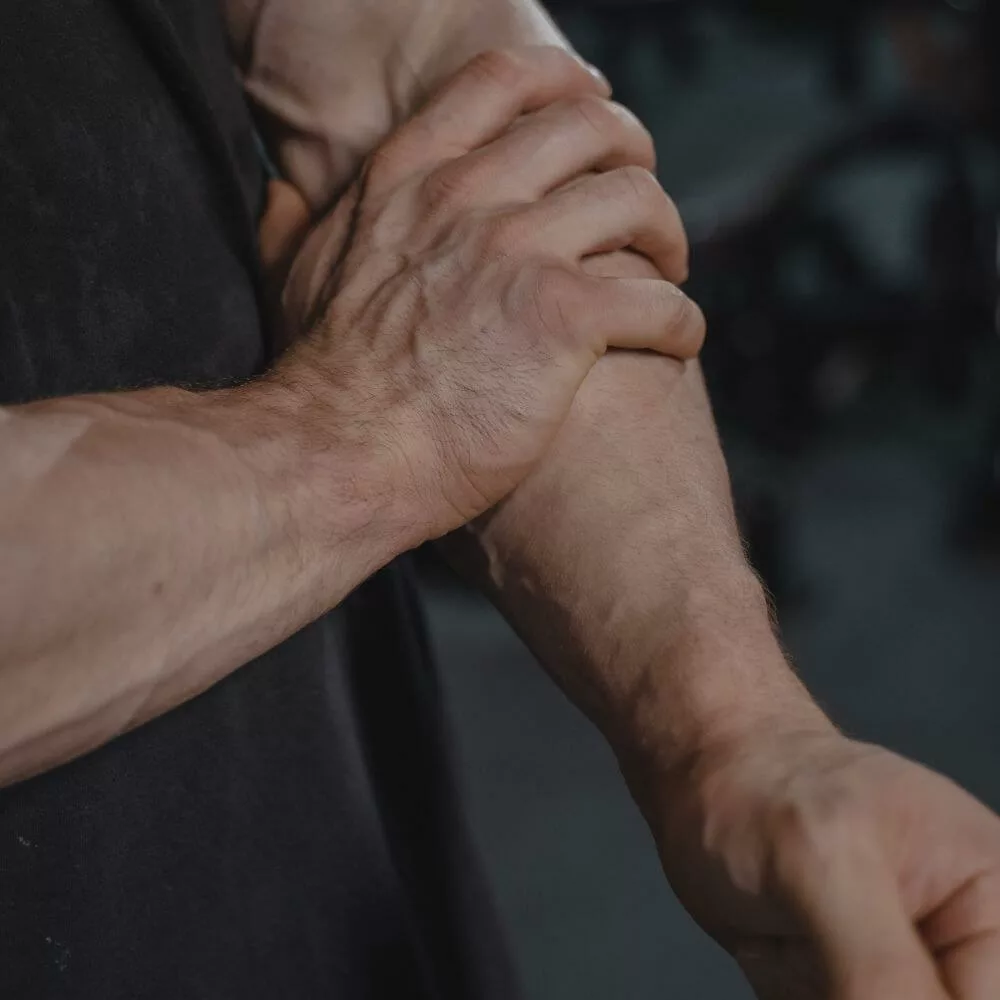
When you arm wrestle, the elbow joint takes on unusual stresses. The tendons, ligaments, and other connective tissues are under constant pressure as they absorb force.
These structures need to assist in maintaining a stable and strong position.
However, the strain often goes beyond what they can handle, especially with repetitive strain over numerous matches or extended practice sessions.
Over time, accumulated training stress can affect both performance and recovery if not properly managed.
It’s important to distinguish between ordinary soreness after a session and pain that hints at injury. Aching or discomfort that’s coupled with swelling or persists long after the arm has stopped pulling could be indicative of a more serious issue.
Understanding the difference between normal training fatigue and potential injury warning signs is an important part of long-term arm wrestling development.
Both newcomers and experienced arm wrestlers can struggle with elbow pain.
Beginners may not have the developed muscular support needed, while
veterans might be battling years of wear and tear or might be
stuck in habits that contribute to strain.
Different experience levels often encounter elbow issues for different reasons, but proper training and recovery habits benefit everyone.
Ignoring these recurring elbow issues doesn’t just sideline a training session: it can lead to long-term damage. Over time, consistent negligence can exacerbate injuries, leading to chronic conditions that significantly affect performance and overall joint health.
Addressing these pains early and taking preventative measures can protect not just your elbows, but also your longevity in the sport. Healthy elbows allow for more consistent training, better recovery, and a longer, more productive arm wrestling career.
Common Causes of Elbow Pain in Pullers
Understanding why elbow pain occurs in arm wrestlers involves looking at numerous factors contributing to strain and discomfort. Pushing your limits is part of the sport, but certain patterns and habits can increase your risk of pain.
Identifying these contributing factors early can help prevent minor irritation from developing into a more serious injury.
Spending too much time on the table without allowing enough recovery time puts your elbow at a disadvantage. The repetitive stress wears on the joint, leading to fatigue and potential injury. Recovery isn’t just about resting; it’s about giving your body time to adapt and strengthen.
The connective tissues around the elbow often recover more slowly than muscles, making recovery management especially important for pullers.
A sudden ramp-up in how much or how intensely you’re training can also lead to problems. If you increase your workload too fast, the strain outpaces your body’s ability to adjust. Consistency and gradual increases in intensity are key to healthy progress.
This principle applies to both table practice and gym-based arm wrestling training.
Technique plays a crucial role. Without efficient force application or proper form, you might be exerting unnecessary pressure on your elbow. This inefficiency often strains the joints and muscles incorrectly, setting the stage for injury.
Improving mechanics often reduces stress on the elbow while
simultaneously improving performance on the table.
Supporting muscles around the wrist and forearm can act like your first line of defense. If these muscles are weak, the elbow takes on more stress. A balanced workout regimen that targets these areas could reduce elbow strain.
Strong wrists, forearms, and hands help distribute force more effectively throughout the kinetic chain. Lastly, relying heavily on one movement pattern or sticking to a single style of arm wrestling limits muscle and joint resilience. Diversifying techniques can help distribute the forces more evenly across your arm, reducing the risk of overuse injuries.
Varying training angles, grip positions, and pulling styles can improve overall durability while exposing tissues to a broader range of stressors.
Making adjustments based on these causes can help prevent elbow issues, paving the way for a stronger, pain-free arm wrestling career. Consistent recovery, smart programming, strong supporting muscles, and efficient technique all contribute to healthier elbows and more sustainable long-term progress.
Thanks for Stopping By!
Which Methods Do You Prefer for Elbow Recovery?
Share Your Experience Below!