(Last Updated on June 3, 2026 by Henry)
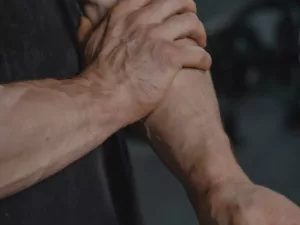
Pronation and supination are all about how you can twist and rotate your forearm to control the match. Pronation is basically when you rotate your forearm so your palm faces down. Supination is the opposite: think palm-up.
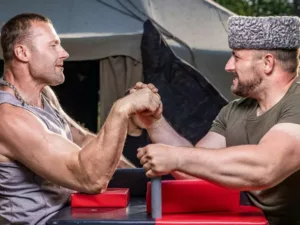
Both movements are key if you want an edge in arm wrestling. Forearm rotation is a major component of hand control, leverage, and overall arm wrestling performance.

The way your forearm rotates plays a big part in controlling the opponent’s hand.
When you pronate right, you can take control of the hand, giving you the upper hand in the match.
Proper rotation doesn’t just secure your grip; it can influence the entire outcome.
Strong pronation is often associated with better hand containment and wrist control during matches.
These movements are crucial in arm wrestling because they play into both offensive and defensive strategies.
On the offense, you use them to overpower and outmaneuver your opponent. Defensively, they help you counterattack and maintain your position. The ability to apply force through different forearm angles creates valuable strategic options at the table. In arm wrestling, the application of pronation and supination differs slightly from the basic anatomical definitions.
Arm wrestlers train these movements specifically because they directly affect leverage and grip security. Beginners often mix up these concepts. It’s easy to see why arm wrestling uses these motions in very specialized ways. Learning the proper mechanics early on can make a big difference in developing an effective strategy and avoiding bad habits later.
In a real match, it’s not just about turning your palm.
It’s about using forearm rotation to gain a strategic advantage,
applying pressure, and disrupting your opponent’s stance.
The Importance of Pronation During Arm Wrestling Matches
Pronation in arm wrestling isn’t just about twisting your arm; it’s how you gain dominance over your opponent’s hand. By pronating effectively, you break down their wrist integrity, making it harder for them to fight back.
Strong pronation is one of the primary tools used to establish hand control and leverage. A solid pronation technique is essential for popular maneuvers like the top roll. When you secure your opponent’s hand from the right angles, you make it easier to out-leverage them. Pronation ensures you maintain control in your positioning, which is crucial in high-pressure matches.
Many successful arm wrestlers build entire strategies around developing superior pronation strength. Using pronation, you can exert a lot more influence with less brute strength. It’s a kind of leverage that lets you excel even if you’re not the strongest player. When you nail the technique, you rely less on arm muscle and more on smart strategy and positioning.
A lot of times, people are doing the pronation exercise in the wrong way, and they’re
doing it very wrong for a reason because they don’t understand what it’s about.
It’s time to stop ego lifting and use the correct technique.
Efficient leverage often allows athletes to maximize strength without unnecessary energy expenditure. What you’re doing is maintaining leverage through effective back pressure. Apply the concept that the better your pronation, the less you need to pull directly with your arm, saving energy and focusing force more effectively.
A common arm wrestling principle is that improved hand control can amplify overall pulling power. Developing strong pronation minimizes the need to rely solely on raw strength.
This not only helps in the short run but also extends your match longevity, allowing you to sustain energy for quicker, smarter maneuvers. Strong pronation often contributes to better grip security, wrist stability, and endurance during longer matches.
Strong pronation can be the difference between winning and wearing down in a match. When your muscle memory is dialed into using these angles, the competition doesn’t stand much of a chance. You’re effectively putting yourself in the best position to win with hard work and good technique.
Supination’s Significance in Arm Wrestling Dynamics
Supination is your go-to move for hook-based styles in arm wrestling. Think of it as curling your opponent’s arm inward: a technique that can pull them into positions where you have the advantage.
Supination is commonly associated with inside arm wrestling techniques and hook-oriented strategies. When you’re using supination effectively, you’re drawing your opponent into an inside position. This can disrupt their balance and give you the upper hand. Inside positions let you engage more of your core strength, shifting the flow of the match in your favor.
Many hook pullers rely on strong supination to maintain control in close-range battles. Wrist flexion combined with supination gives you control. By bending the wrist as you supinate, you’re not just holding your ground; you’re pulling your opponent into a space where they need to work harder to break free. The combination of wrist strength and forearm rotation can significantly improve hand control during inside matches.
There’s real strategic value in knowing when to supinate. While it might seem simple,
the timing and positioning during the match can make it a powerful advantage.
Supination can sometimes put your opponent off balance, leading to their mistakes.
Technical timing is often just as important as raw strength in competitive arm wrestling. But go overboard with supination, and you might open yourself up to vulnerabilities.
It’s true that your best tactics involve balance. Too much supination could make it easier for the opponent to counterattack, which is something you definitely want to avoid in a competitive setting.
Successful arm wrestlers learn when to apply pronation, supination, or a combination of both, depending on the match situation.
Muscles and Structures Critical for Pronation and Supination
In the art of arm wrestling, knowing the muscles and structures involved in pronation and supination can give you a big advantage. It’s mostly about activating the right muscles at the right time. Understanding the mechanics behind forearm rotation can help improve both strength and technical execution.
For pronation, the key players are the pronator teres and pronator quadratus. These muscles help you effectively twist your forearm, allowing for control and leverage in matches. A strong pronator setup lets you dictate the direction and force of rotation with precision. Well-developed pronation strength often translates into better hand control and top-roll effectiveness.
Supination relies on the biceps brachii along with the supinator muscle itself. Together, they allow for that inward turning motion that can be crucial to maintaining control over the opponent. This muscle interaction is why having solid biceps is more than just aesthetic; it’s functional. Strong supination supports hook-based arm wrestling styles and inside-table control.
Wrist, fingers, and elbows play a huge role, too. During any match, these parts interact closely, needing to perform with coordination. They contribute to maintaining pressure and adjusting strategy mid-match. Grip strength and wrist stability help transfer rotational force more efficiently through the arm.
Tendons and connective tissues undergo significant stress during arm wrestling. These are the unsung heroes that support all the hardcore rotation and pulling. Without strong connective tissue, even the most well-developed muscles can struggle.
Healthy tendons are essential for generating force safely and maintaining long-term performance. Rotational endurance is critical in long matches, so it’s essential to train these smaller, supportive structures too.
You don’t just need bursts of strength; you need sustaining power.
Building endurance helps you maintain peak performance
from the first pull to the last.
Developing Strong Pronation and Supination Skills Through Training
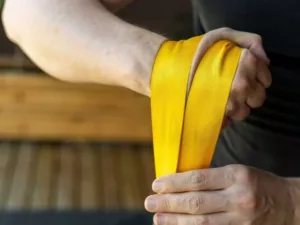
Building up your pronation and supination skills takes targeted training. Resistance bands and cable rotation exercises are fantastic for isolating these movements. They allow for controlled strength building and let you focus on the full range of motion.
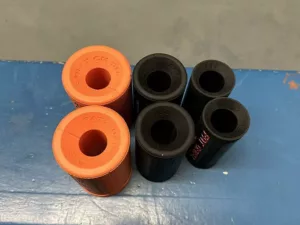
Dedicated rotational training helps develop the specific forearm strength used during arm wrestling matches. Using handle-based pronation drills really helps in refining your technique. When you use a handle during workouts, you simulate the grip and pull that mimic real match conditions, which enhances your muscles’ specific adaptations to the task.
For a top roll, both pronation and back pressure need to be crazy strong.
But how intensely should you train your pronation and back pressure?
Which one needs more focus?
Sport-specific exercises often provide better carryover to real table performance than general strength work alone. Wrist wrench and strap exercises add diversity to your routine. These exercises offer an extra layer of resistance and target the wrist muscles that stabilize arm wrestling techniques. They help in fine-tuning grip strength, which is paramount in staying competitive. Strong wrists, fingers, and forearms work together to improve hand control and leverage.
Isometric holds are great for building endurance. By holding intense positions, you boost endurance, helping you stay at your peak longer during actual matches where every second counts. Rotational endurance becomes increasingly important during long matches and hard-fought positions.
Progressive loading is key to long-term development. Gradually increasing the weight and resistance forces the muscles and tendons to adapt, building strength sustainably. But remember, recovery time matters just as much as training: rest allows muscles to rebuild and grow stronger.
Consistent progression combined with adequate recovery creates lasting gains in pronation, supination, and overall arm wrestling strength.
Strategic Application of Pronation and Supination in Competition
Choosing techniques that align with your strengths is vital. If you’re naturally more effective with one movement over another, develop strategies that capitalize on that. Understanding your personal preferences gives you a tactical edge in the match.
Successful arm wrestlers often build their game around the movements and positions that suit their strengths best. Combining rotation with back and side pressure maneuvers can add depth to your approach. It allows you to mix and match techniques, making it harder for your opponent to predict or counter your moves. This keeps your style dynamic and adaptable to any situation.
The ability to blend pronation, supination, and pressure application creates a more complete arm wrestling skill set.
Defensive rotational positioning is just as important as offensive. Knowing when to hold back or reposition can be the difference between maintaining control and losing it.
It’s about being fluid enough to switch between attack and defense seamlessly, depending on the flow of the match. Good defensive positioning helps preserve hand control and reduces unnecessary energy expenditure.
Avoid common mistakes that weaken your hand control. Overcommitting
to a certain position without the necessary strength or leverage
can give your opponent the upper hand.
Fine-tuning your balance between strength and technique is essential for proficient hand control. Technical efficiency often produces better results than relying exclusively on raw power.
Practicing safe and effective methods for building rotational strength ensures you are not only improving your performance but doing so without the risk of injury. By incorporating proper warm-up, cool-down, and regular evaluations, you build strength that stands the test of time.
Long-term arm wrestling progress depends on developing strength, leverage, endurance, and joint health together.
Thanks for Stopping By!
Which Part Of Grip Training Are You Focusing On Right Now?
Share Your Experience Below!