(Last Updated on May 30, 2026 by Henry)
Forearm pump, if you’ve ever climbed, you’ve probably felt it. It’s the burning, swelling sensation in your forearms that makes every hold feel impossible to grip. This common climbers’ term describes how your muscles feel when they’re pushed to the limit. It’s not just the physical feeling, but a sign that your forearms are asking for a break after intense work.
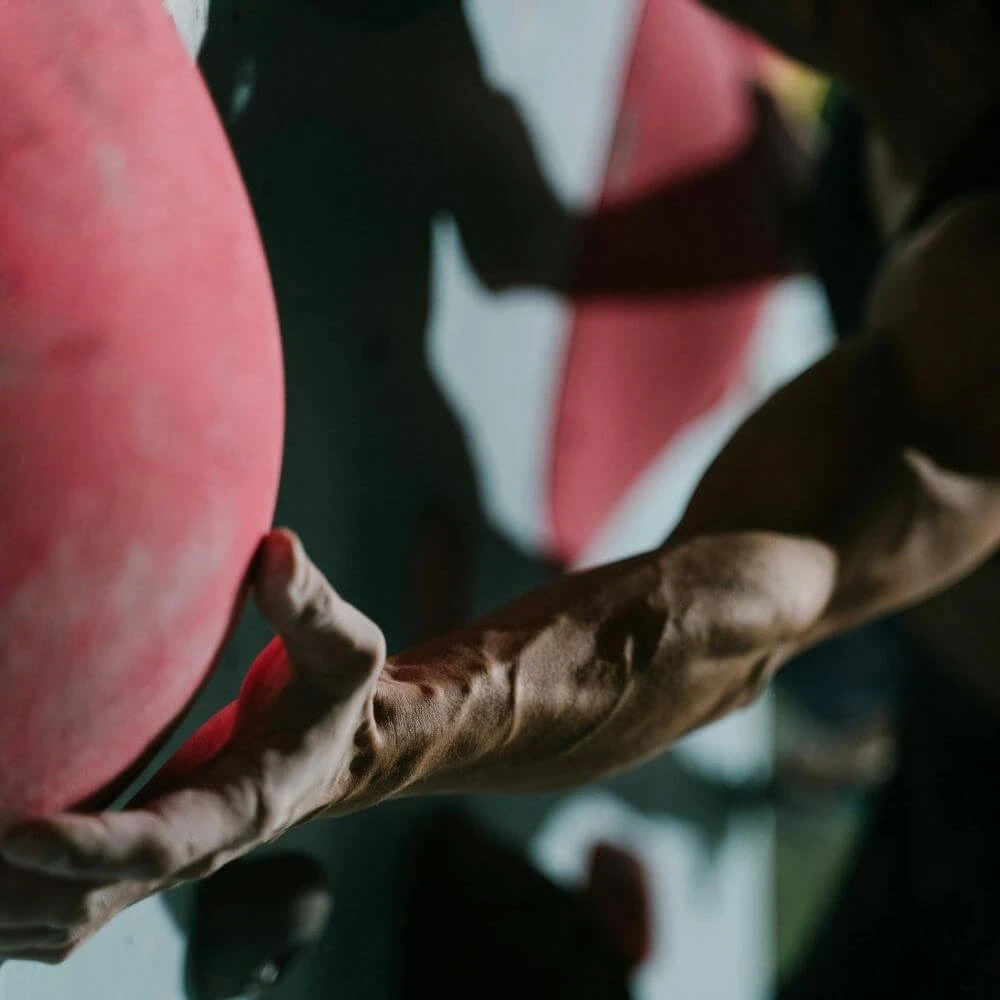
For climbers, grip fatigue can appear suddenly and completely change how secure every hold feels.
Climbing isn’t like most sports: here, it’s all about constant gripping and tension. This need for sustained effort makes climbing tough on the forearms.
Unlike runners or swimmers who use a series of fluid motions, climbers hold their body weight using small, repetitive gripping actions.
Imagine trying to hold an object in a vise-like grip for extended periods; that’s what your forearms endure on the wall.
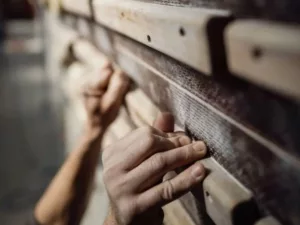
The hands, wrists, and forearms stay under near-constant stress during many climbing sessions.
Every climber knows that squeezing holds doesn’t mean those muscles are truly engaged or efficient. What’s happening is prolonged muscle tension without relief, causing that infamous pump. It’s a climb-specific type of fatigue where the muscles are saturated with blood, swelling up and feeling rock-hard, limiting your climbing time significantly.
This is one reason forearm endurance and grip efficiency matter so much in climbing performance.
Now, there is a difference between the usual fatigue most climbers experience and severe forearm pump. Normal fatigue happens gradually, allowing for recovery time. Severe pump strikes fast and hard, leaving your hands almost useless. Recognizing this difference can help adjust your climbing strategy to minimize intense strain.
Learning to manage forearm fatigue is an important part of improving your grip for climbing. Beginners often notice forearm pump hits faster than more experienced climbers.
This is partly due to inefficient techniques; new climbers might grip too hard or use their arms too much, instead of leveraging balance and footwork. As technique improves with experience, many climbers find they can delay or reduce forearm pump significantly.
Overgripping is one of the most common causes of early hand and forearm exhaustion.
Experienced climbers have often learned how to listen to their body’s signals, pace themselves better, and use more efficient grips. Every climber faces the pump at some point, but understanding what it is and why it happens can be an important step to managing and eventually overcoming it.
Better movement efficiency often leads to stronger endurance, improved recovery, and longer-lasting grip strength on the wall.
The Science Behind Forearm Fatigue
Climbers often hear about how crucial blood flow is for maintaining endurance while gripping. During intense climbing, the forearms can become so tight that blood flow is restricted. This restricted flow means less oxygen is delivered to the muscles, leading to a faster accumulation of that familiar burning sensation known as “the pump.”
Reduced circulation can rapidly affect grip endurance and forearm performance on the wall. Inside the muscles, without sufficient oxygen, something tricky happens.
The body begins to produce lactic acid and other metabolic wastes. It’s like a ticking time bomb inside your forearm muscles, which can quickly lead to fatigue. The more waste that builds up, the heavier your forearms feel, making it tough to keep a strong grip on holds.
This buildup is one reason climbers often struggle to maintain hand strength during longer routes. The forearm muscles are relatively small compared to other muscle groups climbers might use. They fatigue quickly when put under continuous tension.
This size difference is a big factor in why even experienced climbers can sometimes struggle with managing pump.
Small muscles under constant tension tend to tire faster, especially during sustained gripping.
How tightly you grip holds can determine just how fast your endurance depletes. The tighter the grip, the more restrictions on blood flow. It’s crucial not to over-grip unnecessarily, as this can lead to quicker fatigue and even failure on the wall.
Efficient grip control is often more valuable than squeezing with maximum force. Focusing on adjusting grip intensity to be more efficient can actually extend your time spent climbing. Learning to back off compared to using a vice-like grip during less demanding holds can greatly improve endurance over time. This small tweak in technique makes a large difference in overall climbing efficiency and stamina.
Over time, smarter gripping habits can help improve your grip endurance without relying only on stronger forearms.
Climbing Techniques That Increase Pump
Gripping holds harder than necessary is a common mistake that leads to increased forearm fatigue. Some climbers panic and hold on for dear life, but this only makes the forearm pump kick in faster. Figuring out the minimal amount of force needed for a secure grip can do wonders for reducing pump.
Overgripping wastes energy and quickly reduces climbing endurance. Body positioning plays a significant role in how much your forearms have to work.
If you’re misaligned or leaning too far from the wall, your arms might be doing extra work just to keep you close. Proper technique involves using your feet and core to maintain balance, easing the burden on your forearms.
We can also challenge a common climbing myth: endurance training is not about constantly
getting pumped. Instead, effective endurance training should target the correct energy
system adaptation rather than replicating the feeling of failure on routes.
An efficient climbing technique helps preserve grip strength for longer routes and harder sessions.
Another common technique-related issue is constantly pulling instead of occasionally resting the arms. Whenever possible, hanging on straight arms rather than keeping them bent all the time provides your forearms a brief rest. Consider using straight-arm hangs strategically to conserve energy over longer climbs.
Even short moments of recovery can help reduce forearm fatigue accumulation.
Inefficient footwork often sneaks up on climbers, too. When your feet aren’t positioned well, your arms try to compensate, which means more load and more fatigue on your forearms. Improving foot placement and converting it into seamless climbs will help your forearms stay fresh longer.
Good footwork is one of the most overlooked ways to improve your grip endurance while climbing. Route-reading errors can drain energy surprisingly fast.
By misjudging a move or path, you can end up exerting more physical effort than necessary. Anticipating moves, visualizing your route, and making efficient decisions while climbing can drastically cut down the amount of unnecessary pump you experience.
Better decision-making on the wall often means less wasted grip strength and slower forearm burnout.
Why Certain Climbing Styles Cause Faster Pump
Different climbing styles place varying demands on your forearms, affecting how quickly you might feel that dreaded pump. Bouldering, which involves shorter yet more intense routes, often requires a lot of power in a short burst. In contrast, sport climbing might demand sustained efforts over a longer time, which can also tax the forearms but in a different way.
Different climbing disciplines challenge grip strength and forearm endurance in unique ways.
Steep overhangs introduce another layer of difficulty, as they require maintaining more sustained muscle tension due to gravity’s relentless pull. You’re fighting not just upward, but outwards, leading to quicker pump if you’re not strategic with your movement and grip.
Overhang climbing places continuous stress on the hands, wrists, and forearms. Using small crimps and pinch holds ups the ante since these require more precision and strength. These holds minimize the area of contact and force your forearms to work harder, intensifying the pump faster than on larger, more generous holds.
Smaller holds often demand greater finger strength and tighter grip control. Long endurance routes are different beasts compared to explosive power problems.
The latter demands short bursts of energy, while the former tests your ability to manage energy over a prolonged period. Both scenarios challenge forearms in unique ways but can lead to a swift pump if not approached wisely.
Managing grip fatigue becomes increasingly important during longer climbing sessions.
Indoor climbing, often dismissed as less taxing than the great outdoors, actually presents its own challenges. The repetitive movement patterns typical of indoor routes, combined with artificial holds that might not mimic the organic shapes of natural rock, present consistent demands that can accelerate forearm fatigue if not carefully managed.
Consistent indoor climbing volume can place heavy demands on forearm recovery and grip endurance over time.
How Climbers Improve Forearm Endurance
One effective way to manage forearm pump is to learn how to relax your grip pressure between moves. Being mindful of how tightly you’re squeezing and consciously easing off whenever possible can allow your muscles brief moments of relief, extending your climbing session.
Learning when to relax your grip is a major part of improving climbing efficiency. Building endurance specific to climbing isn’t about overnight success but a gradual process.
Regularly incorporating endurance exercises that target the forearm muscles can progressively enhance your stamina. Think of it like working up to running a marathon: incremental increases over time lead to better endurance.
Consistent forearm endurance training can help improve your grip over longer climbing sessions.
Pacing and breathing control can be incredible tools. Maintaining a steady breathing pattern helps manage the oxygen supply to your muscles, potentially delaying the onset of fatigue. Focusing on consistent breath work allows you to maintain energy levels and keep your focus during tough sections of a climb.
There’s a recurring principle in climbing training: consistent exposure to manageable stress and
focused fundamentals matter more than constantly pushing maximum intensity.
Controlled breathing can help reduce unnecessary tension throughout the upper body and forearms.
Recovery strategies between attempts can significantly impact your endurance. Taking small breaks, gently stretching your forearms, and shaking out your hands in between climbs help maintain circulation and reduce tension. These recovery methods ensure you can attempt the next climb with fresh muscles.
Recovery is an important part of maintaining healthy grip strength and reducing repetitive strain. Climbers often use training methods to prolong forearm strength and delay pump safely.
Strategies include interval training with climbing exercises, utilizing grip trainers, and focusing on dynamic movements in workouts. All of these collectively contribute to building up the type of endurance that’s necessary for extended climbing without compromising safety.
Smart training habits can gradually improve forearm resilience, grip endurance, and climbing performance over time.
Preventing Excessive Forearm Pump and Injury
Starting your climbing session with a proper warm-up is essential. Engaging in dynamic stretches and specific exercises tailored for your forearms can prepare these muscles for the demands ahead, reducing the risk of getting pumped too quickly.
A structured warm-up helps prepare grip strength and forearm endurance for climbing performance. Recognizing when your body is signaling overuse is crucial to preventing injury.
Pay attention to unusual, persistent pain instead of the usual pump feeling: this can be a warning sign to ease off or modify your climbing routine. Distinguishing a normal forearm pump from potential injury is key to long-term climbing health.
After intense climbs, managing recovery is just as vital as the climbing itself. Taking time to cool down with gentle stretching and allowing for rest days helps the body to repair and reduce long-term fatigue. Recovery habits directly support better grip strength development and injury prevention over time. Hydration, nutrition, and rest play big roles in managing forearm pump. Staying hydrated, fueling with the right nutrients, and ensuring sufficient rest can enhance muscle recovery and overall climb performance.
Good recovery foundations support sustained forearm endurance and more efficient grip use. If persistent forearm pain doesn’t ease up, it might suggest an injury beyond normal soreness.
When this happens, consulting a professional is important to address issues early and avoid long-term damage. Listening to your body’s cues and respecting them can help sustain your climbing activity healthily.
Thanks for Stopping By!
Which Climbing Technique Do You Prefer?
Share Your Experience Below!